Electrified SUVs are having a moment in 2026. Over the past few months, we’ve seen Toyota debut two fully electric crossovers, while Geely looks to make its local comeback with both hybrid and battery-powered options. And given the current fuel crisis we find ourselves in, ditching diesel but keeping cargo space and seating capacity may be the most practical compromise for today’s motorists.
One of the most aggressive brands in this trend is Jetour. The Chinese carmaker rolled out the T2 Lightning i-DM, which attracted buyers with its macho road presence and plug-in hybrid powertrain. In our review, we found that the T2 needed some refinement and polishing—and this is where the Jetour T1 Lightning i-DM comes in. While its name makes it sound like the T2’s predecessor, this newer plug-in hybrid crossover has worked out the kinks from its larger sibling and is offered at a substantially lower price.
This is arguably Jetour’s most complete vehicle—a relatively new product that can dutifully go up against hybrid offerings from heritage brands, like the Toyota RAV4 and the Honda CR-V. With Jetour Auto Philippines’ persistent marketing efforts, chances are this vehicle is already on your radar. But is it worthy of your money? Read on to find out.
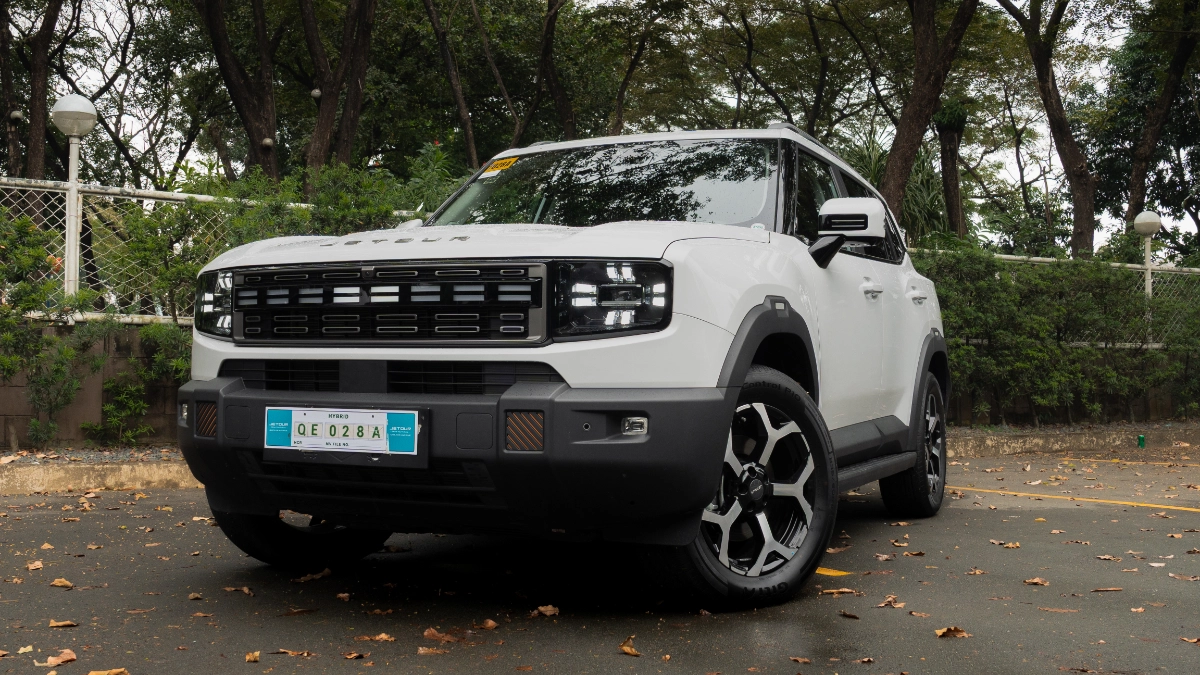
While the Jetour T2 immediately draws aesthetic comparisons with the Land Rover Defender, the T1 Lightning i-DM can claim to have its own look. Big and boxy SUV designs seem to be another persistent trend, and the T1 follows the same blueprint, but it adds a few bits and pieces to help it stand out.
Measuring in at just over 4,700mm long, 1,967mm wide, and 1,843mm tall, the T1 looks a lot larger than it actually does. The blacked-out front and rear bumpers give it a bit more thickness, while the complementing fender flares, side skirts, and step boards bolster its overall presence. While these accessories probably don’t do much for performance, they do make the SUV look more handsome and decently rugged. Jetour has also added a PHEV badge with mountains in the background, by the C-pillar—a nice touch.
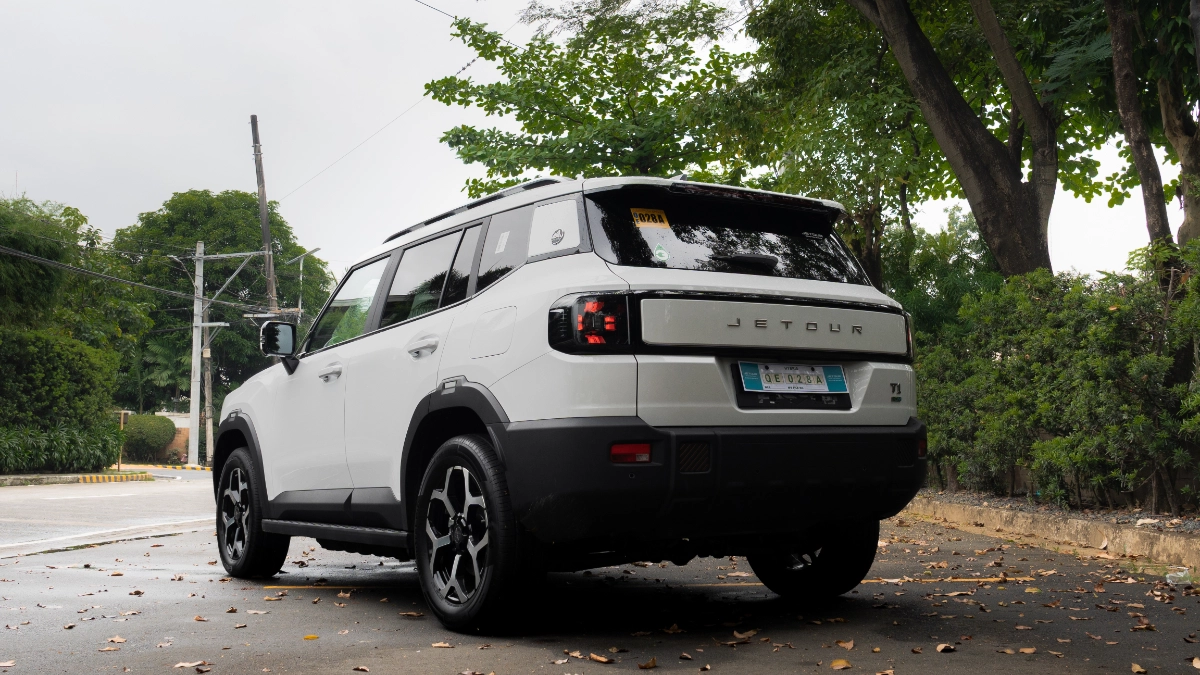
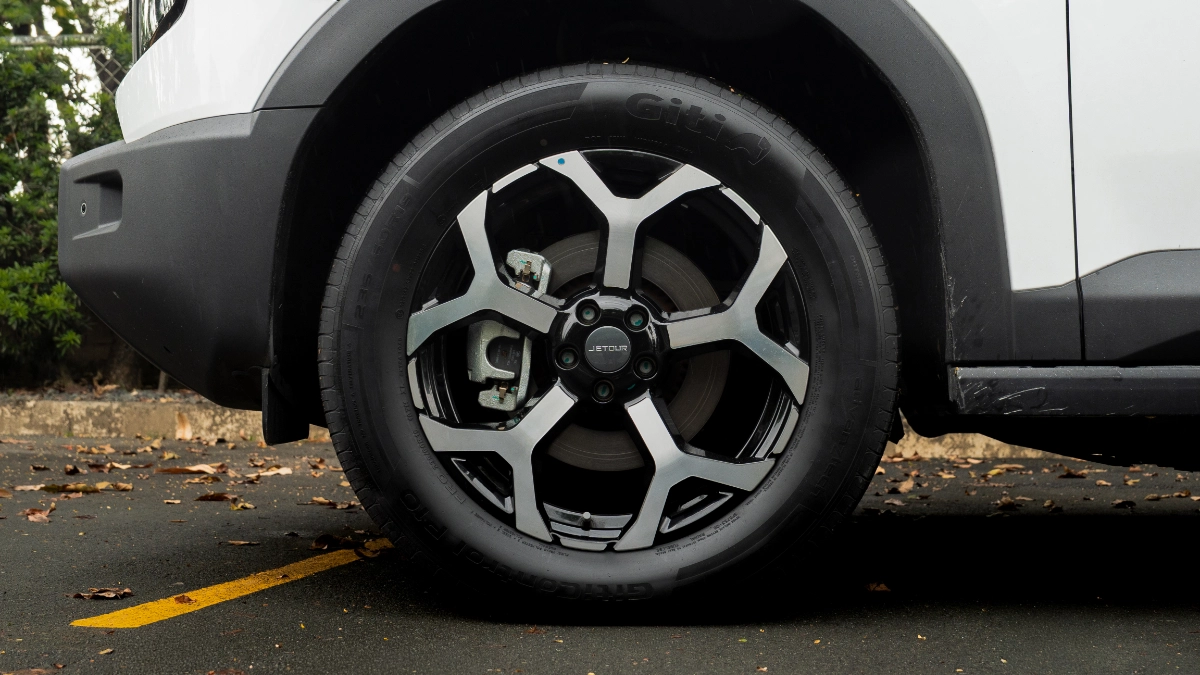
One of the louder aspects of the T1 is the design of its 19-inch wheels, and it’s still rather minimalist. The overall design shines the brightest through its ‘horizon’ light bar and ‘cloverleaf’ headlights. Even in daytime, these fixtures still look eye-catching, although when you’re parking, the light bar begins to flash rather obtrusively. It does help in making the car visible at night, but I can’t help thinking about all the unwanted attention it attracts.
ALSO READ:
MIAS 2026: Jetour PH introduces GAIA brand with the P4.488-M G700
The Jetour T1 scores a five-star safety rating in ASEAN NCAP
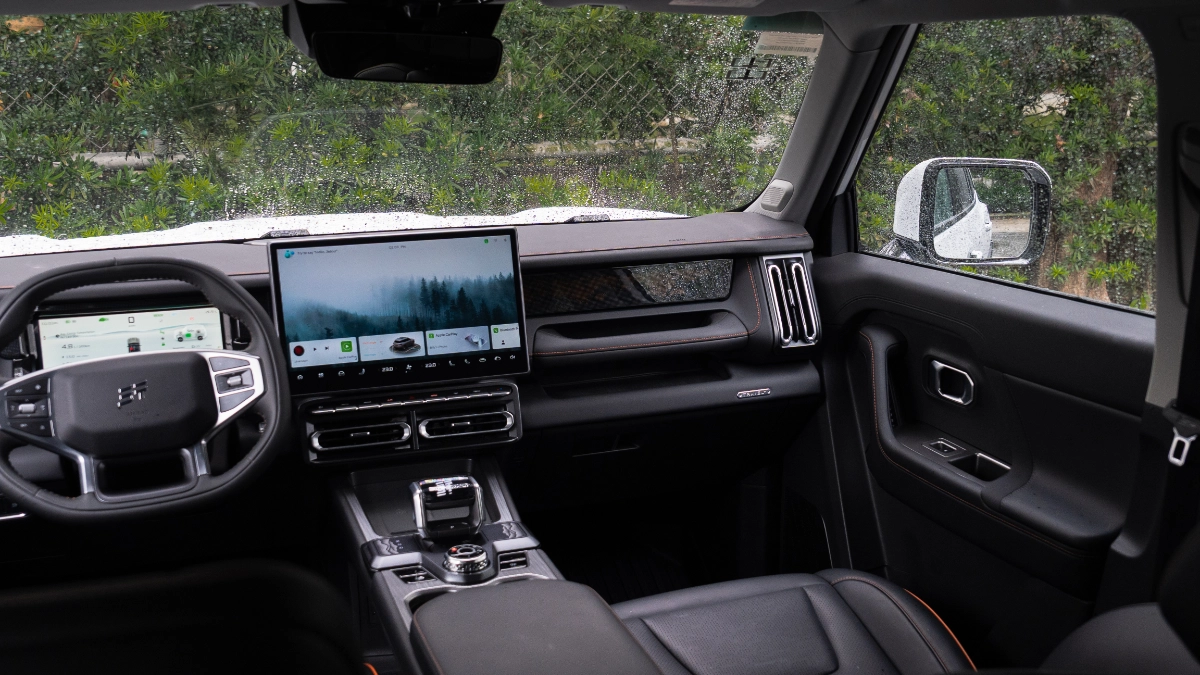
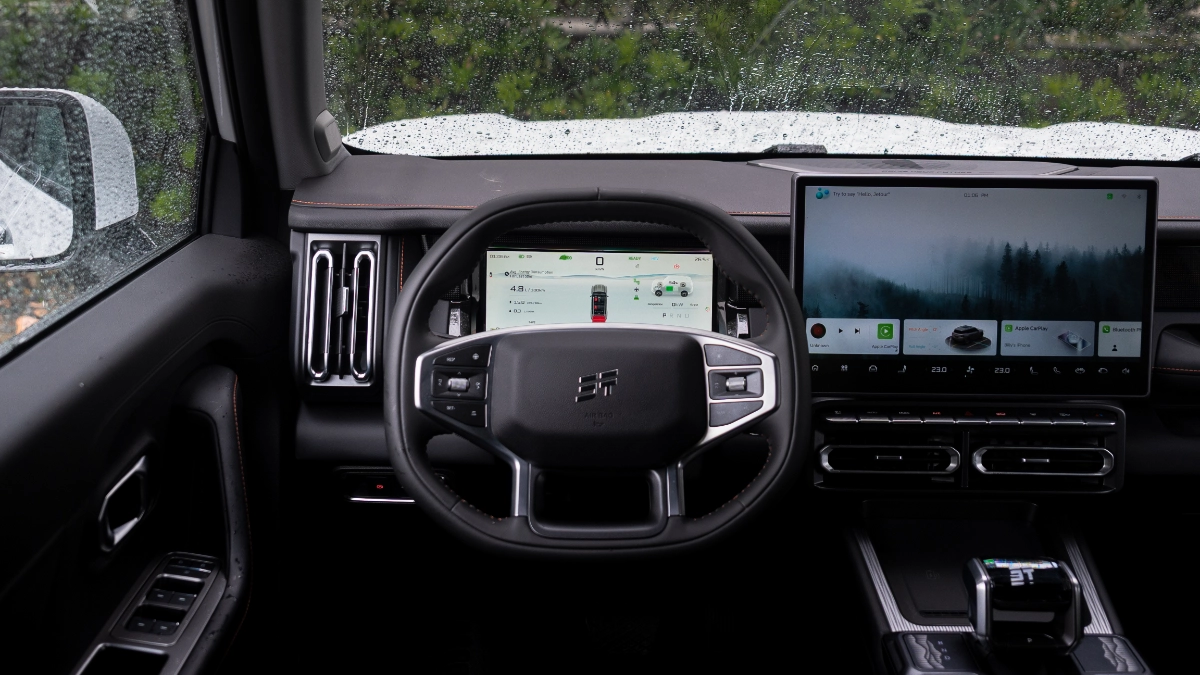
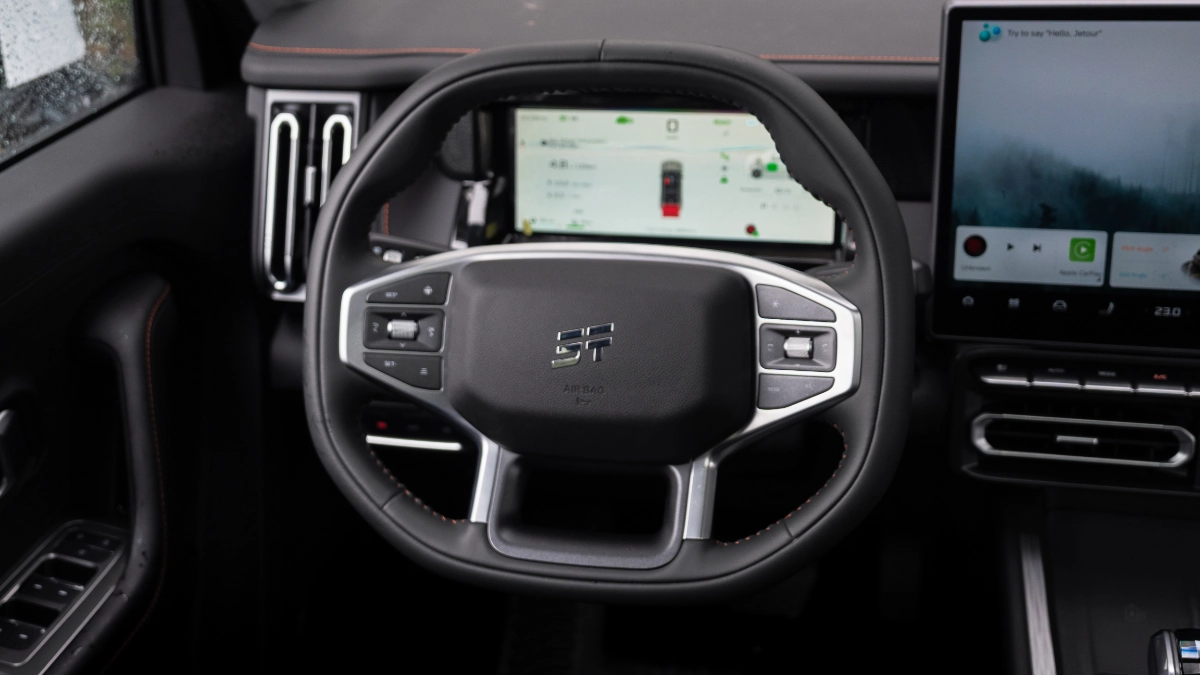
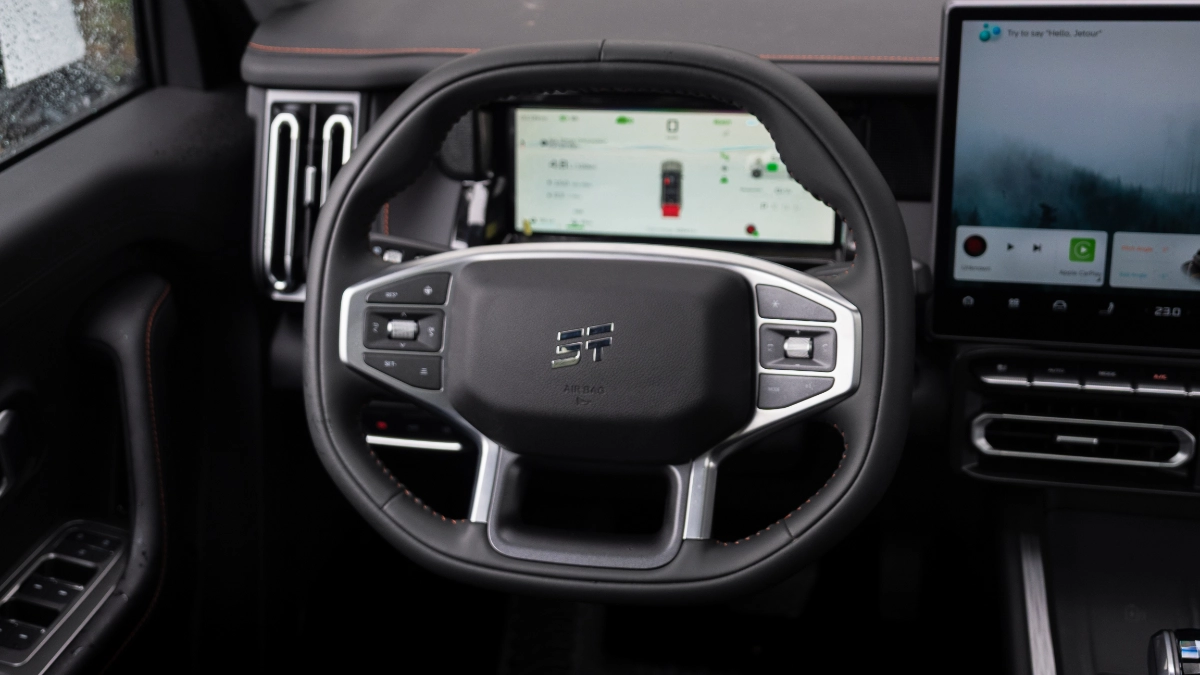
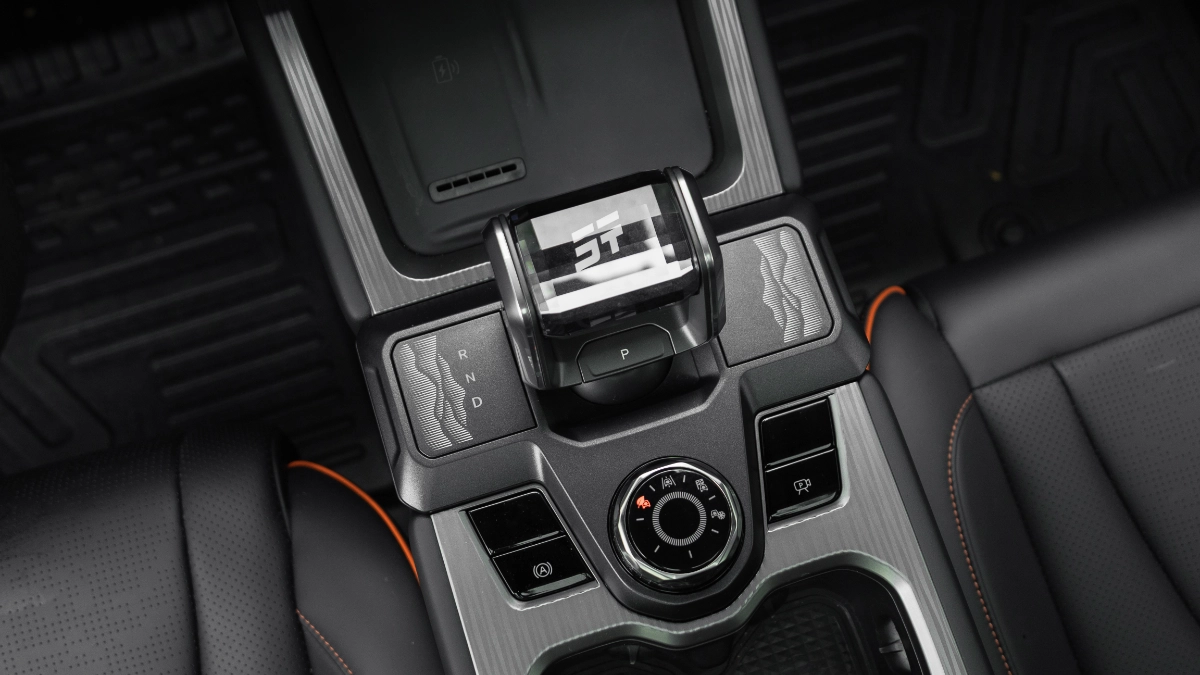
Inside, you get a sense of Jetour’s off-roading aspirations for the T1. Most of the cabin features metal finishes, with fabric and leather for upholstery. Aside from the large 15.6-inch screen up front, the most prominent feature of the cabin has to be the metal-plated center console. It holds not only that large crystal gearshift, but also the selector knob for Sport, Eco, Normal, and Snow drive modes. Each of these settings has an accompanying animation on the screen, which encourages you to switch between them, but it doesn’t exactly inspire confidence to go overlanding.
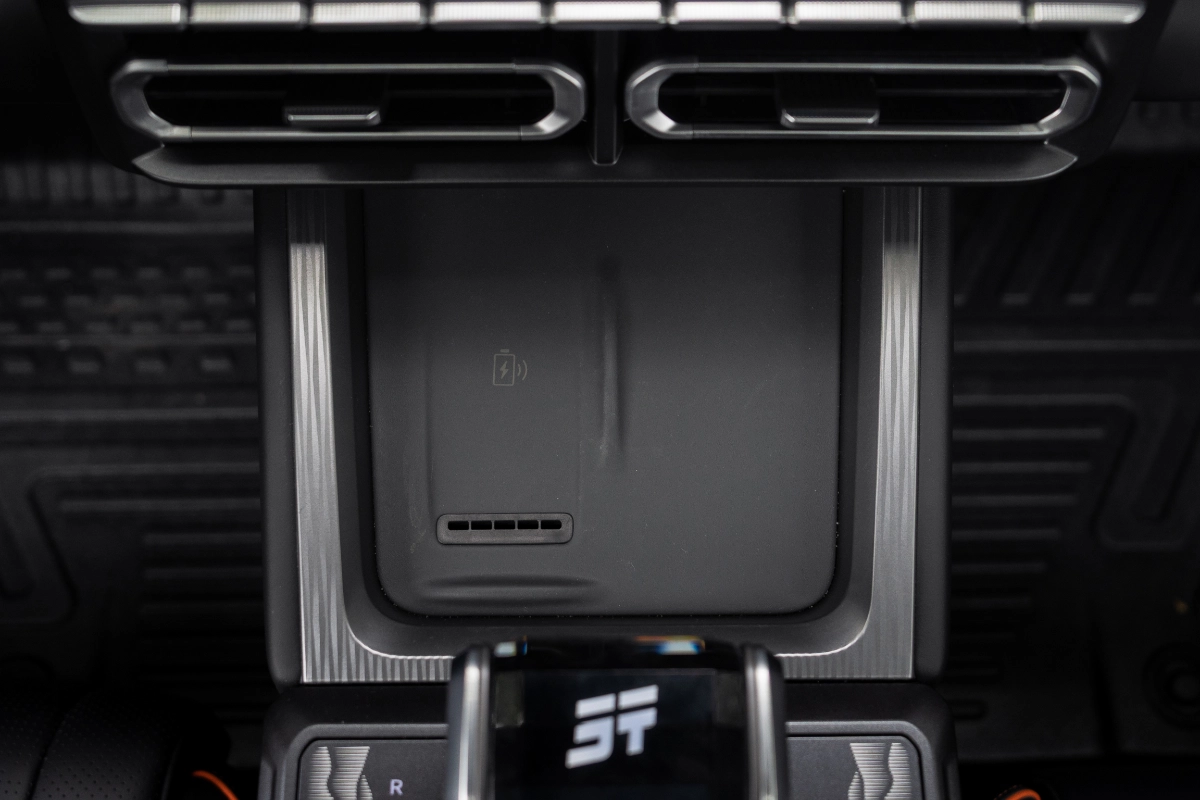
There are a few off-roading motifs scattered throughout the cabin, such as mountain or dune decals by the wireless charging pad and a grab handle for the front passenger. Again, these did not really prompt me to head for the great outdoors, but they weren’t eyesores, either.
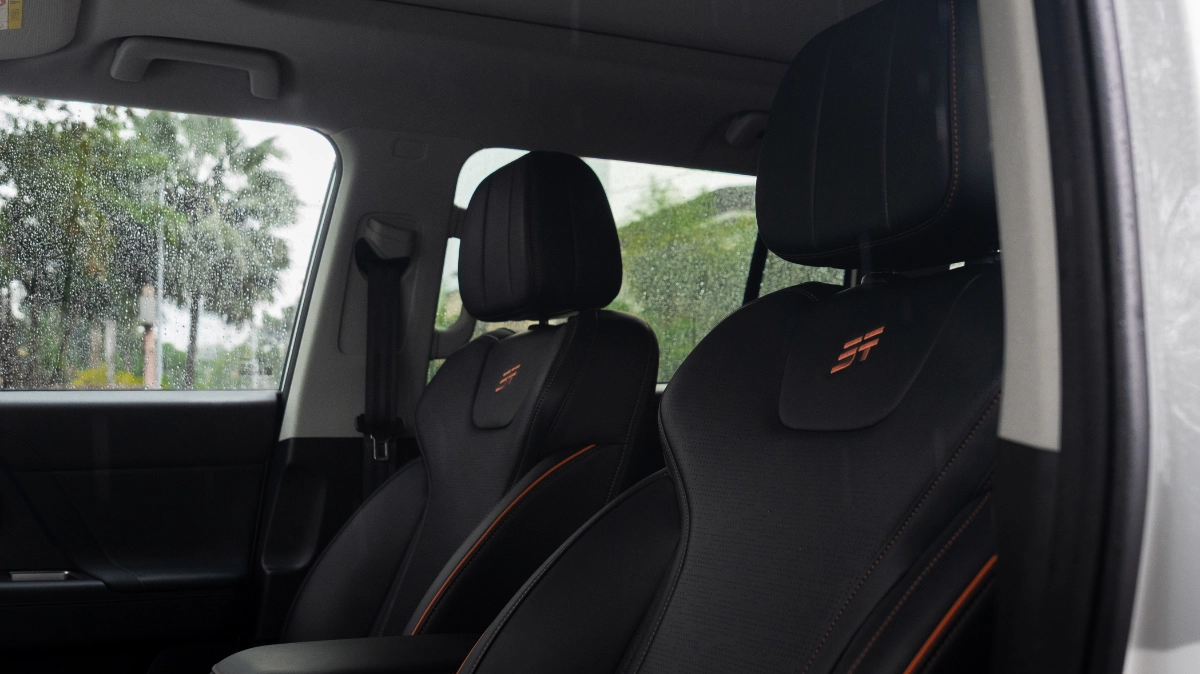
More important, they didn’t get in the way of T1’s cabin comfort. The seats were delightfully soft, with decent legroom and space on the first and second rows. The driver and front-passenger seats are also ventilated for added coziness. I did have to shuffle through more than a few menu screens to engage the seat cooling, but at least the main climate controls are a row of physical buttons right below the display.
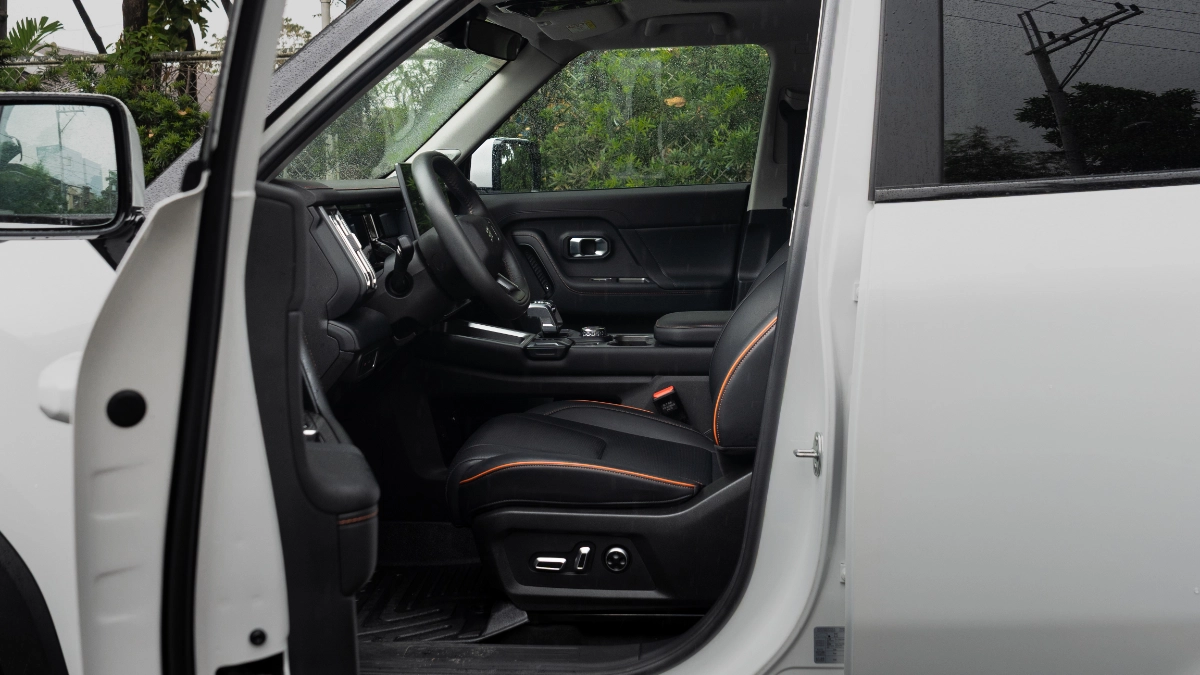
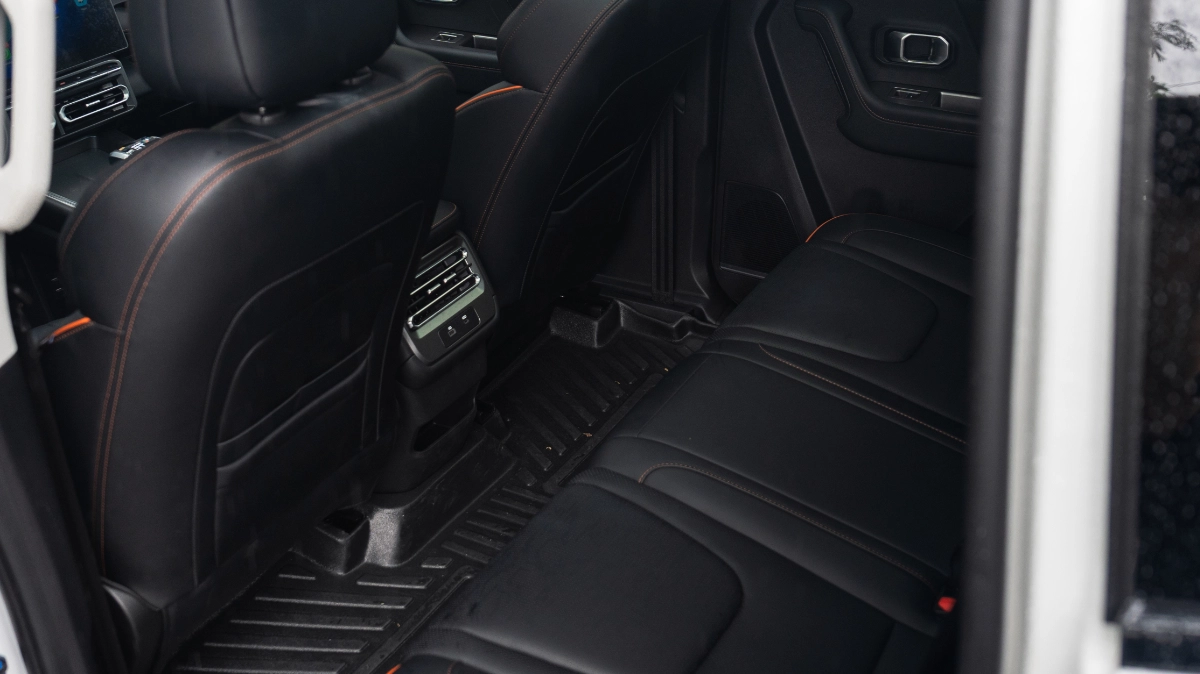
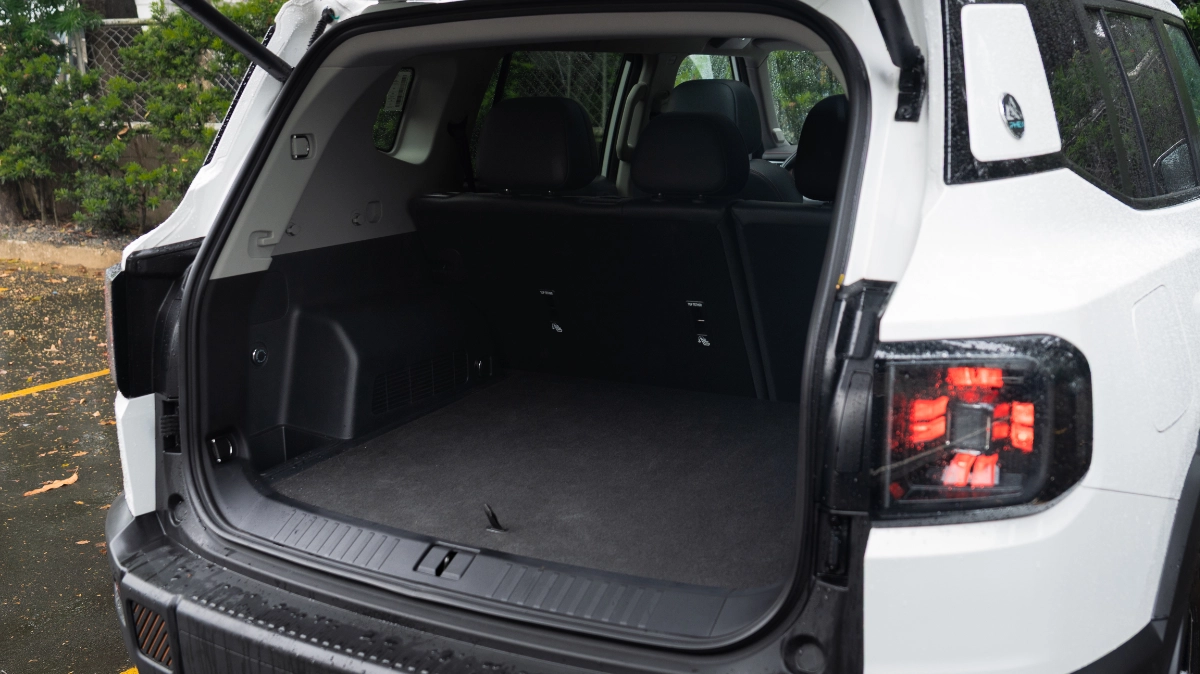
While we don’t have the exact capacity of the rear cargo area, there was more than enough space to fit a couple of backpacks, two camping chairs, and some camera equipment. Smaller families going away for the weekend should have more than enough room, both in the cabin and for their things in the back.
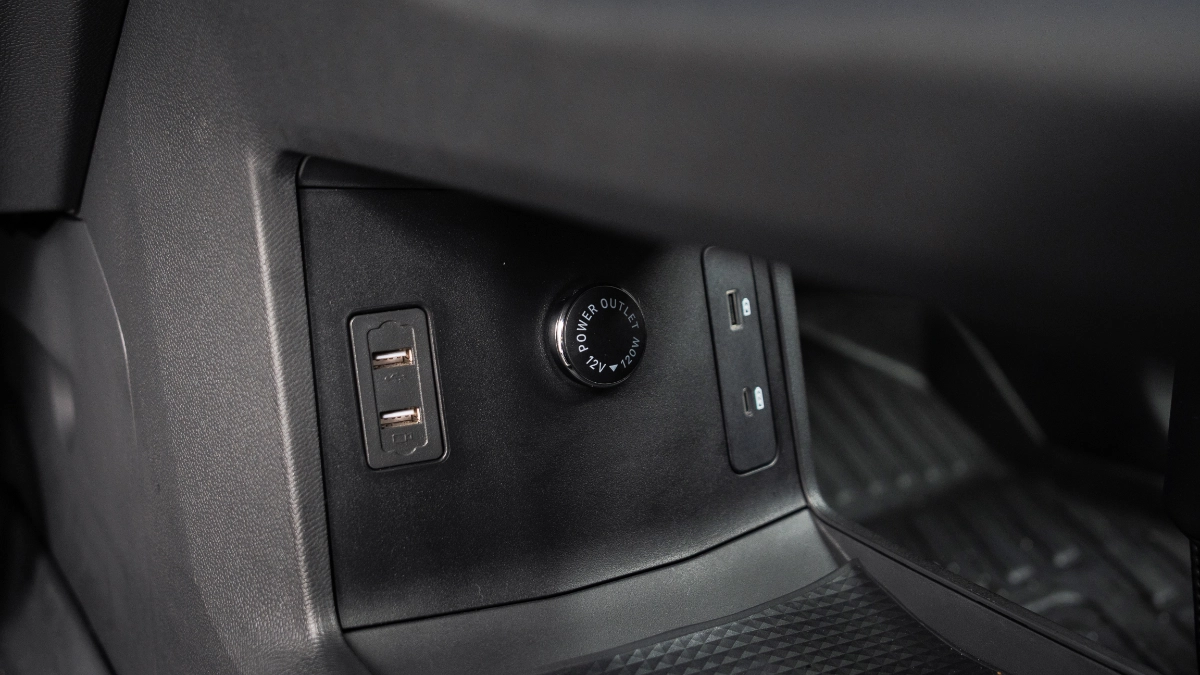
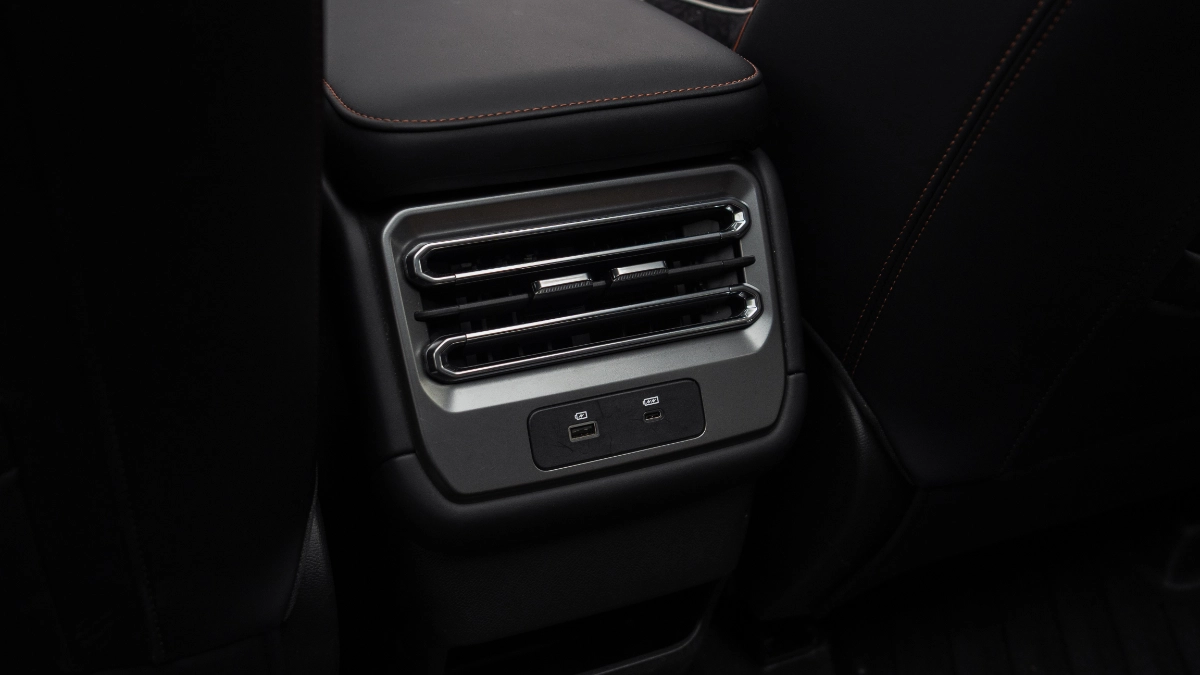
To top it all off, there are four USB ports up front and two more in the second row. With these and the wireless charging pad in the center console, all five passengers can charge a device while sitting comfortably. The nine-speaker Sony sound system is also crisp and clear.
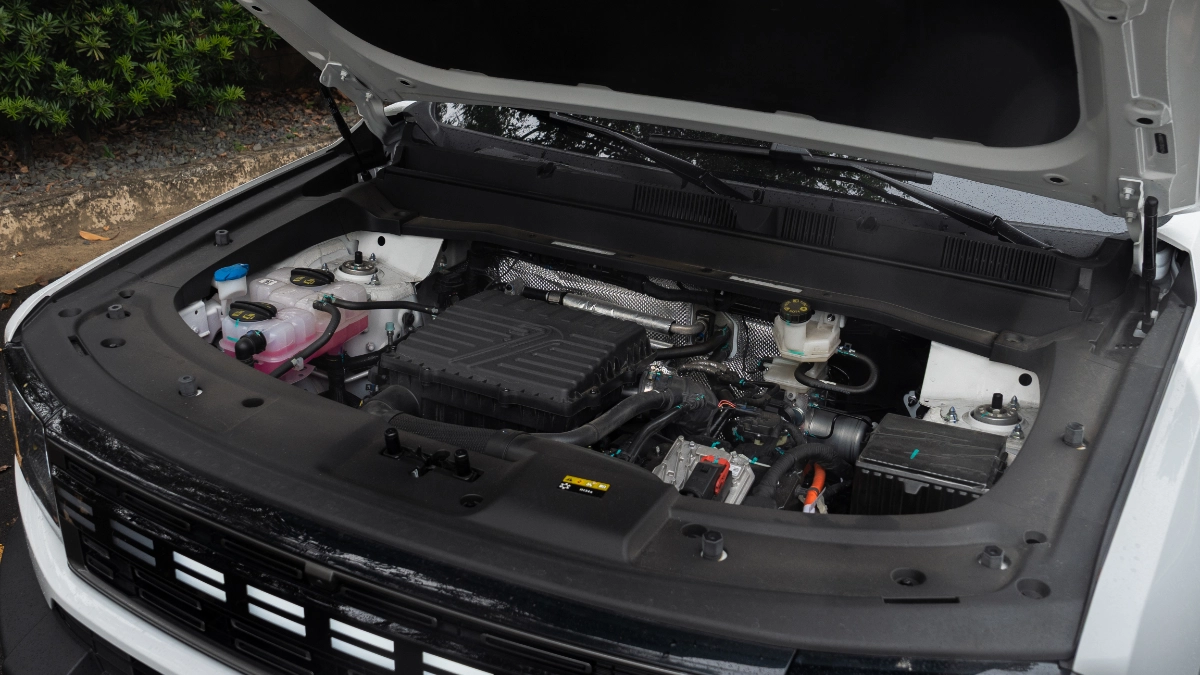
Outfitted with a single electric motor, the plug-in hybrid system of the T1 comprises a 1.5-liter engine and a substantial 26.7kWh battery. One of the biggest gripes I had with the T2 is how heavily the powertrain favored the battery, but the T1 has thankfully corrected this bias.
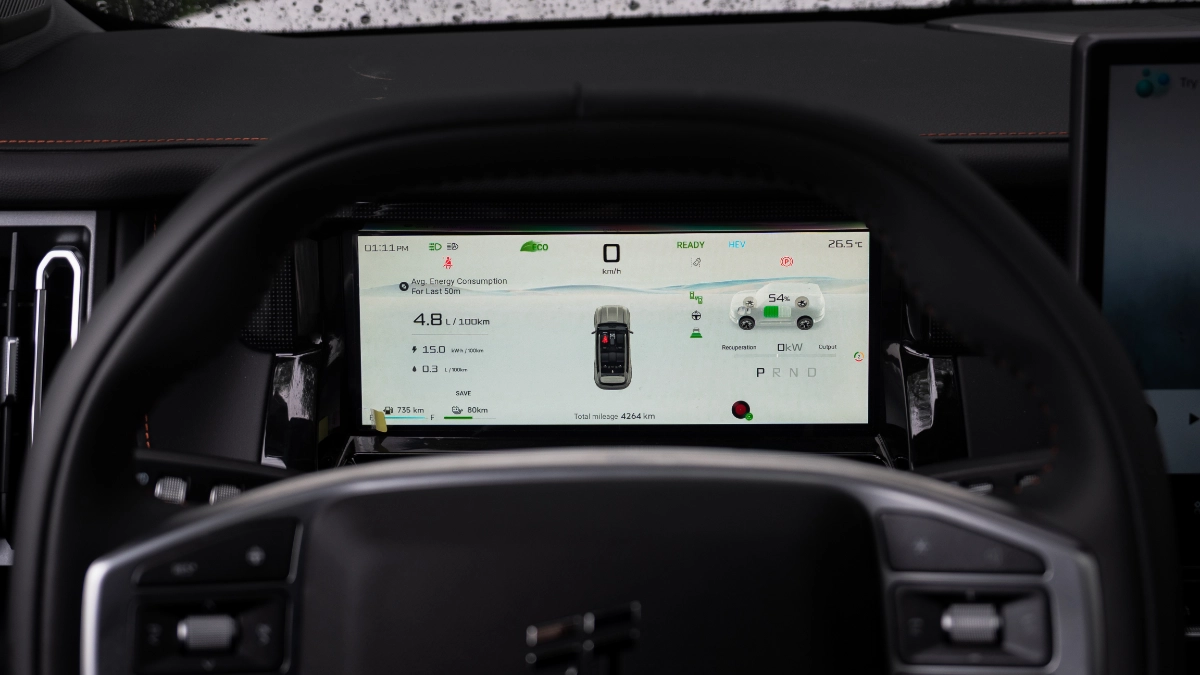
Overall, it switched between hybrid and full electric power more efficiently, ensuring that the battery never really depleted. Although this likely affected its overall fuel consumption, I never experienced any sluggishness while driving. The T1 still turned out a healthy 15.5km/L in the city, and peaked at 18.7km/L on the open highway.
Power management was fairly conservative, which is likely thanks to the single-speed dedicated hybrid transmission. It acted more like a CVT, with slower starts and decent steadiness at higher speeds. On paper, the T1’s engine is rated for 140hp and 210Nm of torque, while the motor makes 201hp and 310Nm. It sounds punchy, but again, the transmission tames the ride. Sport mode didn’t make too much of a difference, but at the same time, I didn’t have the road conditions to go flat out with the T1.
I mostly left it in Eco and enjoyed the battery power while it lasted. Jetour advertises the T1 with up to 110km of electric range, and over 1,200km when combined with the gasoline engine. These figures can likely be achieved with the right roads and traffic, but within Metro Manila, the T1 should be able to drive around 70km on just electric power before needing to work with the engine. That’s still more than enough for a city drive.
Along with a much more composed powertrain, the T1 also has better driving dynamics than most of its stablemates. The SUV’s throttle response and braking are more aptly tuned, responding without delays.
After finding my proper driving position, viewing angles were on point—overall, the car has great visibility from the cockpit. This made maneuvering much easier, and I didn’t really find myself relying on the 540-degree camera system. Turning into tighter roads wasn’t too difficult, nor was sliding into smaller parking spaces.
The suspension is on the softer side, which keeps its ride rather comfortable. The 160mm of ground clearance is enough to absorb most potholes and road imperfections, but without having the compact T1 tower over traffic. It drives quietly and stays lowkey—up until the light bar engages and calls for attention.
Speaking of silence, NVH suppression was great throughout our time with the T1. Jetour has outfitted the SUV with five layers of glass, and it does a good job of keeping the noise out. While the engine wasn’t used for long stretches, I didn’t notice much vibration coming from the car’s front half. Combined with the decently cushioned seats, falling asleep in the backseat is not a difficult task whatsoever.
The T1 features a dedicated Nap Mode, which is tucked away behind the screens of other settings. When this function is engaged, the driver’s seat will automatically recline, and serene-sounding music will be played over the speakers. The main screen will then display a babbling brook, or another peaceful scene of nature, and drivers can take an air-conditioned rest without using any fuel.
After napping, motorists can hit the road supported by a full suite of advanced driver-assist systems. Common features such as adaptive cruise control, lane-departure functions, and collision warnings are all on board. Wireless Apple CarPlay and Android Auto are also loaded in. For the outdoorsmen, the T1 has V2L capabilities, but it loses the T2’s bottle opener and cupholders in the rear cargo area.
As a city cruiser, the T1 checks the boxes for a plug-in hybrid crossover, but its engineering falls somewhat short of backing up its off-road-focused software. This car doesn’t need a driving mode for Snow, and one could say that its trail-inspired designs are misleading.
However, it all forms a clean look and a decently comfortable ride. Coming in at P1.798 million, it undercuts the Toyota RAV4 and the Honda CR-V by a huge margin. The T1 is even more affordable than the hybrid Toyota Corolla Cross GR-S, priced at P1.943 million. And remember, neither of these legacy brands offers plug-in hybrid vehicles in the local market. This is where Jetour has them beat, but given that it’s a relatively new brand, buyers can be rightfully apprehensive.
If you’re just looking to save fuel and obtain a green plate, there’s an abundance of electrified alternatives that aren’t necessarily PHEVs—you just have to determine which one works best for your needs. But if a plug-in hybrid powertrain is truly a nonnegotiable, the T1 is a promising option.
Price: P1,798,888
Powertrain: 1.5-liter + 26.7kWh battery and single-electric motor
Power: 140hp (engine); 201hp (motor)
Torque: 210Nm (engine); 310Nm (engine)
Layout: FWD
Seating: 5
Score: 8.5/10