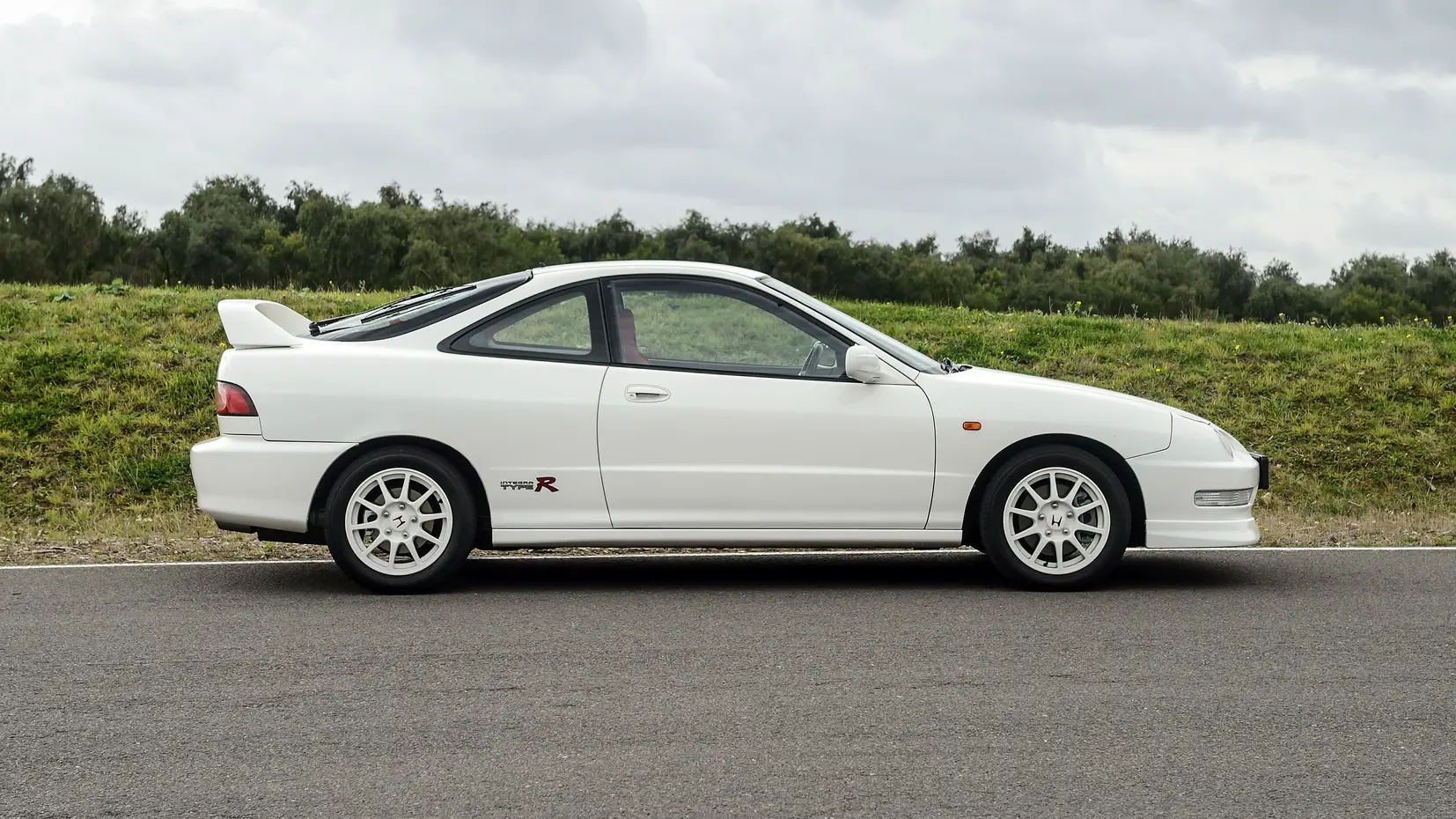
We think of the Honda Integra Type R as a quintessential ’90s legend, like Mr. Motivator or Jennifer Aniston’s hair. That it had a massive impact was thanks to its impeccable handling, razor-sharp five-speed gearbox, and hand-built 189hp 1.8-liter VTEC engine that redlined at 8,700rpm.
“There’s an overwhelming sense that this car was built to be brutally caned,” said Top Gear when we first drove the Japanese pocket rocket, which is widely seen as the finest front-drive car of all time.
Here are some things you probably didn’t know about the DC2 Integra Type R—and if you did, give yourself a little pat on the back.
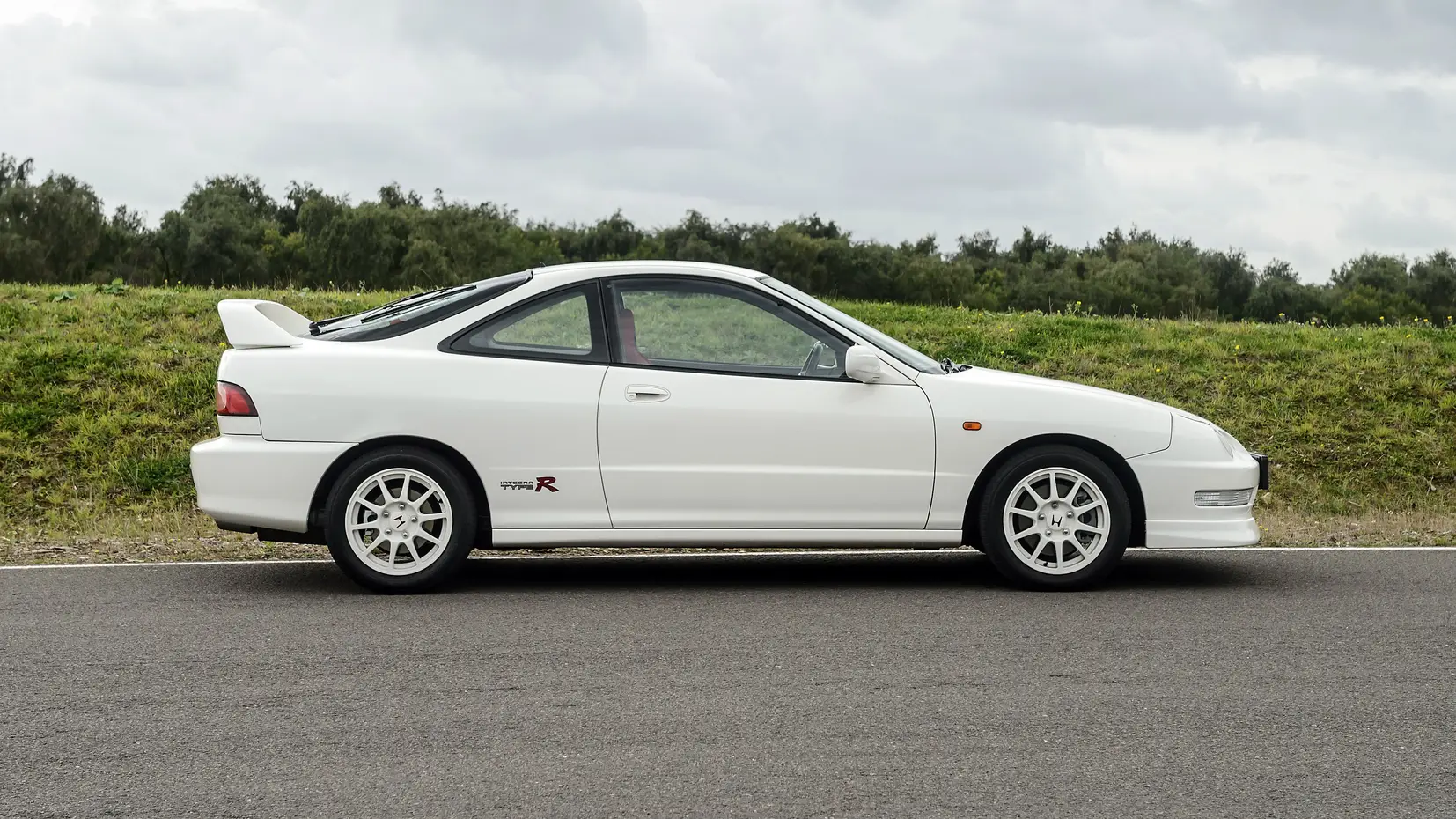
This sport coupe’s candle burned out long before its legend ever will, because this was the Type R-badged car that set the standard for every fast Honda that has since followed.
It’s hard to imagine now, but despite Honda’s many years of experience as an engine supplier in Formula 1, powering Piquet, Senna, and Mansell to five titles between them from 1987 to 1991, it wasn’t rated as a performance brand. The Type R changed all that, injecting passion into the engineering heart of the Japanese carmaker.
OTHER STORIES YOU MIGHT HAVE MISSED:
This sublime Honda Integra Type R restomod takes us right back to the ’90s
The updated Volkswagen ID.3 Neo is now the proper car it should’ve been in the first place
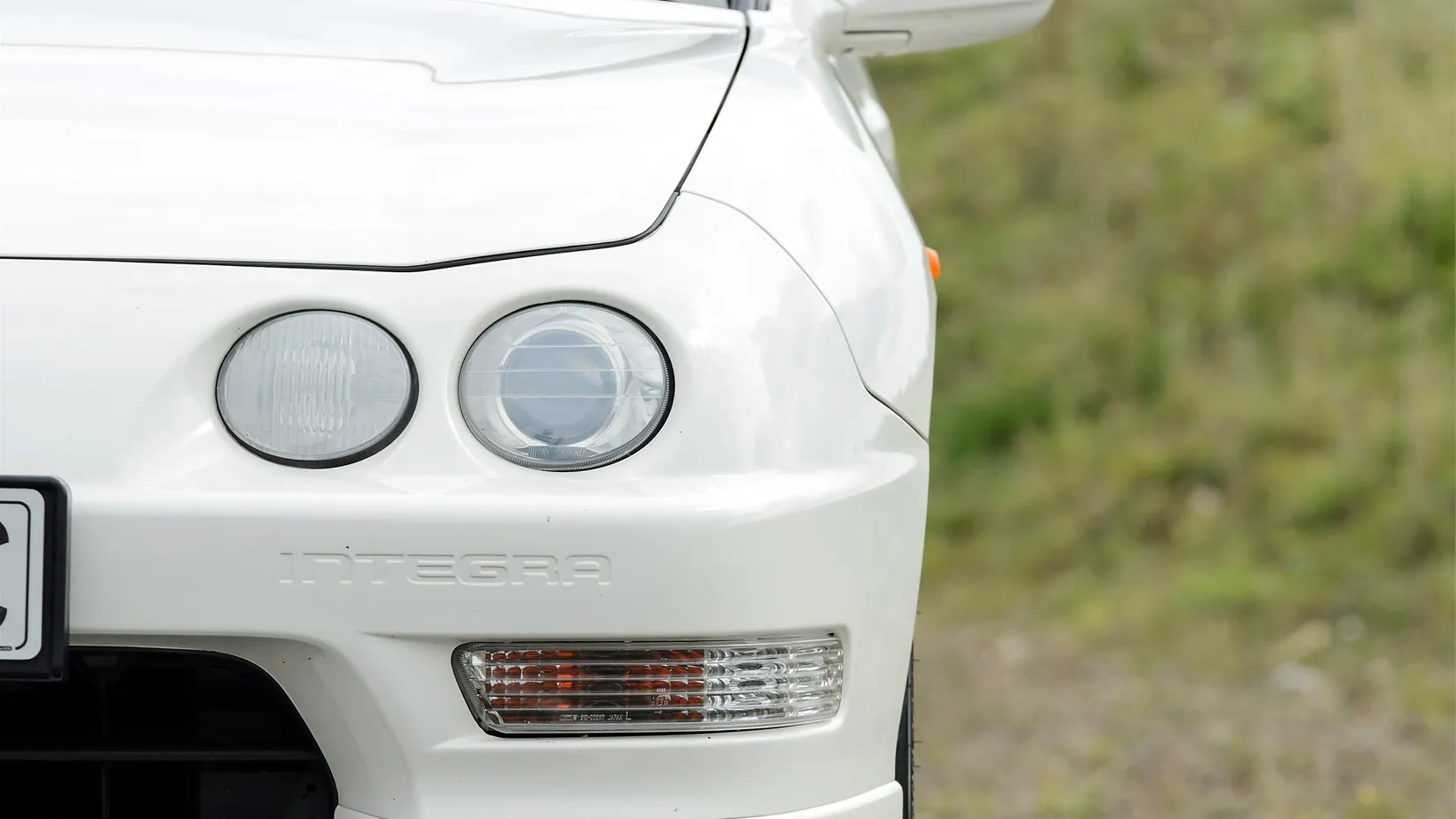
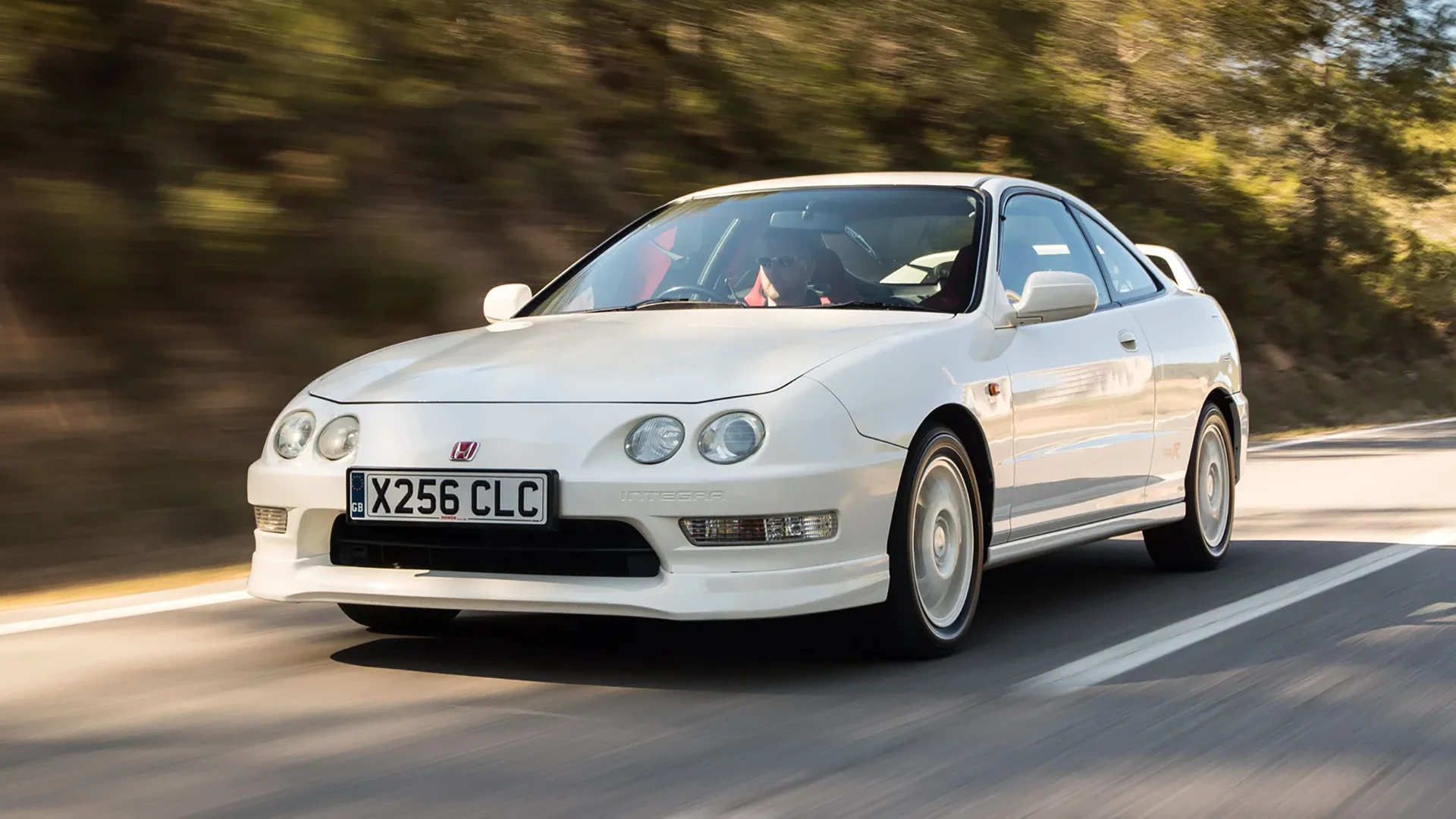
Japanese drivers really didn’t like those headlights. The standard-spec Integra initially went on sale in Japan in 1993, but the quad lights proved to be so unpopular with buyers that Honda gave the car a hasty facelift for the domestic market in 1995, when the Type R version first went on sale.
Fortunately for other markets, Honda retained the four-eyed version, which looks much more interesting. It also gives us a chance to spot the cheeky JDM imports that found their way to other countries in droves, supplementing the limited allocation for foreign markets.
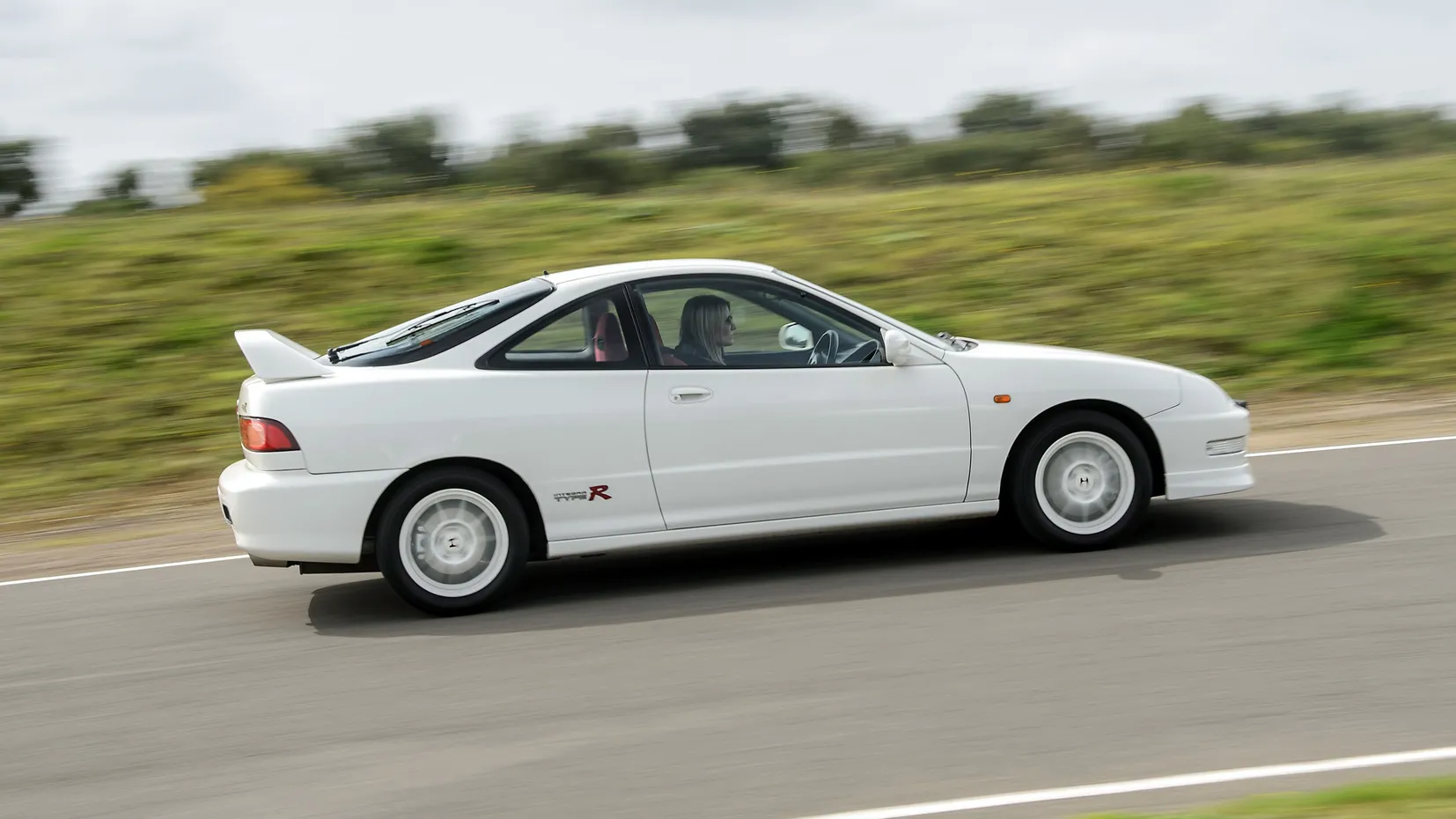
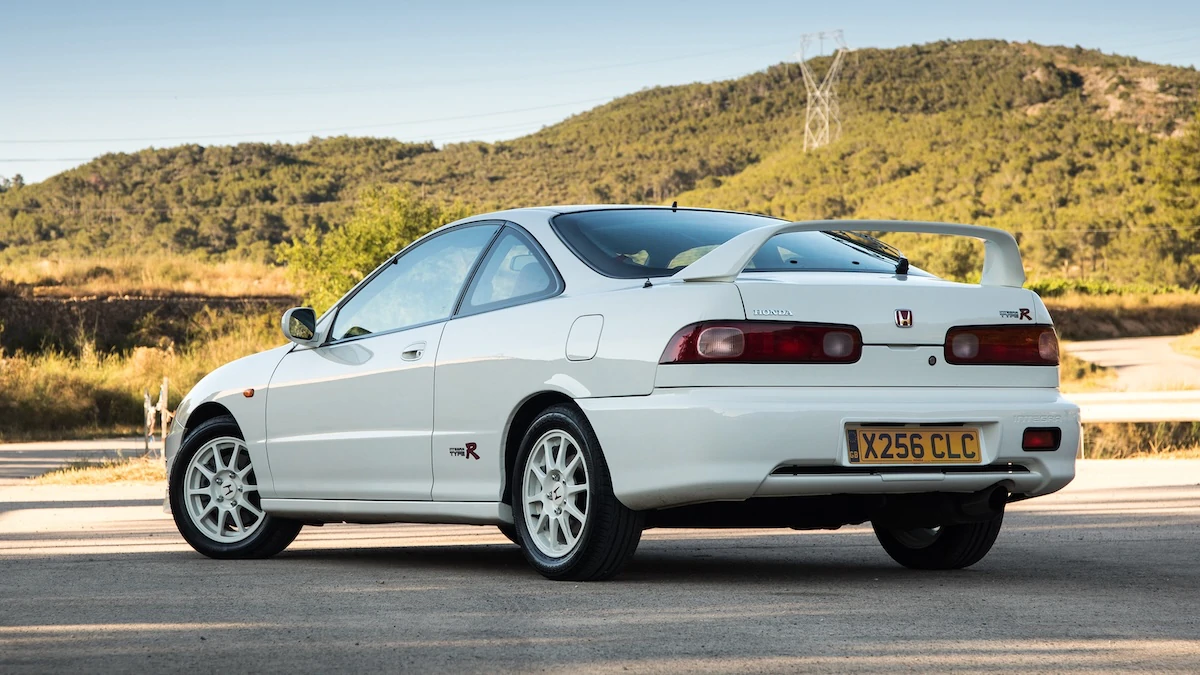
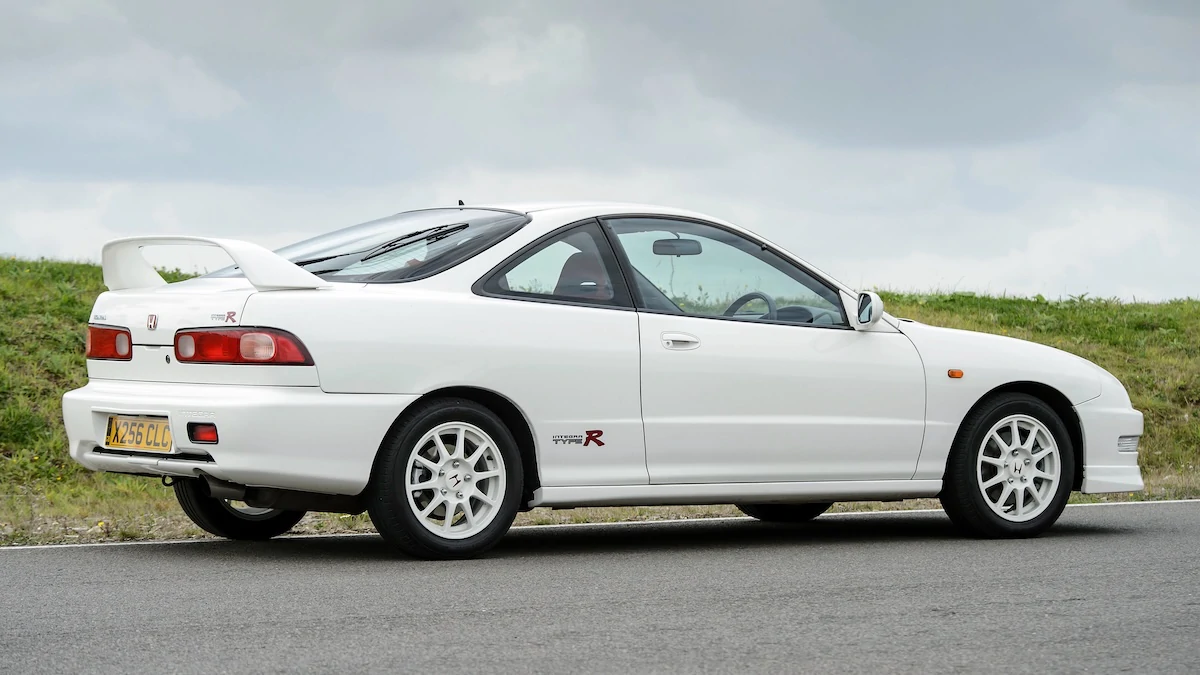
It came in any color you liked, as long as that was black, red, or white. The latter was the one to go for—Championship White intended to celebrate the company’s first F1 GP win in Mexico in 1965 with US driver Richie Ginther at the wheel.
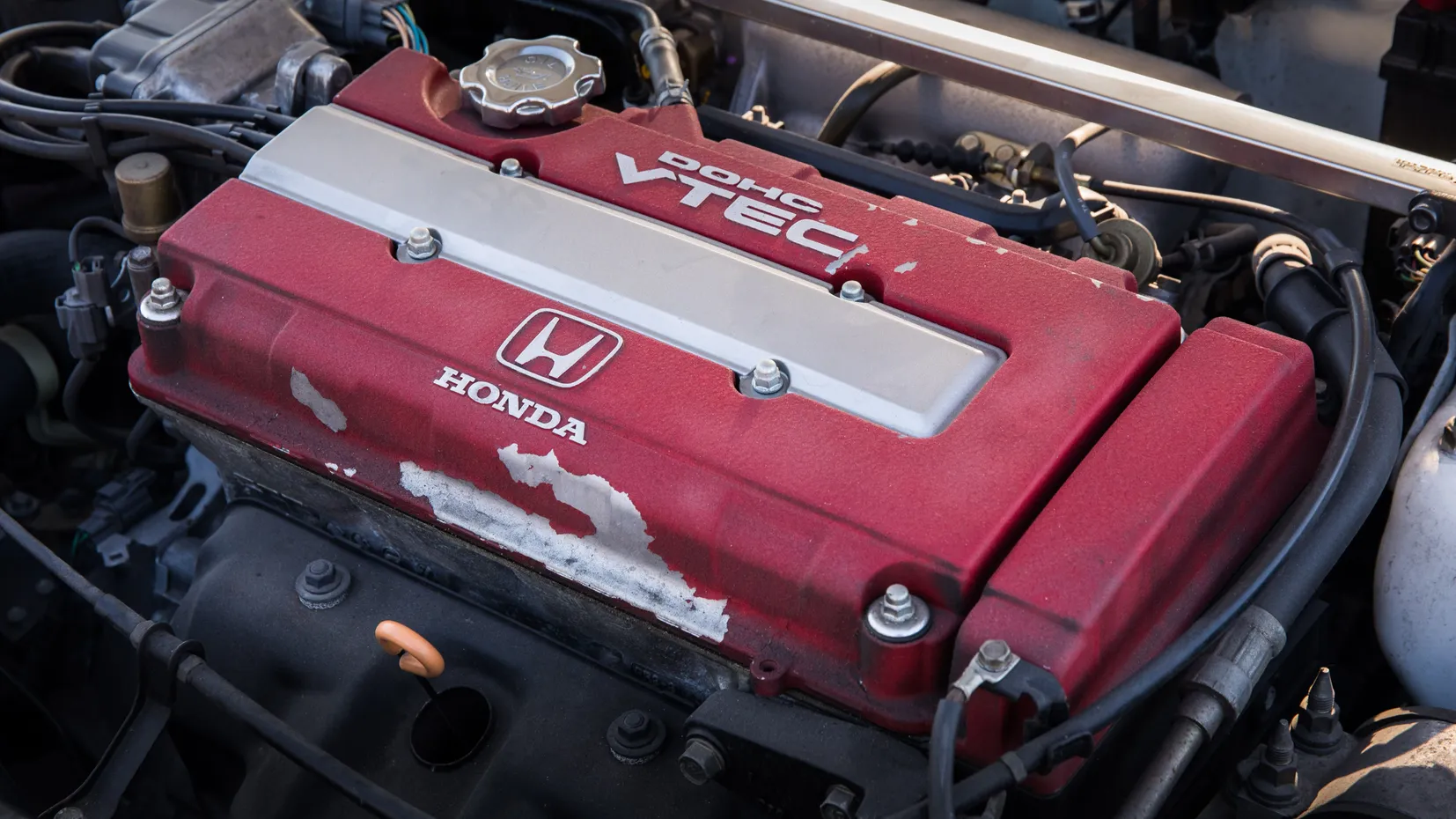
It was a carefully assembled car—Honda was limited to building 25 a day because of details like the hand-polished intake ports. Bespoke inlet valves, an enlarged throttle body, and the helical LSD showed Honda meant business, but with 187hp at 8,000rpm, you already knew that.
This car is from the Honda heritage fleet—the paint might be peeling off the 20-year-old engine block, but the VTEC still knows how to kick in, yo.
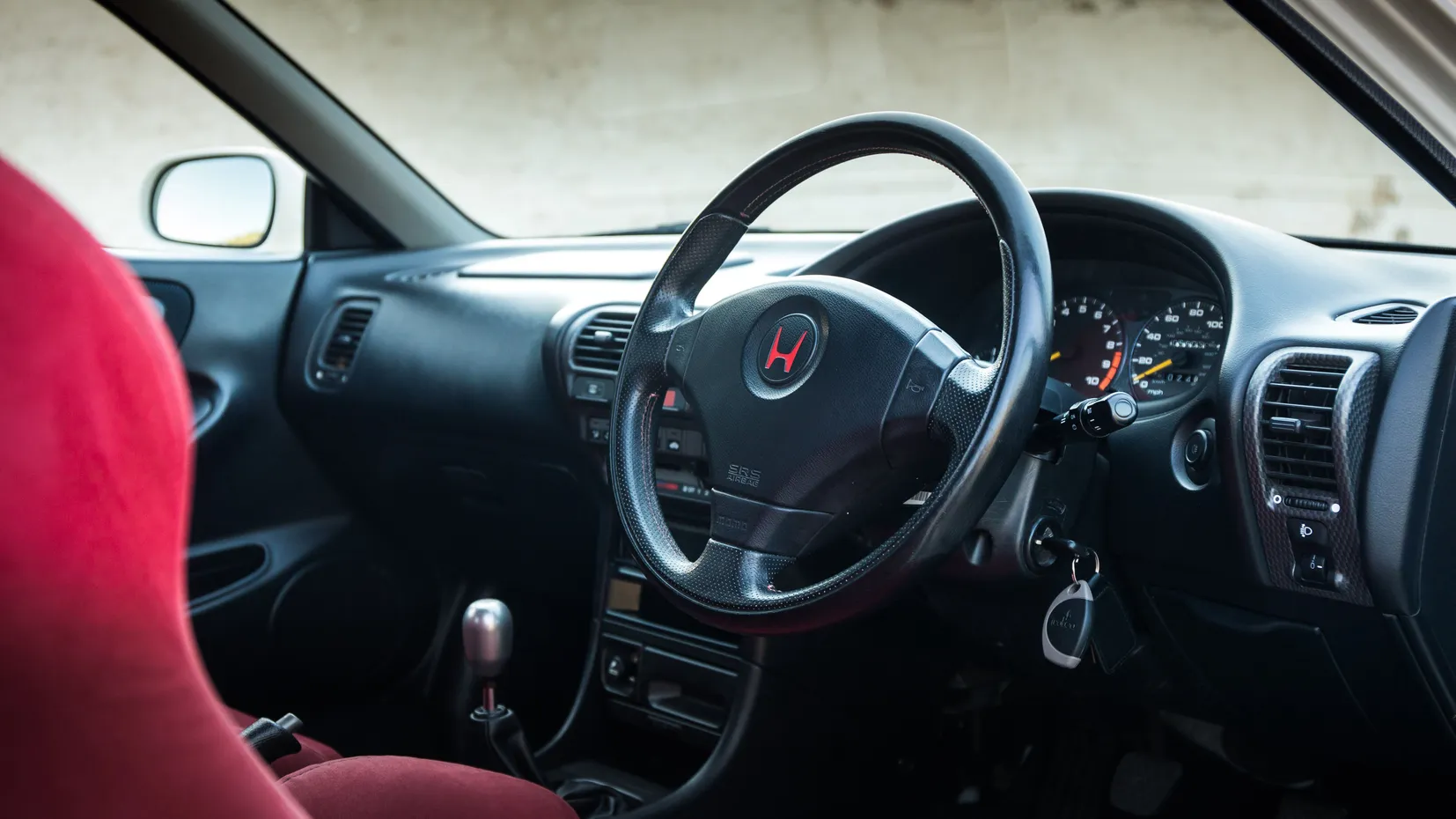
Compared with modern hot hatches that feel the need to scream their souped-up status, the Integra Type R is by comparison fairly muted. A bespoke bodykit on the outside, but vast swathes of gray plastic from the standard Integra on the inside, boosted by fancy bucket seats, a short-throw gearshifter, and red Honda badging.
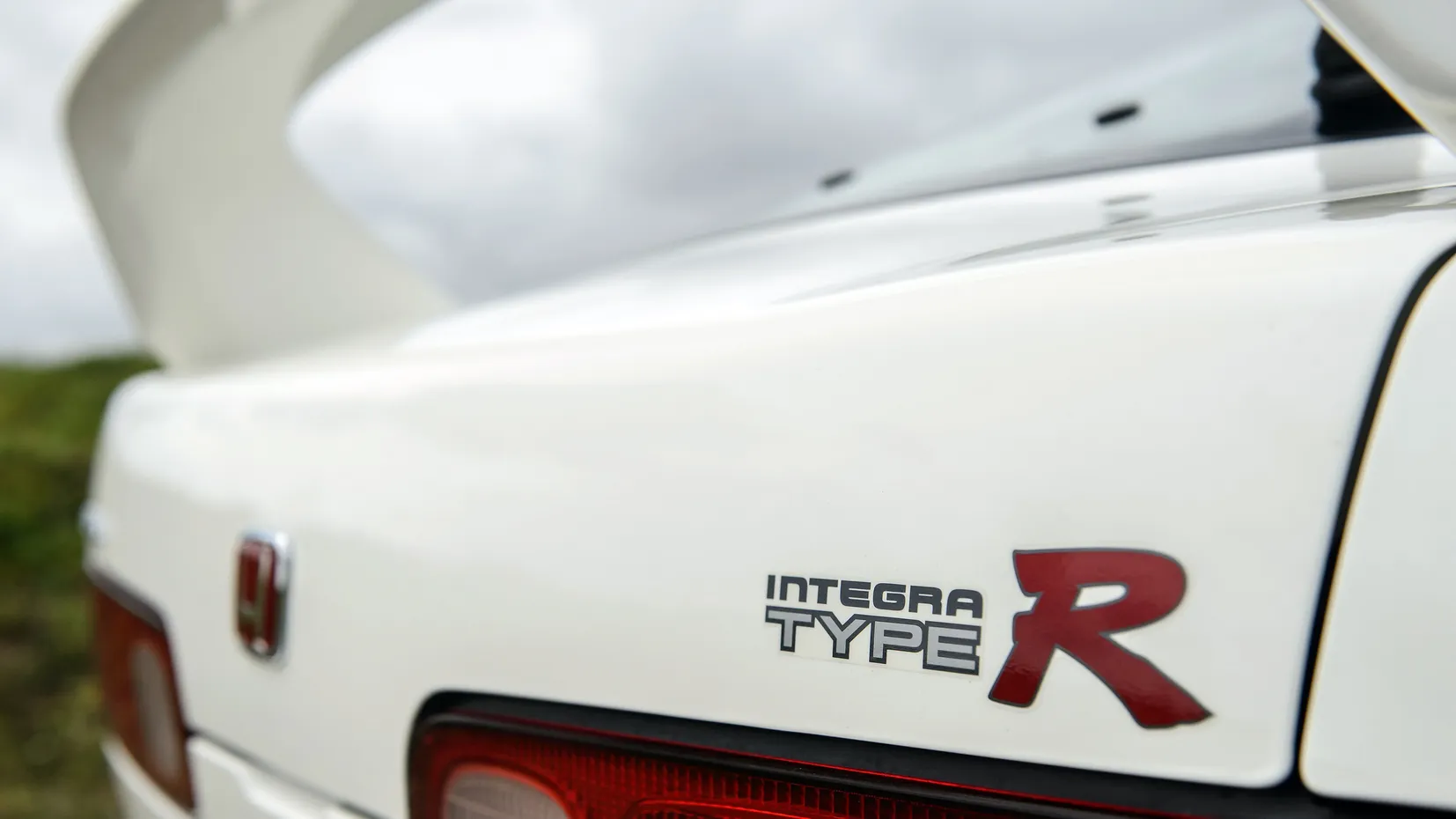
Don’t be fooled, though: Honda put in the detail work where it counted. The rear wing wasn’t just for show—it reduced lift at the back of the car by 30%, and the sculpted aero lip under the front bumper also helped keep the car stable at speed. To improve the driving experience, there were additional spot welds on the chassis to boost stiffness, as well as aluminum strut braces.
The 1,140kg curb weight is the stuff of dreams these days—Honda engineers shaved 39.97kg off the already-slim Integra GS-R despite all the extra welding and added internal bracing, helping the car hit 96ph in 6.5sec and on to 230kph.
The windshield glass was 10% thinner, lighter 15-inch wheels fitted, and the sound deadening removed from inside the cabin to cut down on heft. The sunroof, air-conditioning, cruise control, and rear wiper were all ditched to save weight.
NOTE: This article first appeared on TopGear.com. Minor edits have been made.