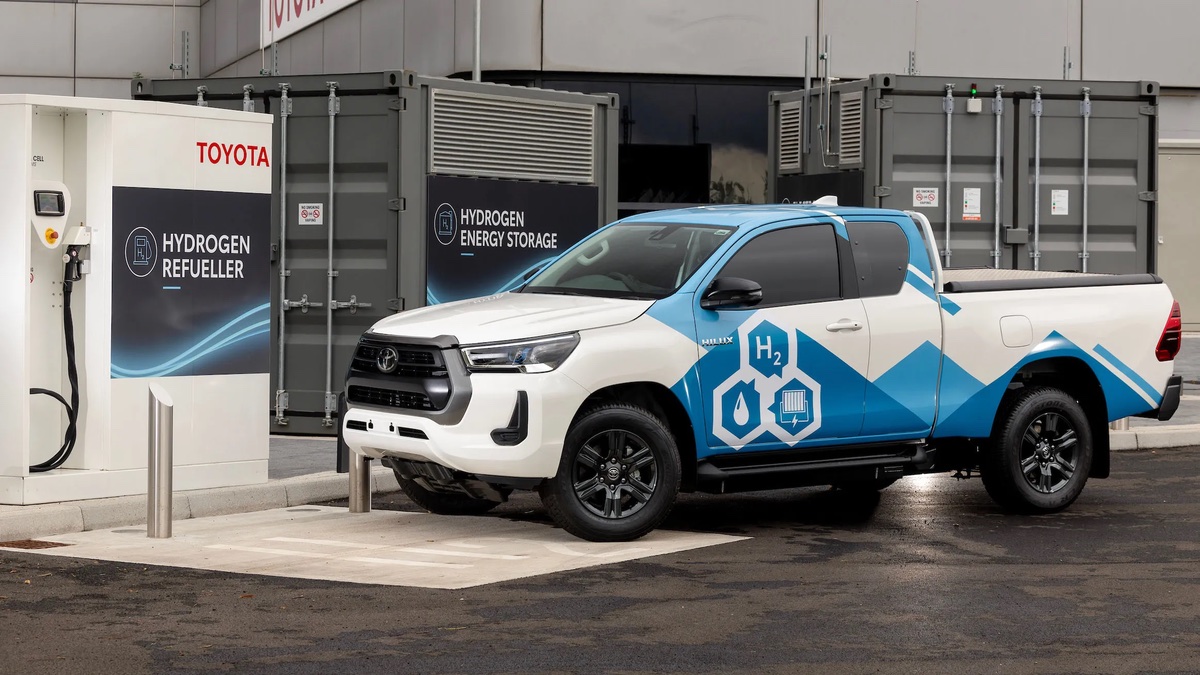
Toyota’s plan to begin production of the hydrogen-powered Hilux in Thailand is gaining traction. As reported by Nikkei Asia, Toyota recently received approval for incentives related to its 1.49 billion Thai baht (almost P2.8 billion) investment to build a production line for the Toyota Hilux hydrogen fuel cell electric vehicle (FCEV).
Production will reportedly take place at the automaker’s Ban Pho plant beginning in December 2027, using one of the existing Hilux production lines as a base. Initial batches of the Hilux FCEV will be exported to markets such as Europe, Australia, and New Zealand.

Toyota remains one of the few automakers actively pursuing FCEVs, deploying the technology in various applications ranging from commuter buses to a Dakar Rally competitor. Meanwhile, development of the Hilux FCEV was publicly announced in 2022, with prototypes revealed two years later. The 2024 Toyota Hilux FCEV prototype had an estimated 600km of range, along with a powertrain rated at 180hp and 299Nm of torque.
OTHER STORIES YOU MIGHT HAVE MISSED:
The next-gen Toyota Corolla will be built in China, starting 2028
Toyota Motor Philippines previews Tamaraw MPUV at Santa Rosa, Laguna plant
Last month, Toyota UK also confirmed that the Hilux FCEV would be debuting in 2028, with the production version targeting 400km of range and 2,500kg of towing capacity. It is also expected to take on the styling of the current-generation Hilux rather than the previous-generation look on the prototypes. No estimates on power figures were provided in the announcement.

As of writing, no information is available on the Toyota Hilux FCEV’s introduction to the Southeast Asian market. However, given Thailand’s central proximity in the region and the Hilux’s status as a market mainstay, an ASEAN launch is likely further down the line.
Obstacles to a regional rollout could include the lack of hydrogen-refilling infrastructure and limited consumer awareness regarding the technology—similar issues experienced by electrified vehicles prior to their surge this year.