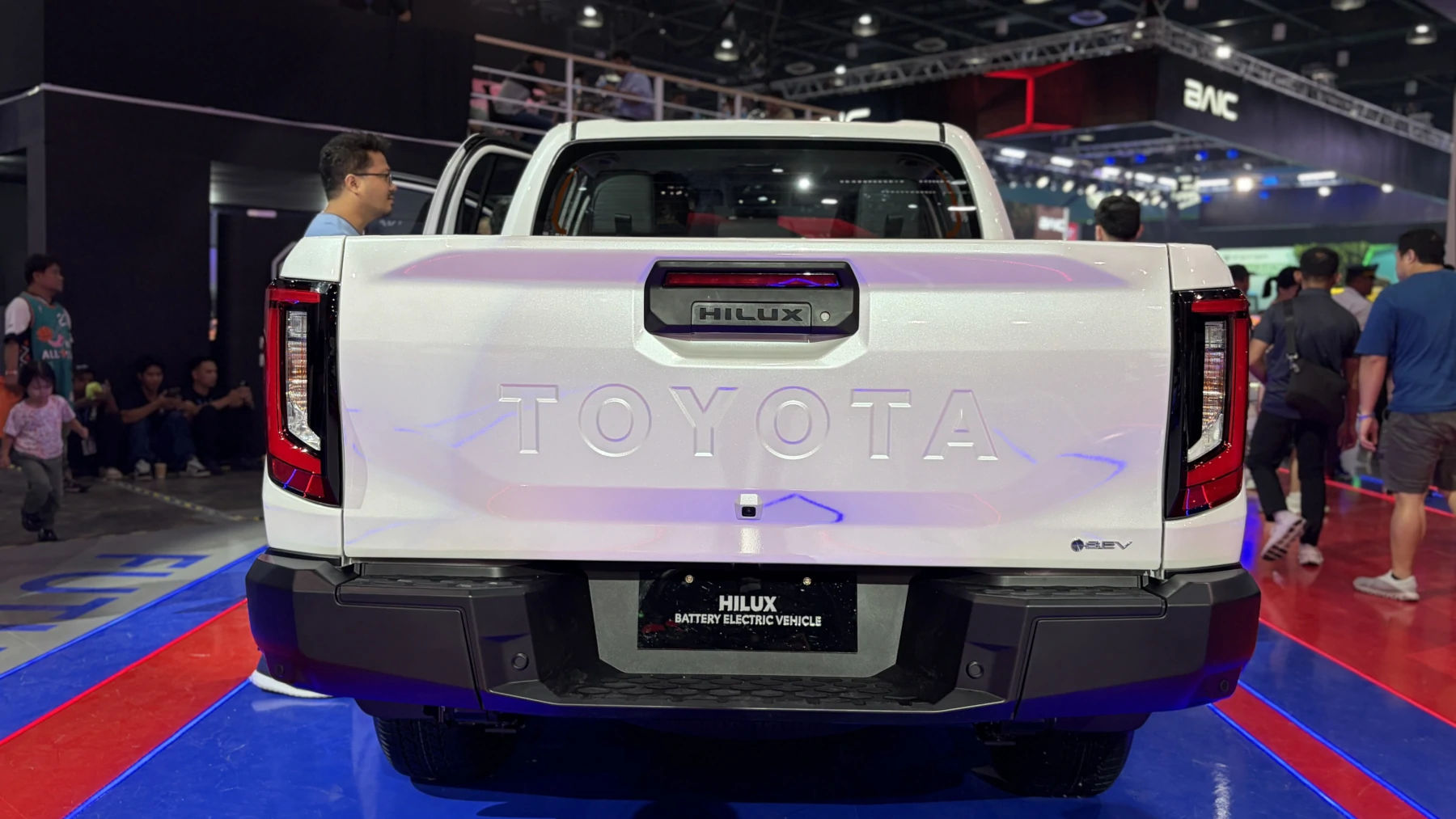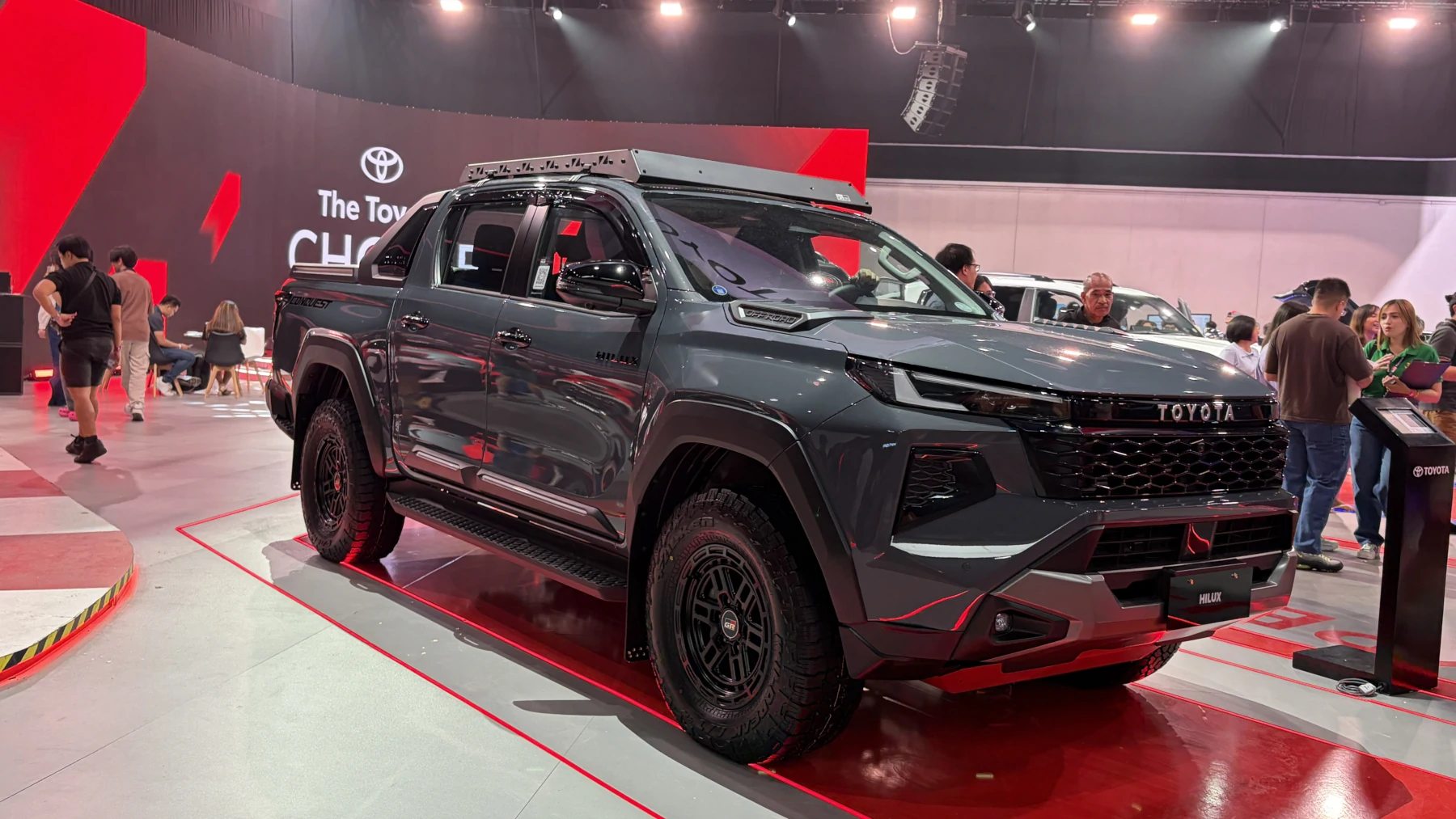
The ninth-generation Toyota Hilux has officially reached our shores. Debuting at the 2026 Philippine International Motor Show (PIMS) alongside the Land Cruiser FJ and the Land Cruiser HEV, the all-new Hilux receives a slew of updates, including an entirely new BEV option.
After Toyota released photos of the new Hilux, it immediately received mixed reactions regarding the design. Admittedly, it does take some getting used to. Although the previous generation also got mixed reactions when it first came out, that same design later gave us the Hilux GR-S, arguably one of the best-looking modern pickups you can get. So let’s give the ninth generation some time to settle in.
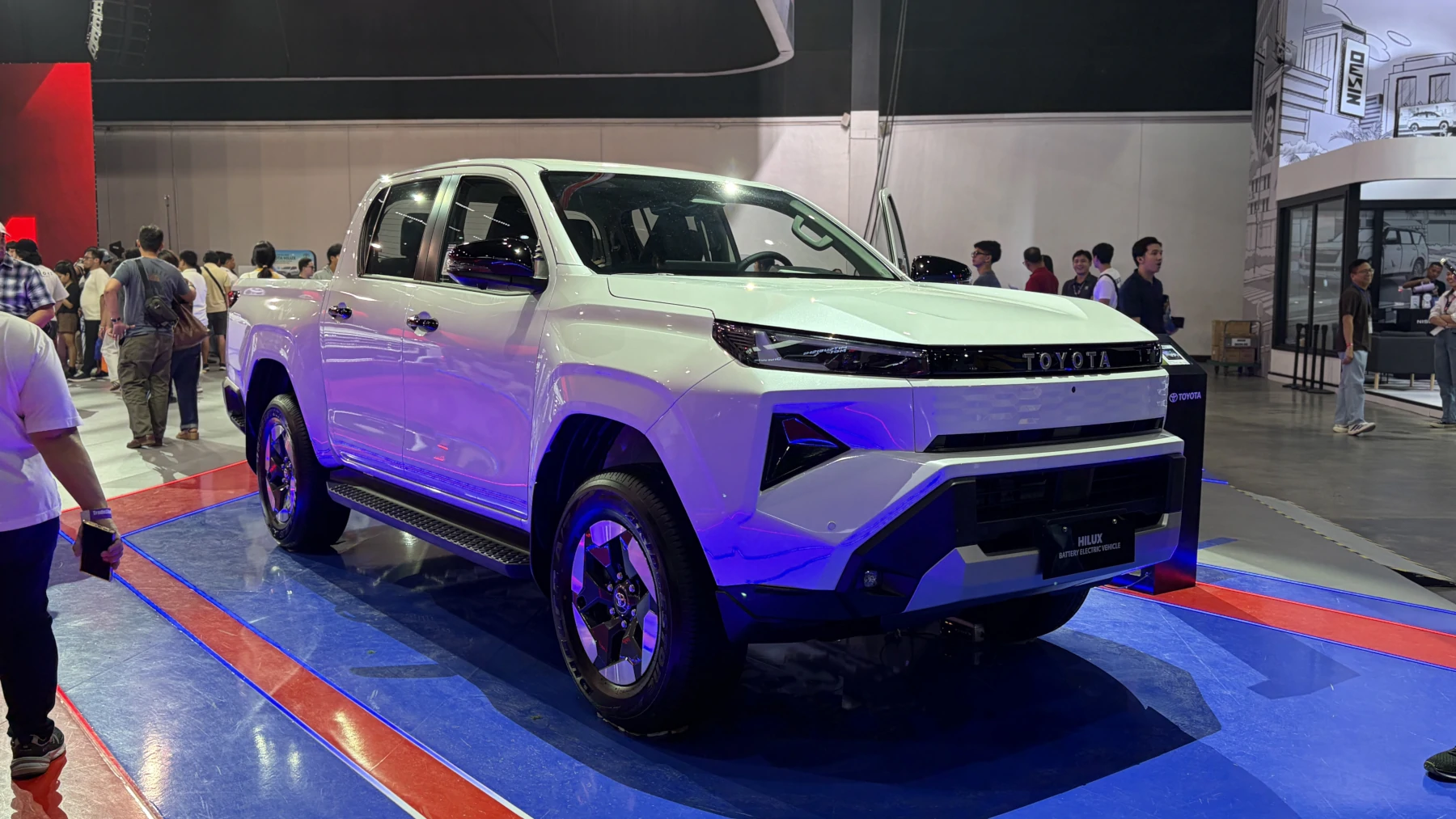
Aside from the looks, the new Hilux does get a whole lot of interior updates and safety features. Toyota kept what worked from the outgoing Hilux, like the ladder frame and the engine, but also added new tech like Toyota Safety Sense 3.0. We’ll talk more about this in a bit, but first, let’s talk about the price.
OTHER STORIES YOU MIGHT HAVE MISSED:
Trio of manual-transmission Subaru models confirmed to launch by 2027
Heads-up: MRT-3 will offer free rides on June 12, 2026
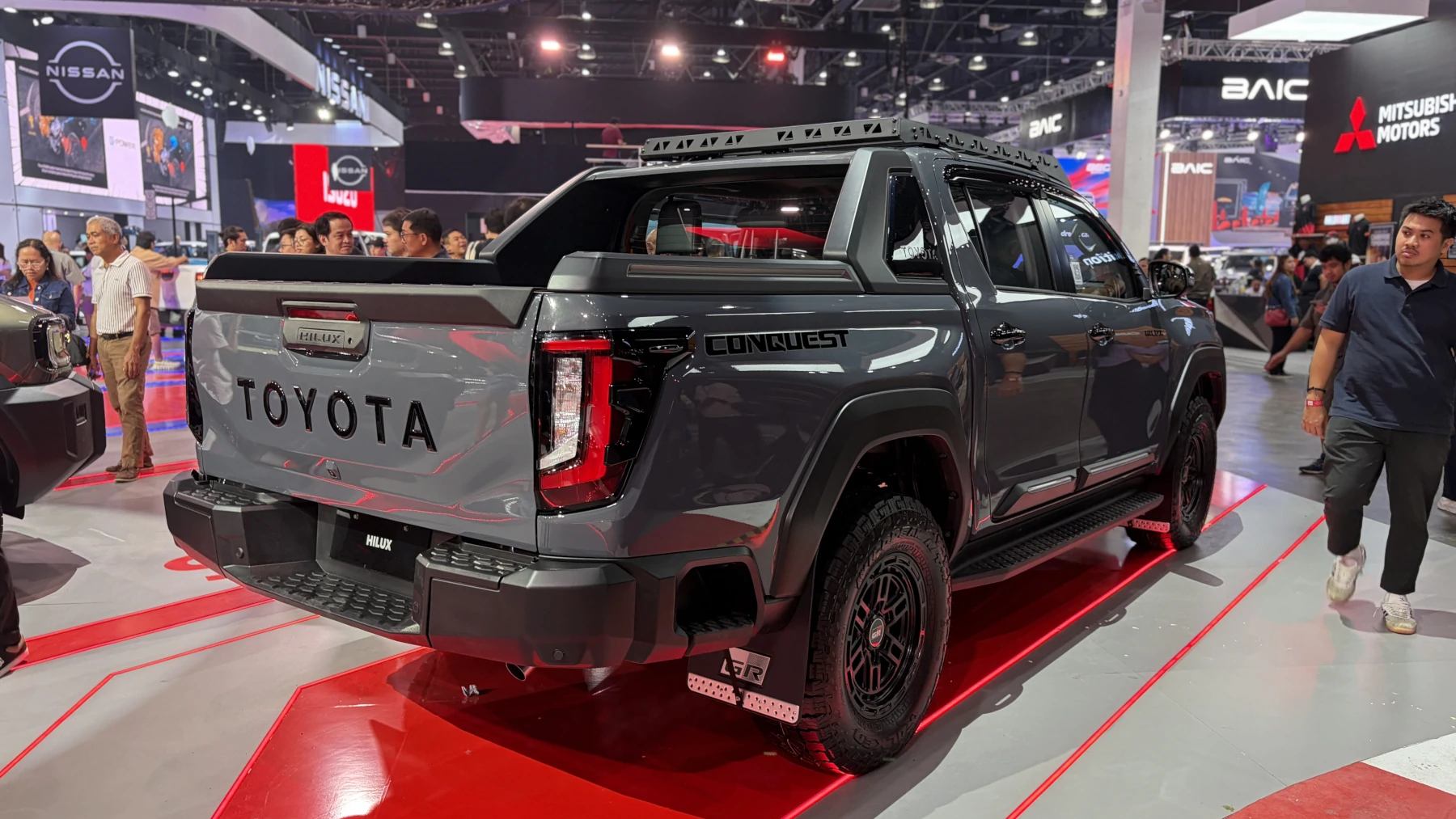
The diesel version of the new Hilux has seven variants from the 4×2 E variant to the top-of-the-line 4×4 Conquest. Though the Hilux presented at PIMS was equipped with Gazoo Racing parts, there’s no GR-S variant for the ninth generation yet.
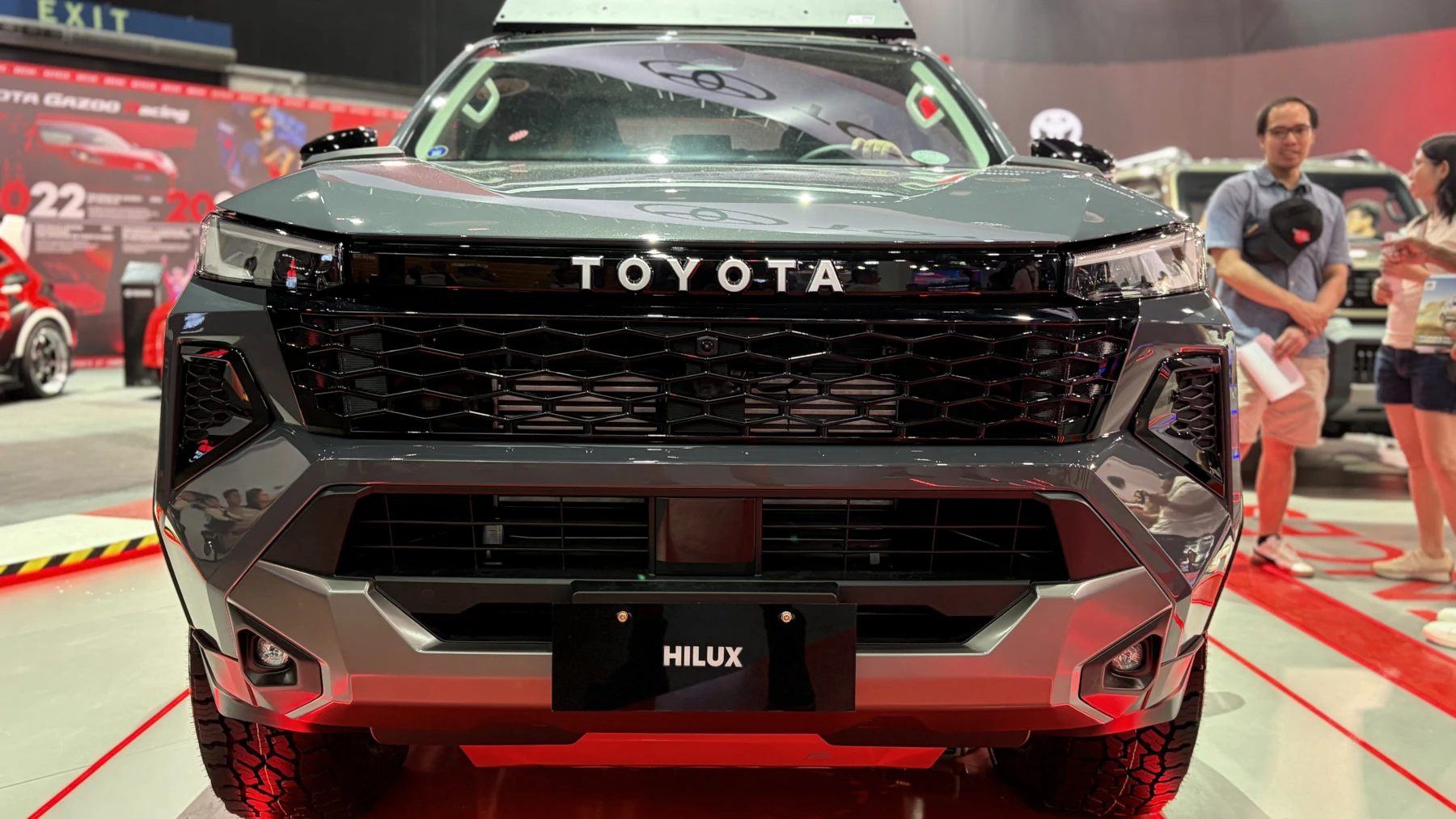
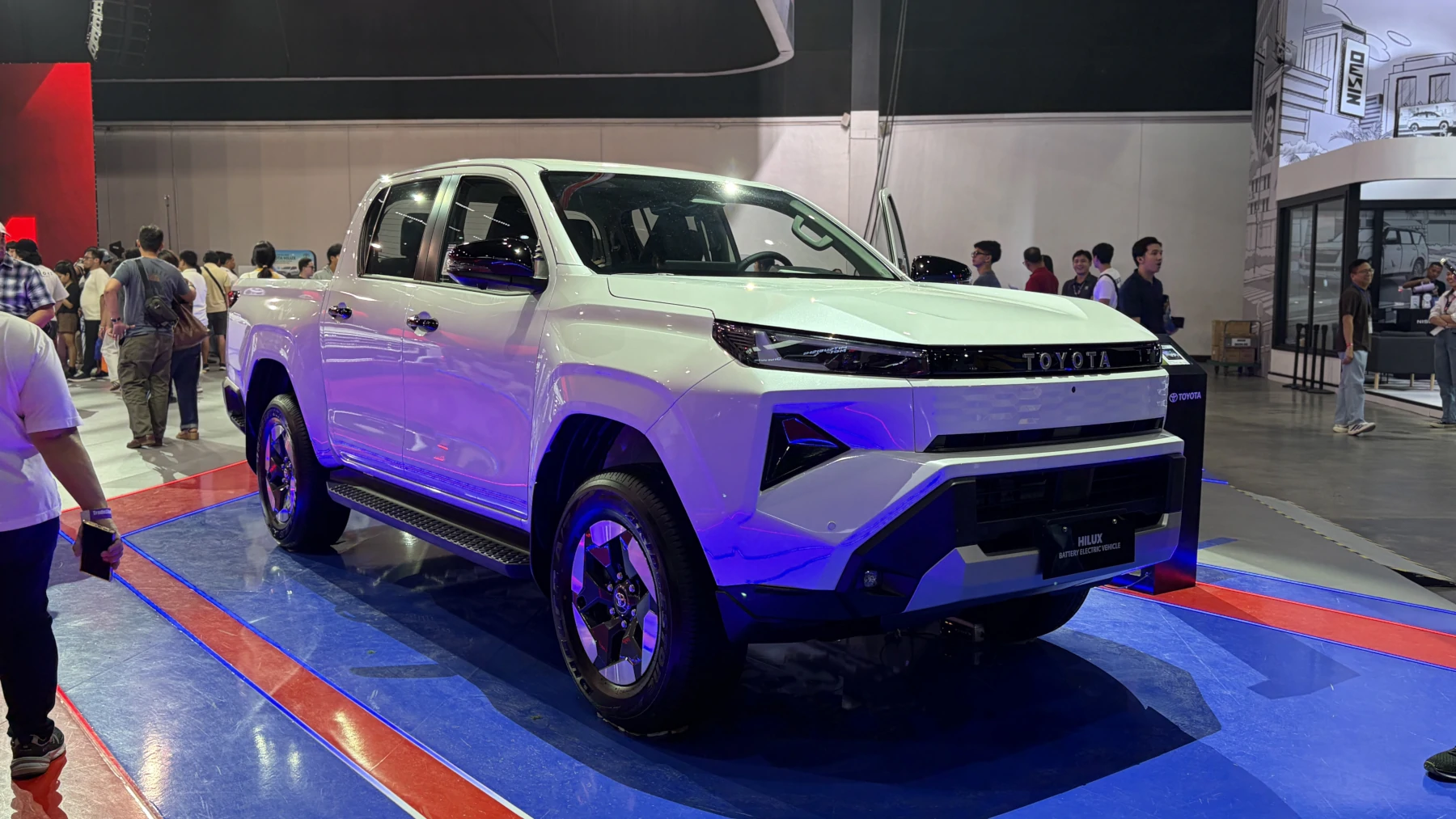
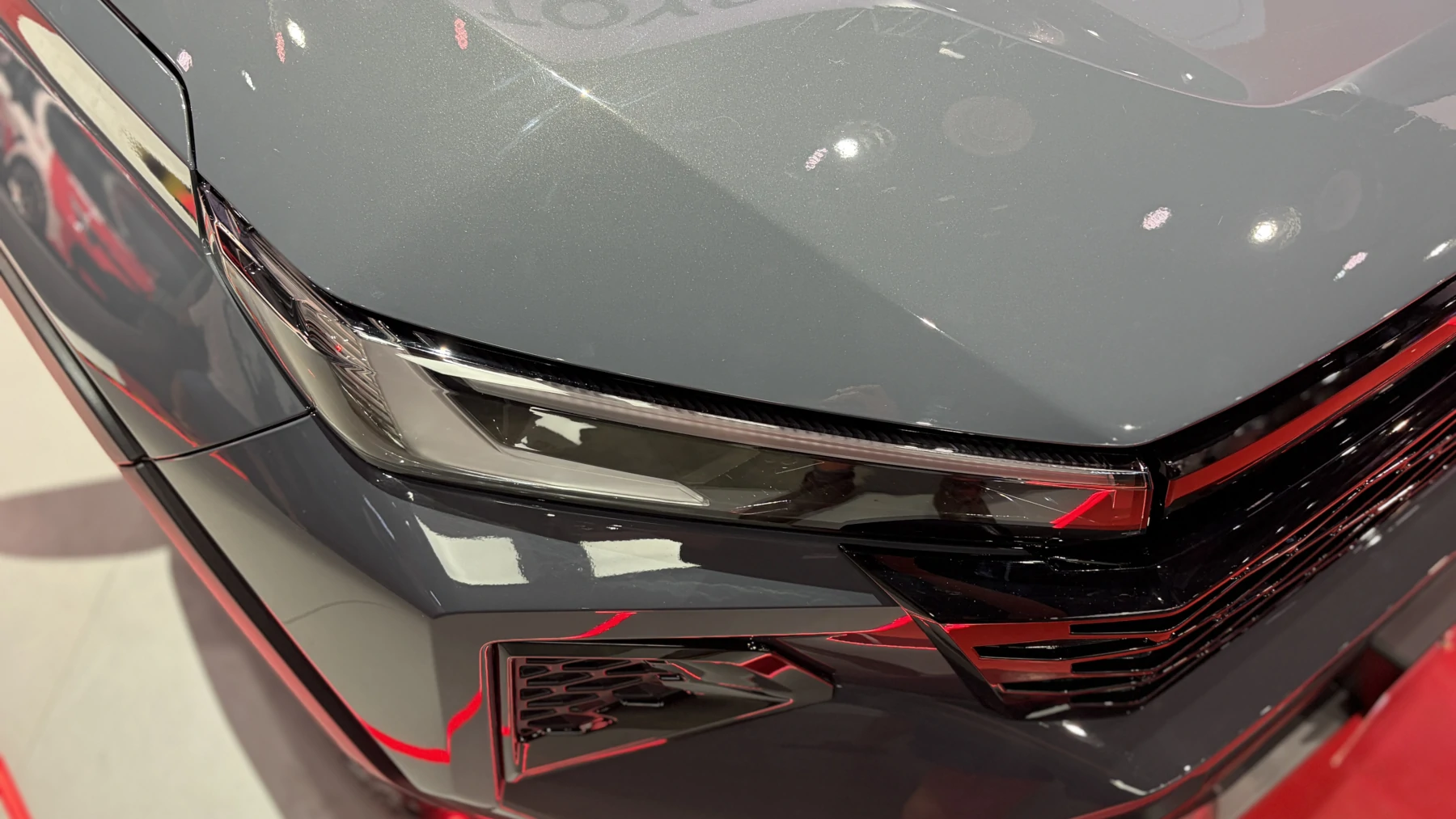
In early photos of the new Hilux, the edges looked flat, and all we could focus on was the front end that sort of resembled an origami school project. This isn’t the case in the metal. The new Hilux still has a commanding presence. The front fascia features a hexagon-pattern front grille, Toyota badging in big bold letters, and thin LED headlights. Silver accents separate the two foglights, while the bumper’s edges angle outward and align with the fenders’ width.
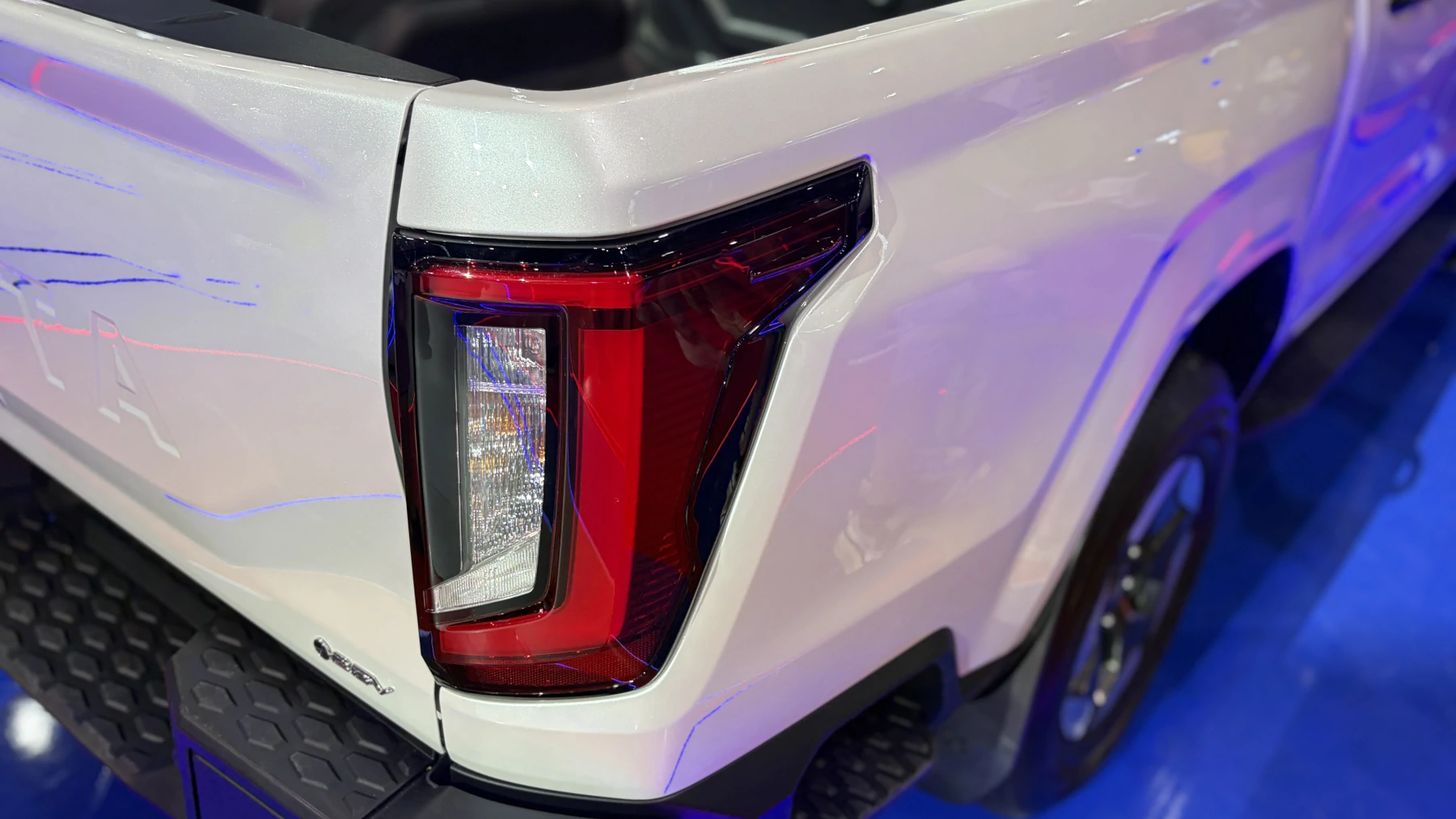
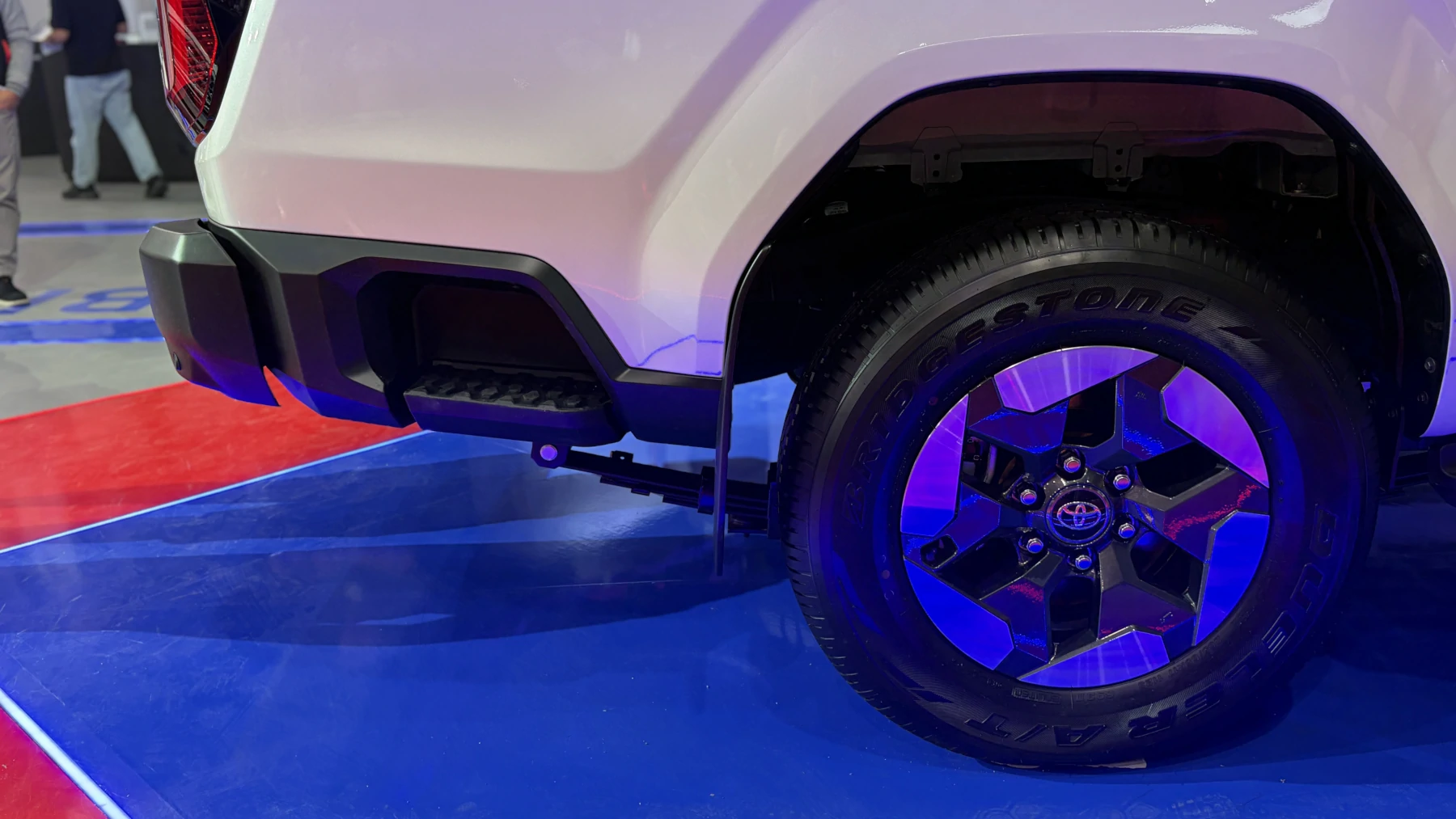
The sides have black fender flares, a standard stepboard, and a mini stepboard behind the rear-wheel arch for easier access to the truck bed. Speaking of the truck bed, the tailgate boasts lift assist to reduce effort while opening and closing. The taillights feature a redesign as well.
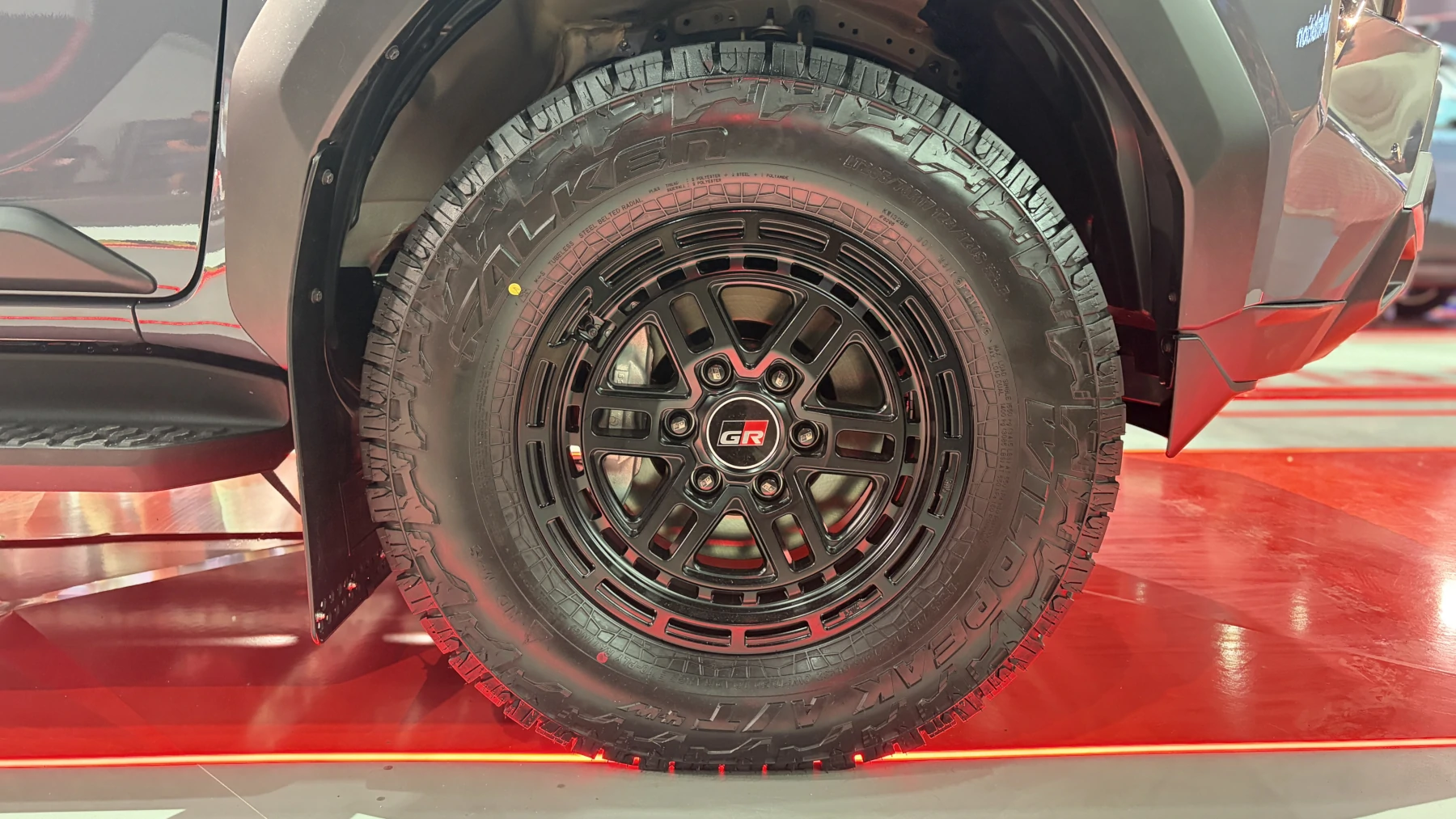
The G, E, and BEV variants wear 17-inch alloy wheels, while the V and Conquest variants are equipped with 18-inch alloys. The G and E variants feature rear drum brakes, while the rest of the variants have ventilated discs all around.
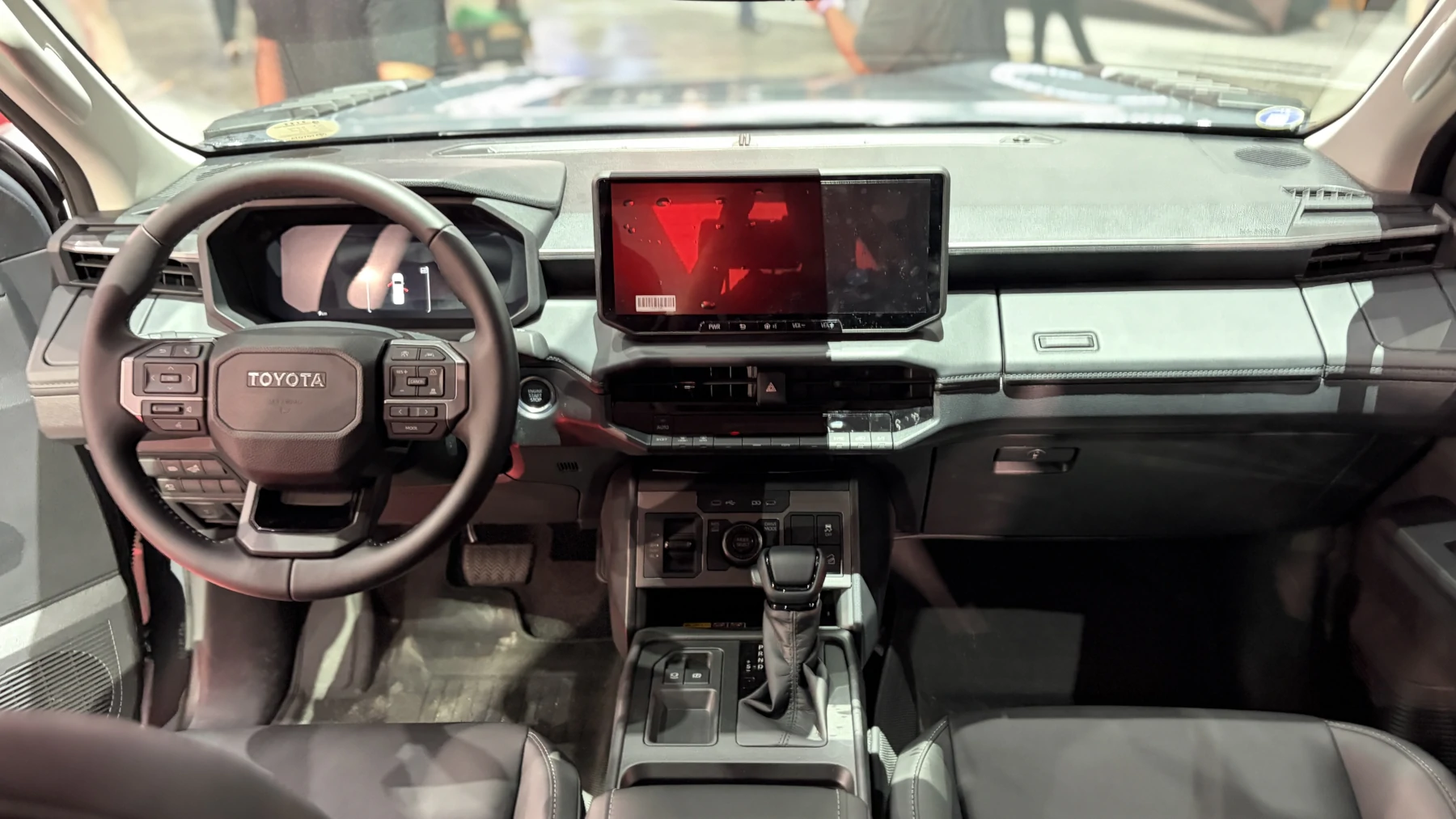
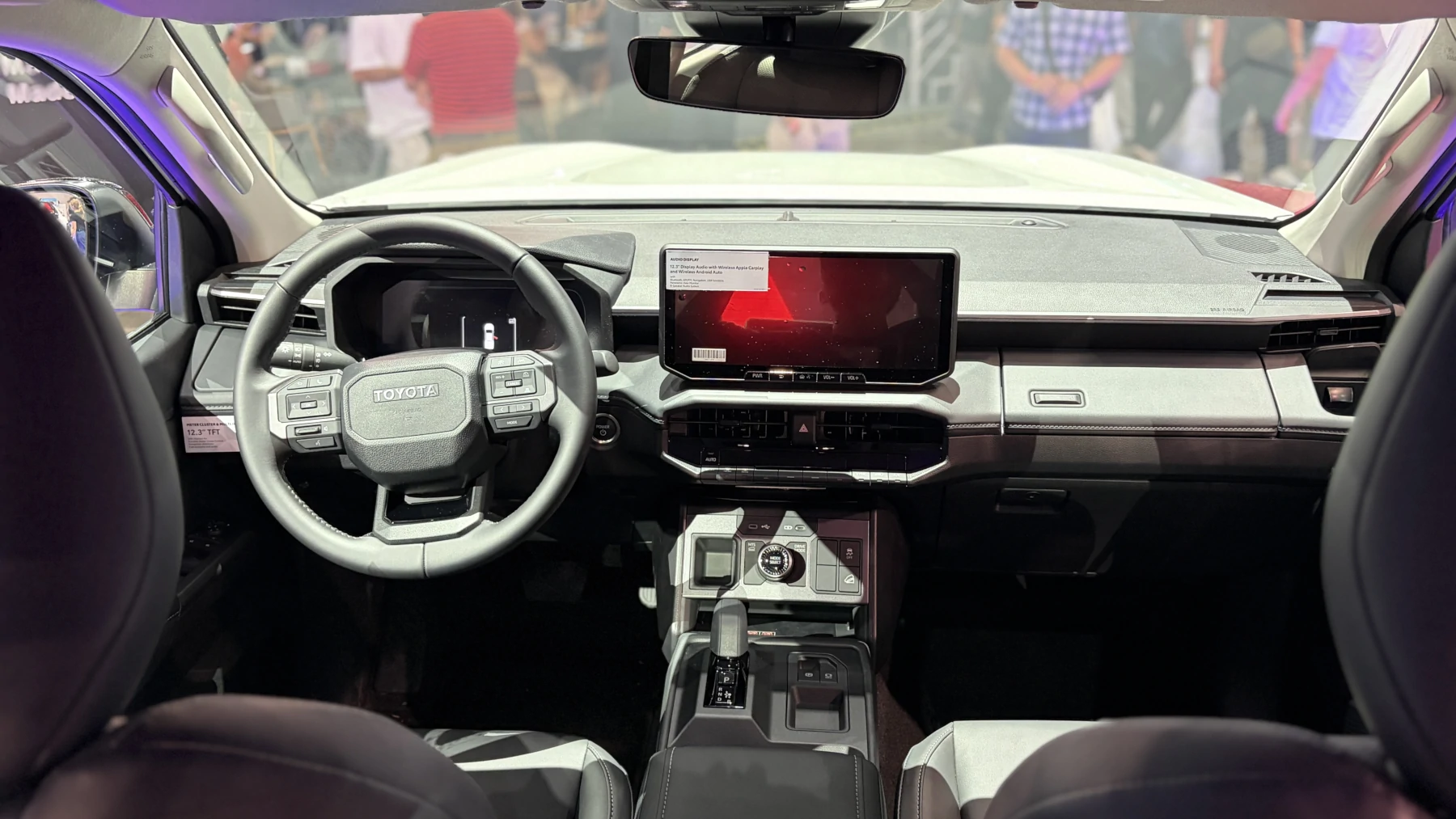
The new Hilux has a modern but utilitarian interior. The BEV, V, and Conquest variants all feature a 12.3-inch display with Wireless Apple CarPlay and Android Auto, a 12-inch TFT instrument panel, synthetic leather seats with eight-way power-adjustable functions for the driver and four-way manual adjustment for the passenger, as well as an electronic parking brake.
Meanwhile, the G and E variants are spec’d with a seven-inch instrument panel, an eight-inch display also with Wireless Apple CarPlay and Android Auto, fabric seats with manual adjustment, and a lever-type hand brake.
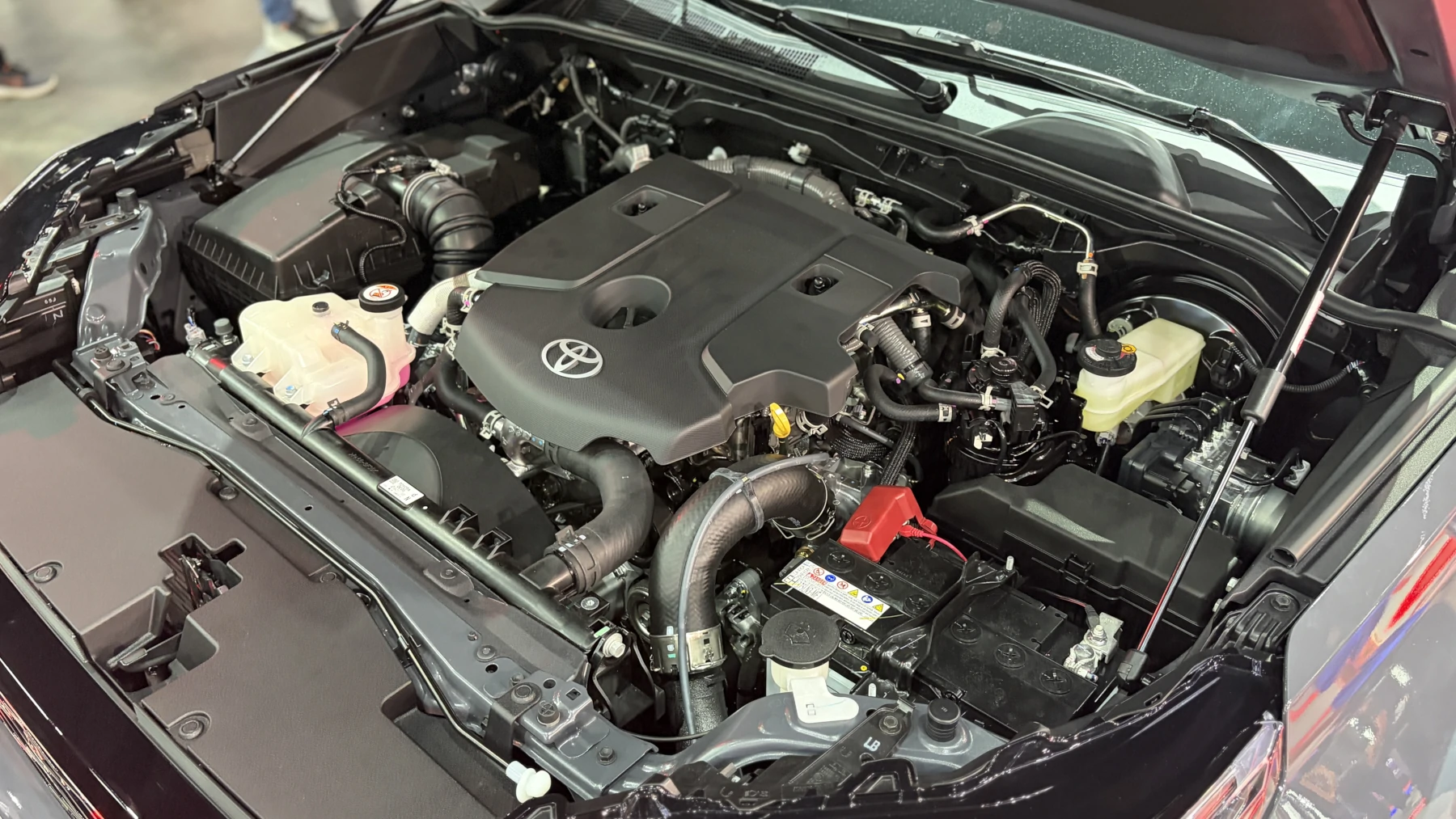
The diesel variants all come with a 2.8-liter 1GD-FTV engine. It’s paired with either a six-speed manual or a six-speed automatic transmission and makes 202hp, with 420Nm of torque for manual variants and 500Nm for variants with the automatic transmission.
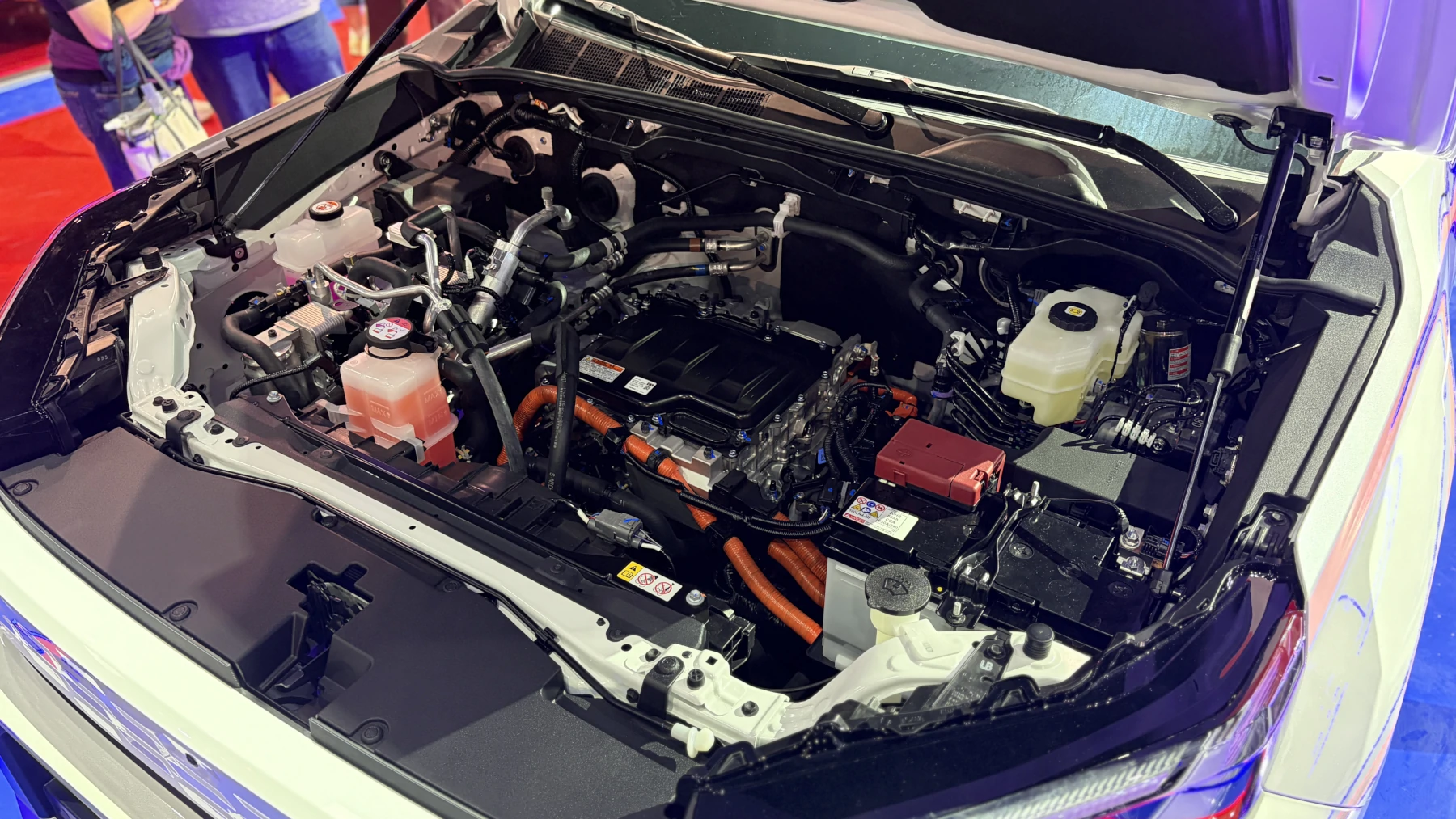
The BEV variant comes with a 59.2kWh battery paired to two electric motors. It makes 194hp with 200Nm of torque to the front wheels and 269Nm to the rear. The battery can be charged with AC or DC chargers and has a maximum driving range of 315km.
The new Hilux comes with rearview cameras as standard. The BEV, V, and Conquest variants are equipped Toyota Safety Sense 3.0, the brand’s latest suite of ADAS that features lane-departure alert, lane-tracing assist, automatic high beams, dynamic radar cruise control, and a pre-collision braking system.
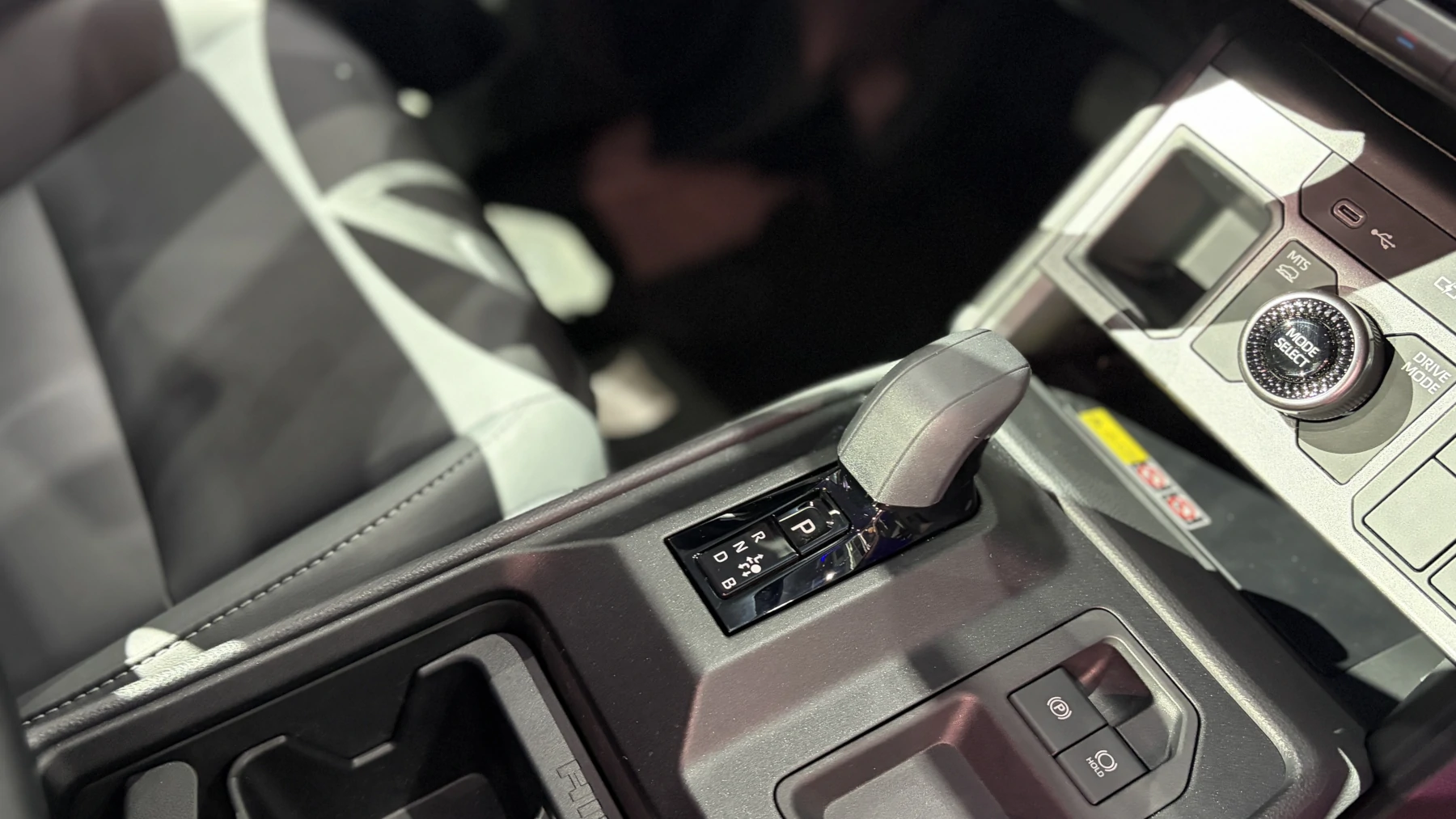
Additionally, the top-of-the-line 4×4 Conquest comes with multi-terrain select with dirt, rock, sand, mogul, and mud drive modes.