1938 to 2003—that is the production period for the Volkswagen Type 1, or what we affectionately call the Beetle. That’s the longest run for any car built on a single platform, and it’s arguably one of the most recognizable cars ever made.
Designed by legendary Dr. Ferdinand Porsche—yes, that Porsche, under orders from Adolf Hitler to design a car that the general public could afford. A people’s car, sort of like what the Ford Model T is in America and what the Mini became in the United Kingdom. The result is the VW Beetle we all know today, a two-door car with a distinctive shape and horizontally opposed air-cooled engine out back.
The Beetle was a simple car that was affordable, reliable, easy to maintain, and despite its small size, was practical with surprising interior space. The small four-cylinder also gave it decent fuel efficiency in an era where fuel was still in short supply. Success came early on, especially in the United States, where buyers liked the Beetle’s great price and honesty. It promised exactly what it was capable of—no more, no less.
OTHER STORIES YOU MIGHT HAVE MISSED:
Flower power: This tie-dye Volkswagen Beetle can put a smile on anyone’s face
9 Classic car interiors that aged like fine wine
The VW custom scene drove popularity to new heights with companies like EMPI (Engineered Motor Parts, Inc.), CB Performance, and Chirco Performance, offering not just high-performance engine parts but also alloy wheels, nerf bars, suspension systems, and brake kits. Performance was probably the last thing on the mind of Dr. Porsche when he developed the original concept, but it was very well known that a properly sorted Beetle could easily outdrag an American muscle car with a large V8 engine.
By the 1960s, the Beetle had developed a strong following, and movies like Herbie had cemented its place in history. At the same time, it became a symbol of individuality and anti-materialism with the ‘Flower Power’ peace movement.
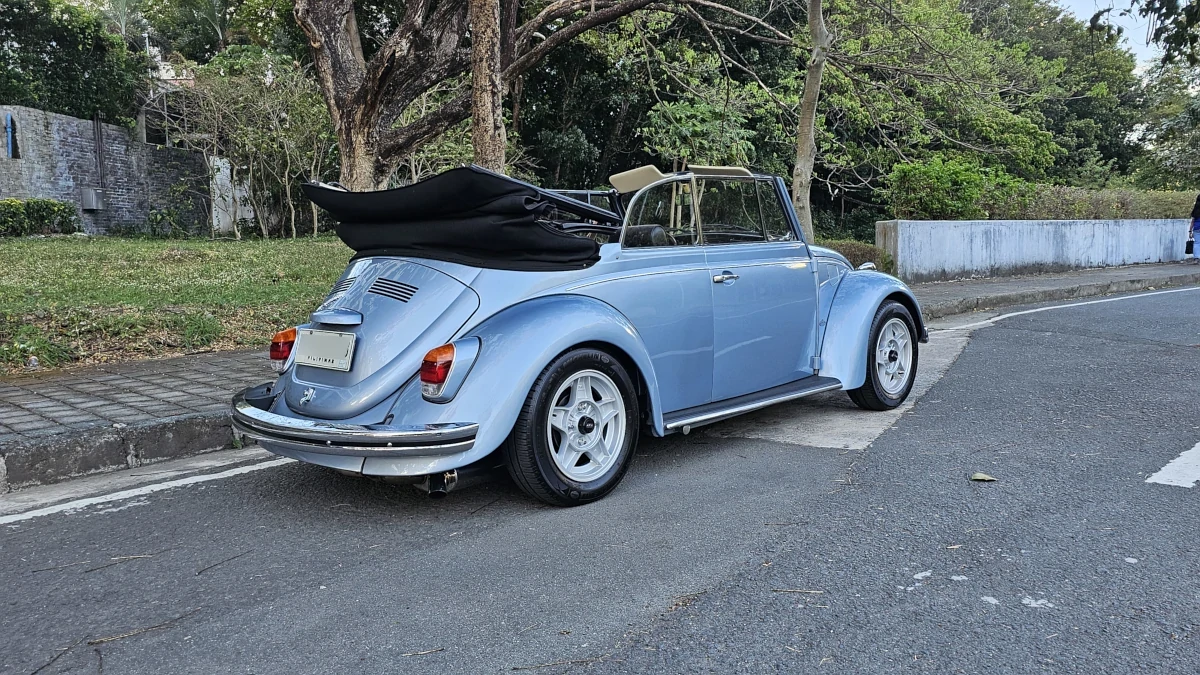
From the outside, there was no mistaking the shape for anything else. The oddball curved shape that gave rise to the name ‘Beetle’ or ‘Bug’ was actually born out of the need to use less steel—it was basically a very resource-efficient design. Looking at the Beetle from the front, the first thing you will notice is that there is no grille, and the big, round headlights give it that cute and friendly look. There is a certain cuteness to the exterior design that gives the Beetle a personality; this was not just a car, but this was your friend. Somebody you could count on.
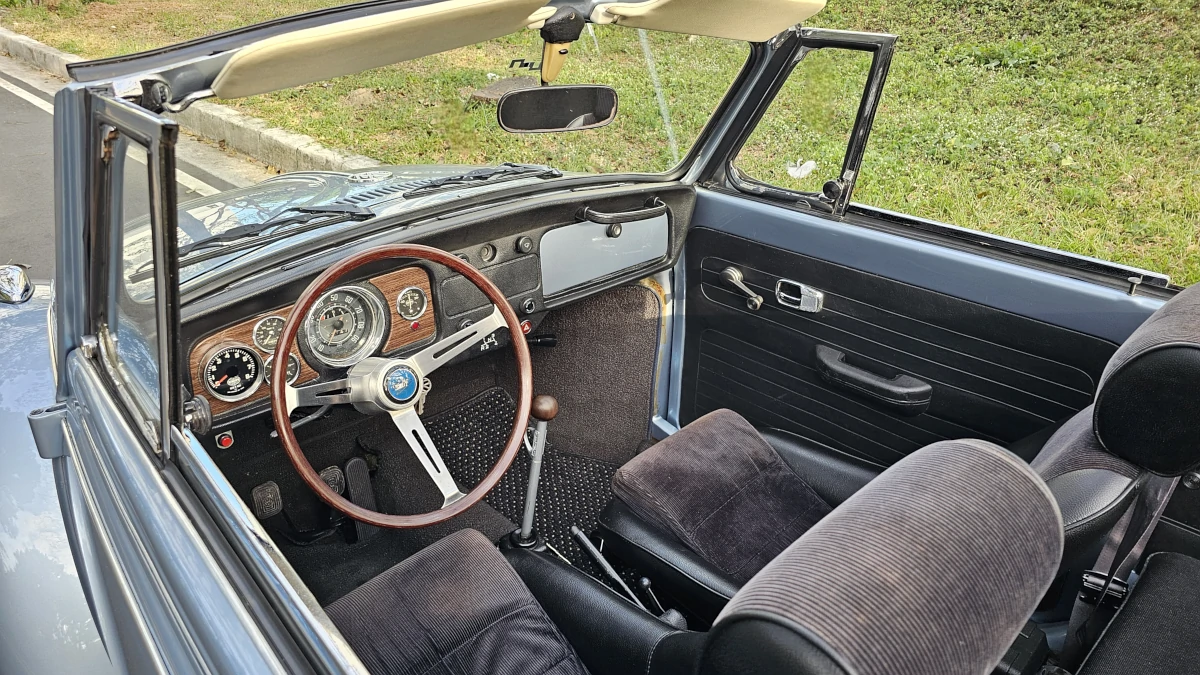
Inside, the efficient use of space gives this car a lot more room than what may seem from the outside. It is theoretically designed to fit five passengers, but I probably would want to share the back seat with just one other person. Storage is limited to door pockets and a glove compartment; there is no center console, nor are there cup and phone holders here. Powering the Beetle was always an air-cooled horizontally opposed four-cylinder affair with displacements ranging from 1,100cc to 1,600cc.
Over here, Diesel Motors of Germany, established by the Guevara family to initially import Henschel trucks and engines from Germany, sought to acquire the distribution rights for Volkswagen in the Philippines. When they were awarded the contract in 1955, Diesel Motors of Germany transitioned to Domingo M. Guevara, or DMG. for short. DMG began the VW business immediately with a direct shipment order (DSO) import arrangement, and 18 months later, started the assembly of the Type 2 Kombi, Double Cab, and Single Cab pickup.
Assembly of the Type 1 Beetle 1200 began a few years later in 1959, and it also went on to produce the VW Sakbayan and Trakbayan, all from their 3.2-hectare assembly plant in Mandaluyong, in what is now California Garden Square along Domingo M. Guevara Street (formerly Libertad Street). The Beetle in particular was quite a common sight in Manila as they were used for taxis and police cars in the 1960s through the 1970s.
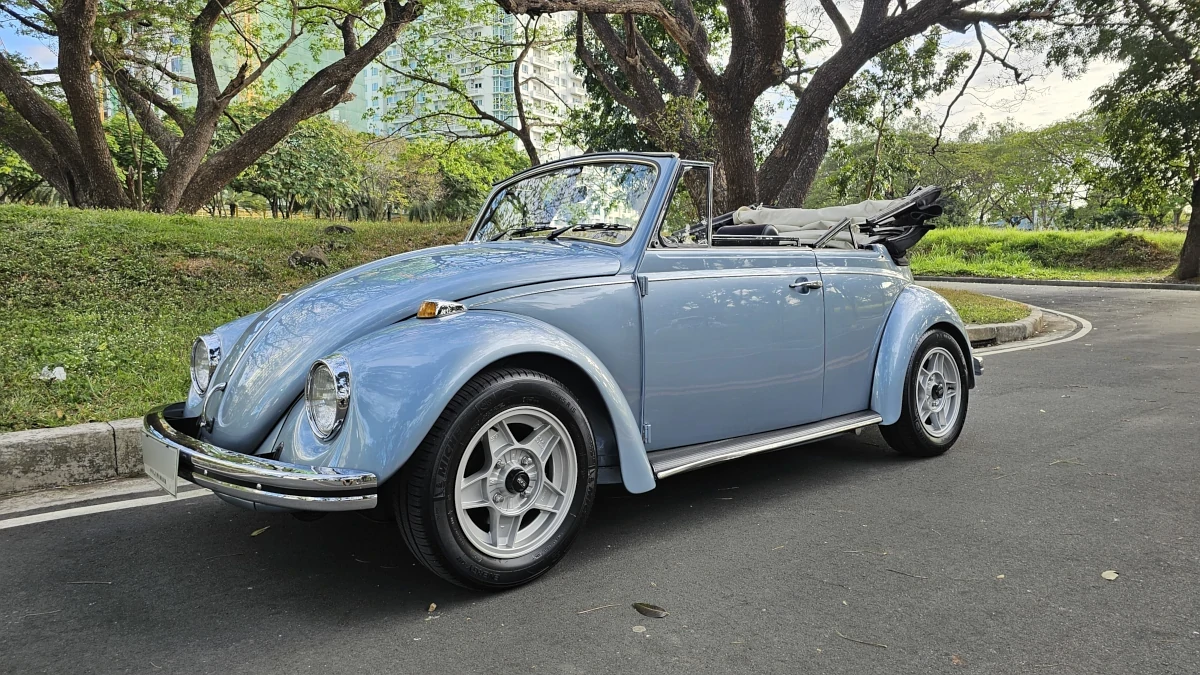
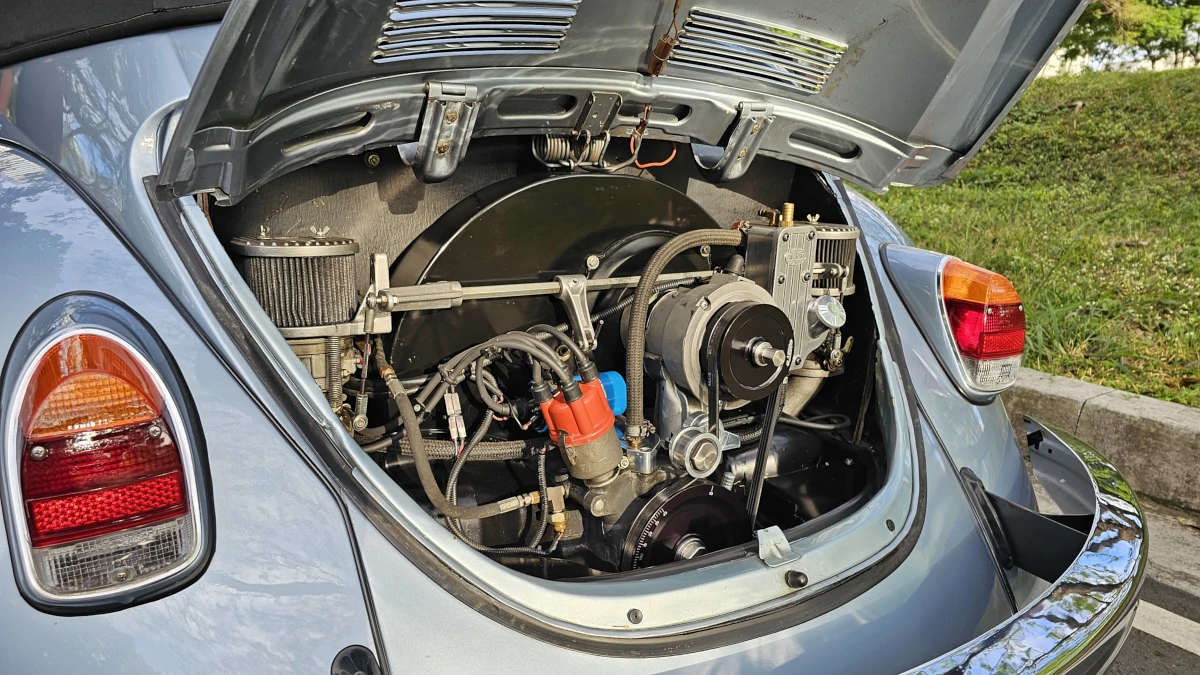
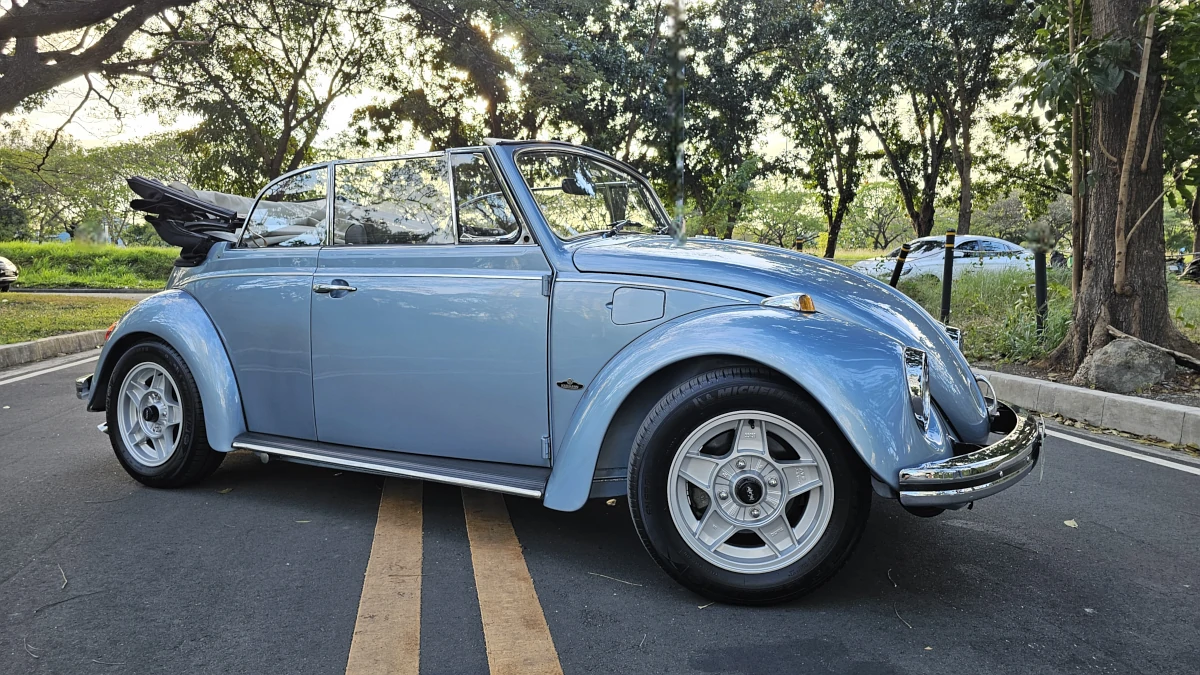
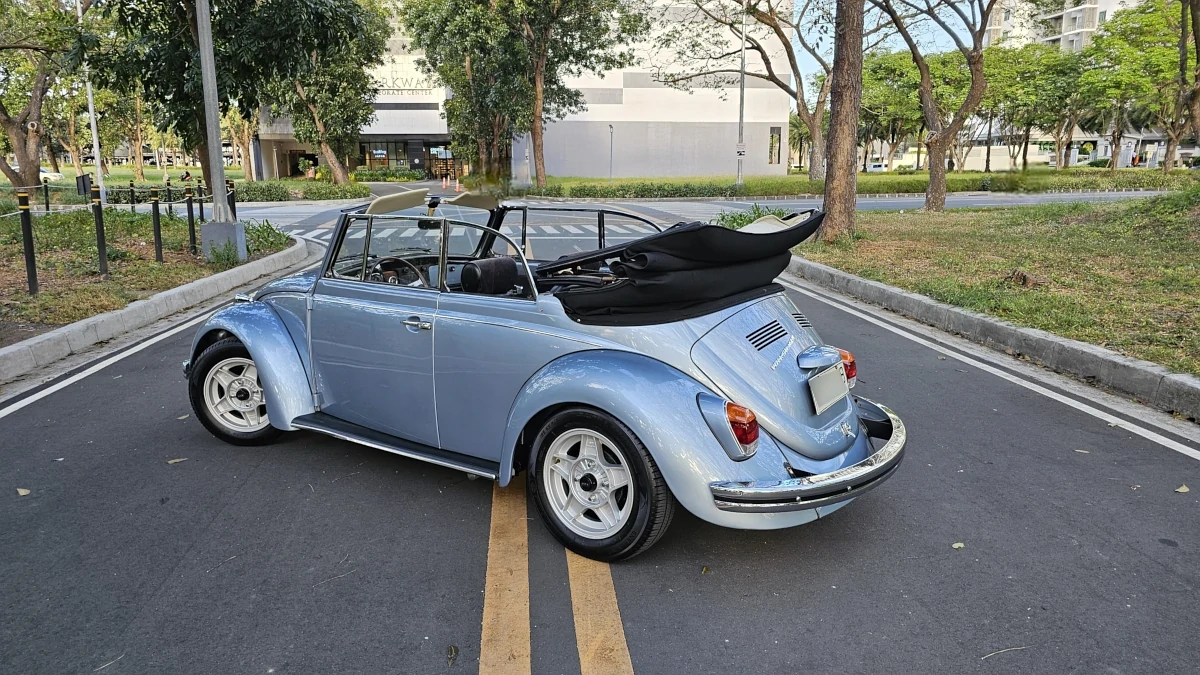
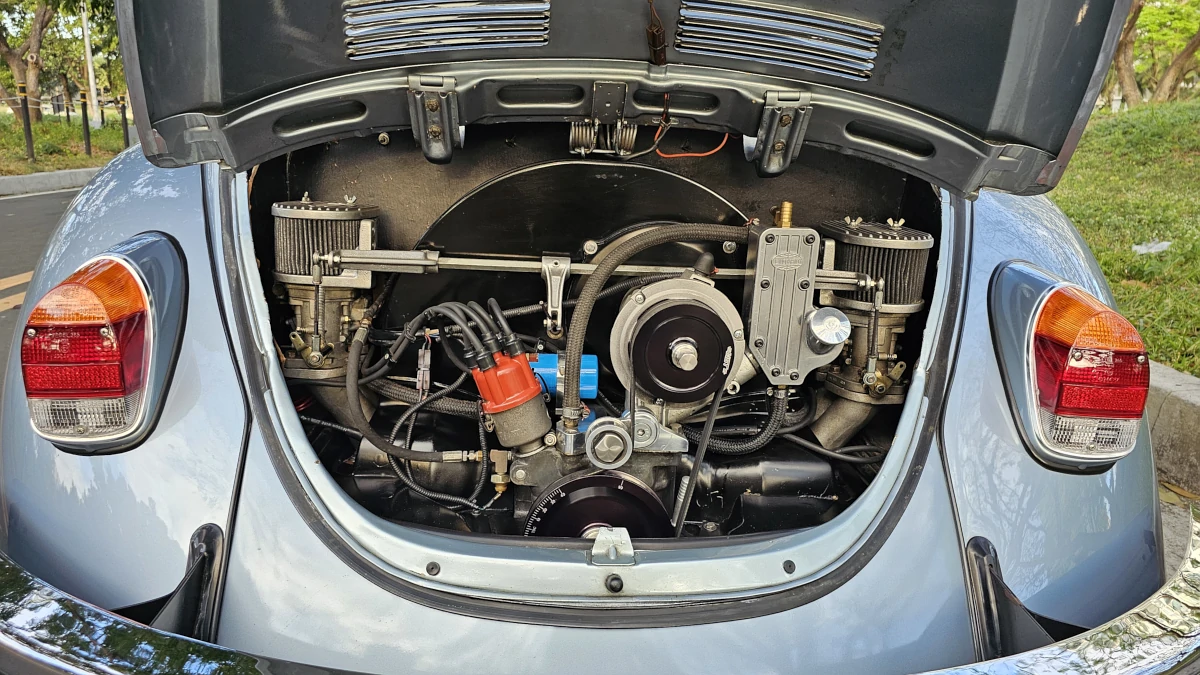
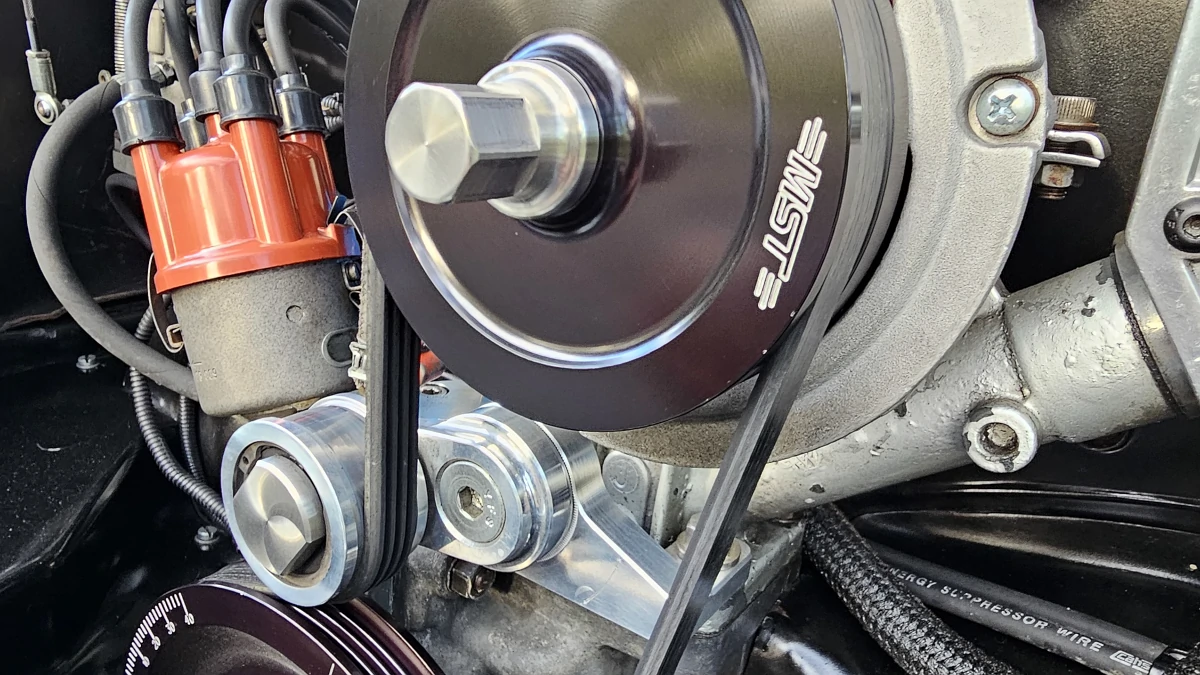
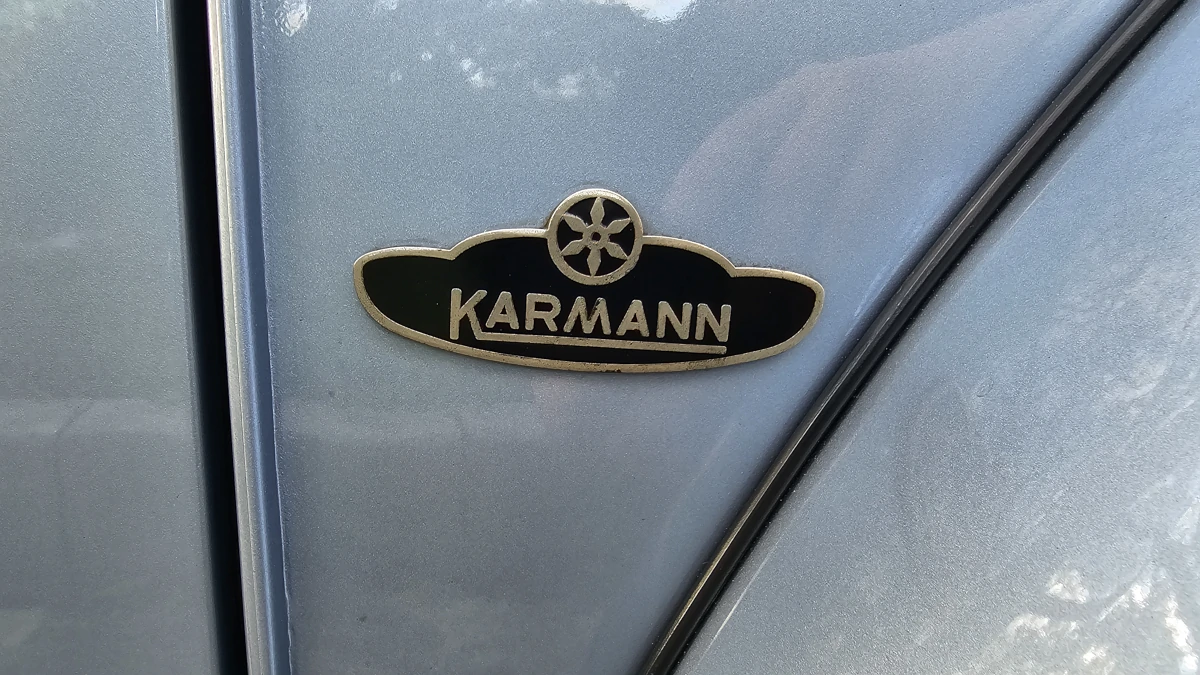
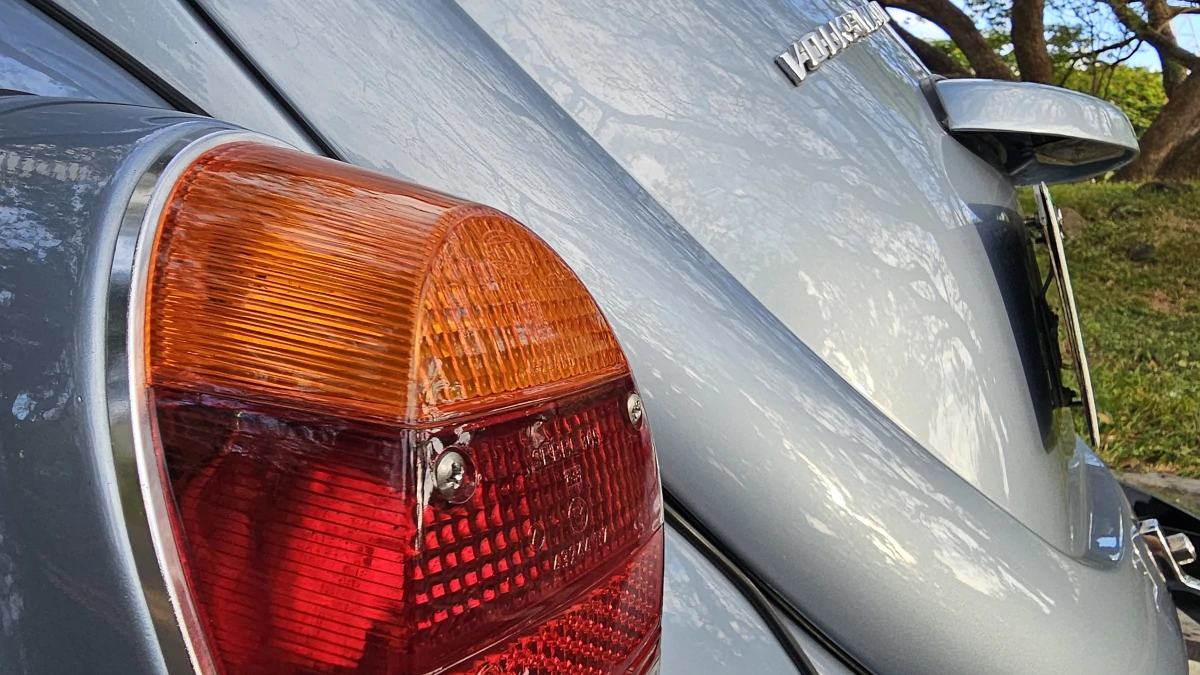
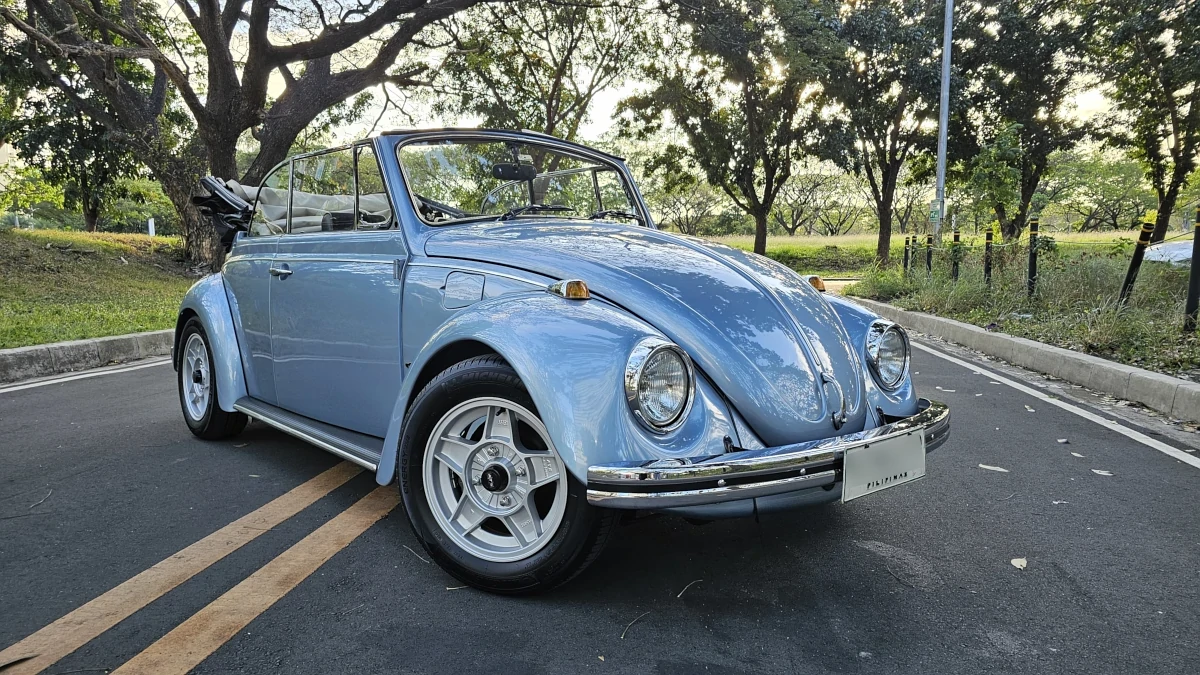
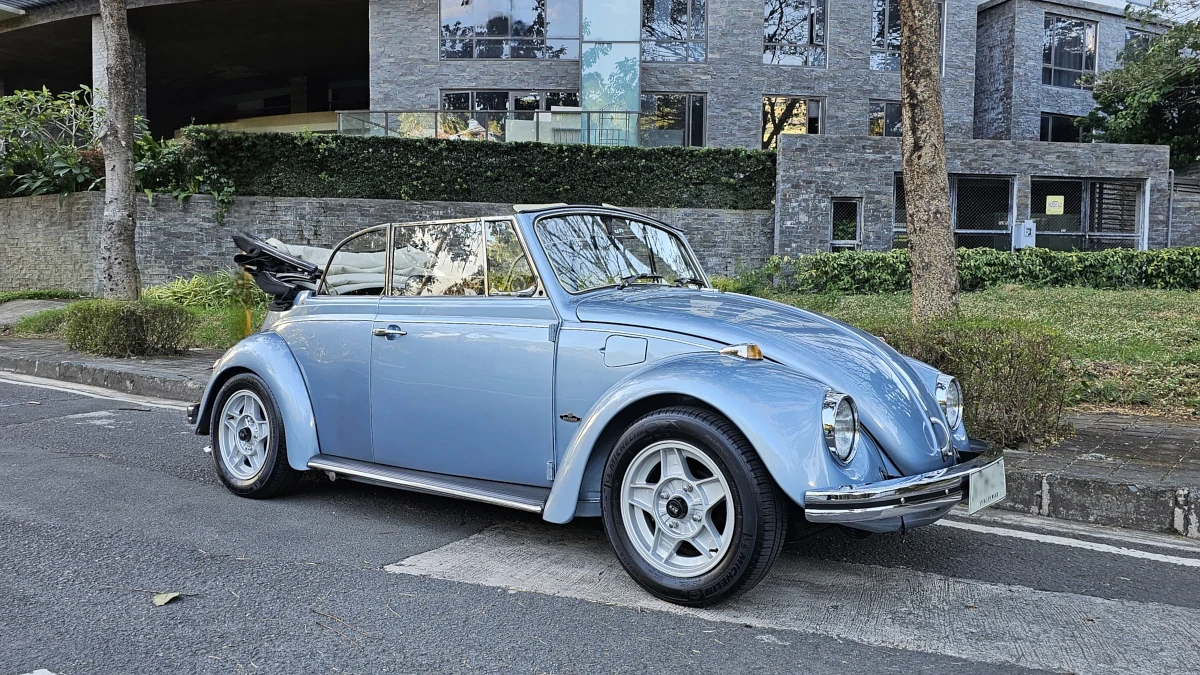
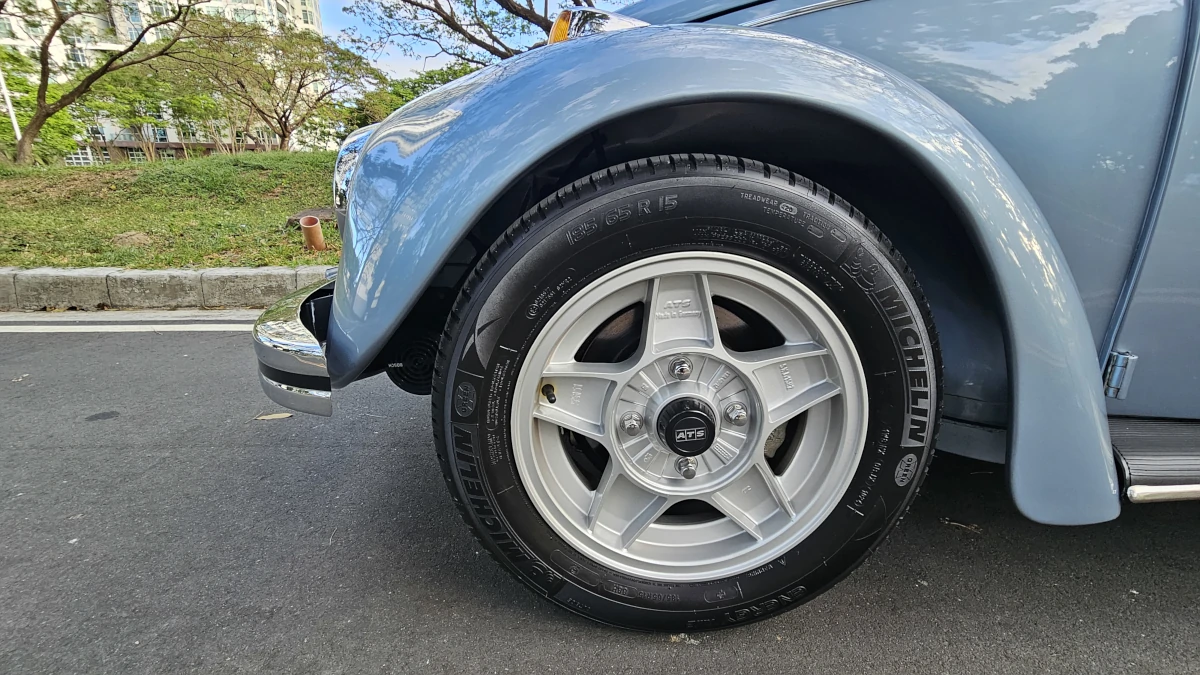
The 1968 Beetle Convertible featured today was acquired from the first owner in 2004 and underwent a complete restoration that was completed a year later. It was refinished in its current silver blue metallic color with a black roof and black interior, while ATS wheels complete the ‘German’ look. During the rebuild process, out went the 60hp, 1,600cc engine and in went a brand-new John Porto-built 2.0-liter engine utilizing a new magnesium case and custom cylinder heads that breathe through 2 x Weber 44IDF down-draft carburetors.
Exhaust duties are handled by a custom-made sidewinder stainless steel system that was ordered from the USA. To handle the extra performance, oil capacity had to be increased with a larger sump and a high-volume oil pump. The new engine is estimated to now produce approximately 150hp and a lot more torque; therefore a heavy-duty clutch and transaxle were fitted.
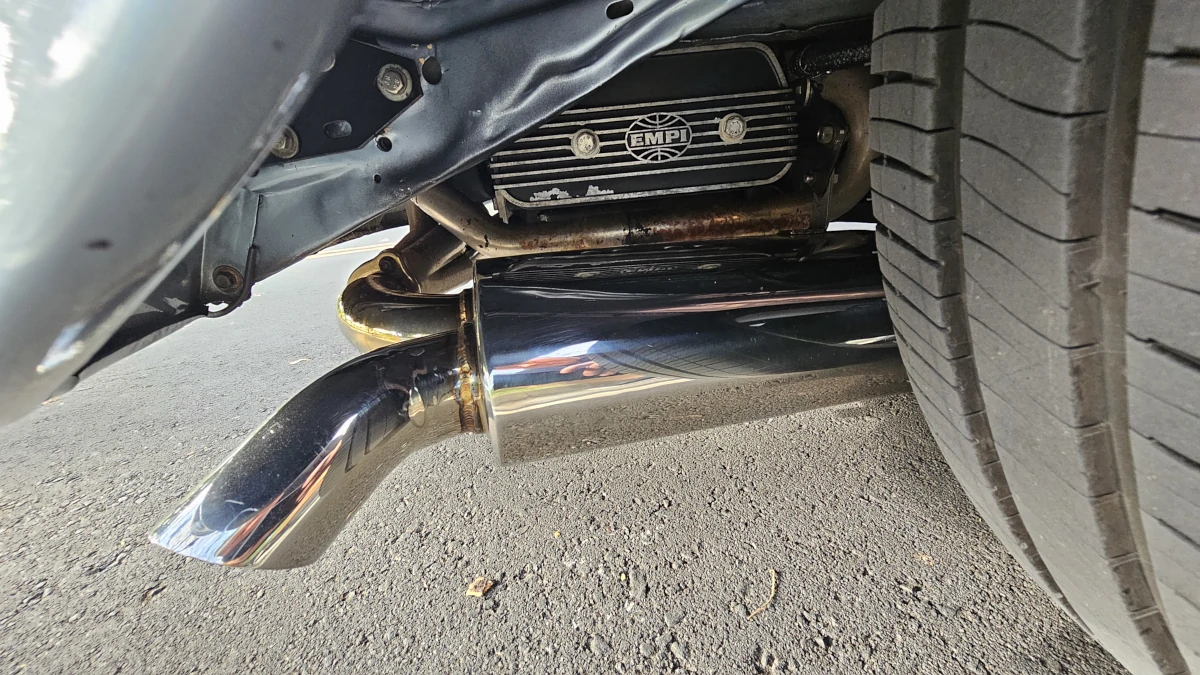
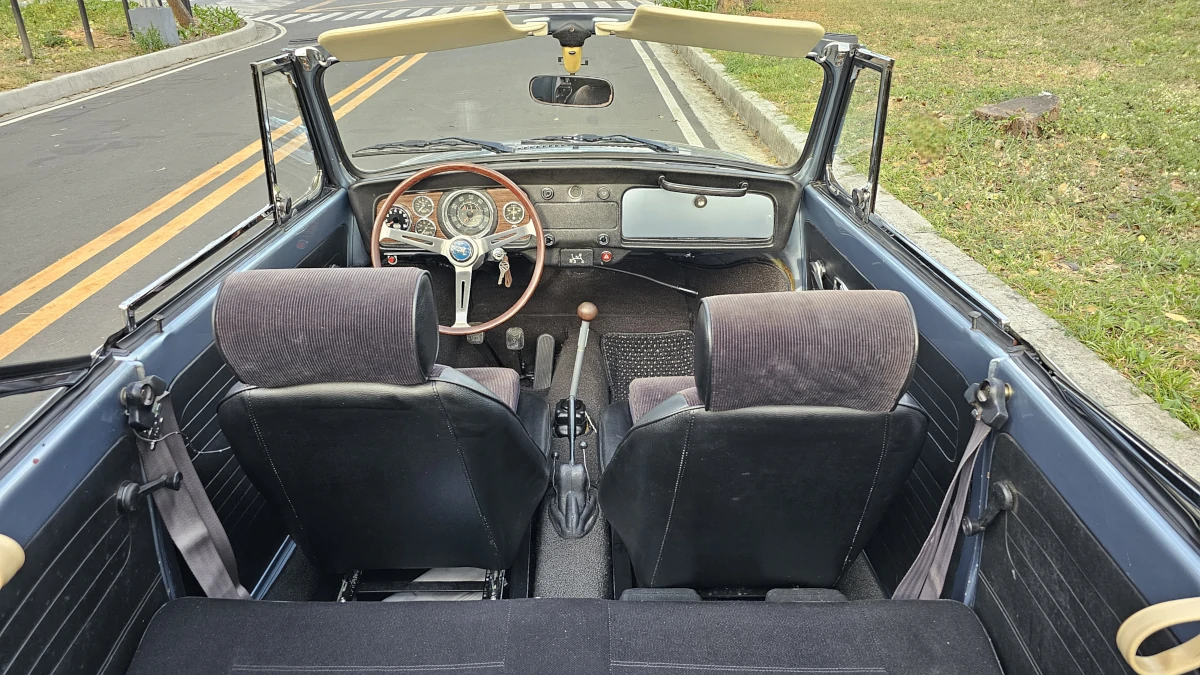
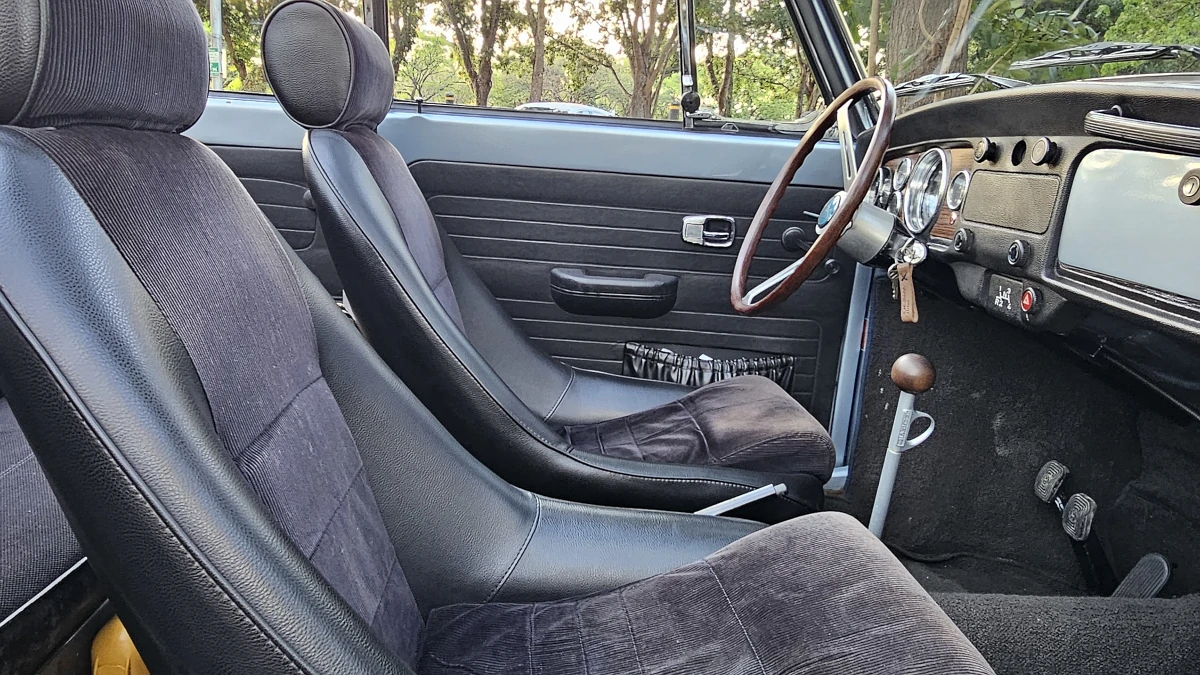
Inside, the black interior was given a complete refresh utilizing as many original parts as possible, with a few tasteful and period correct parts added, like the Corbeau RS seats and genuine coco mats. Other vintage accessories like the Hurst short shifter, vintage EMPI wooden steering wheel, set of gauges, valve covers, and a crankcase breather—it’s these tiny details that complete the car.
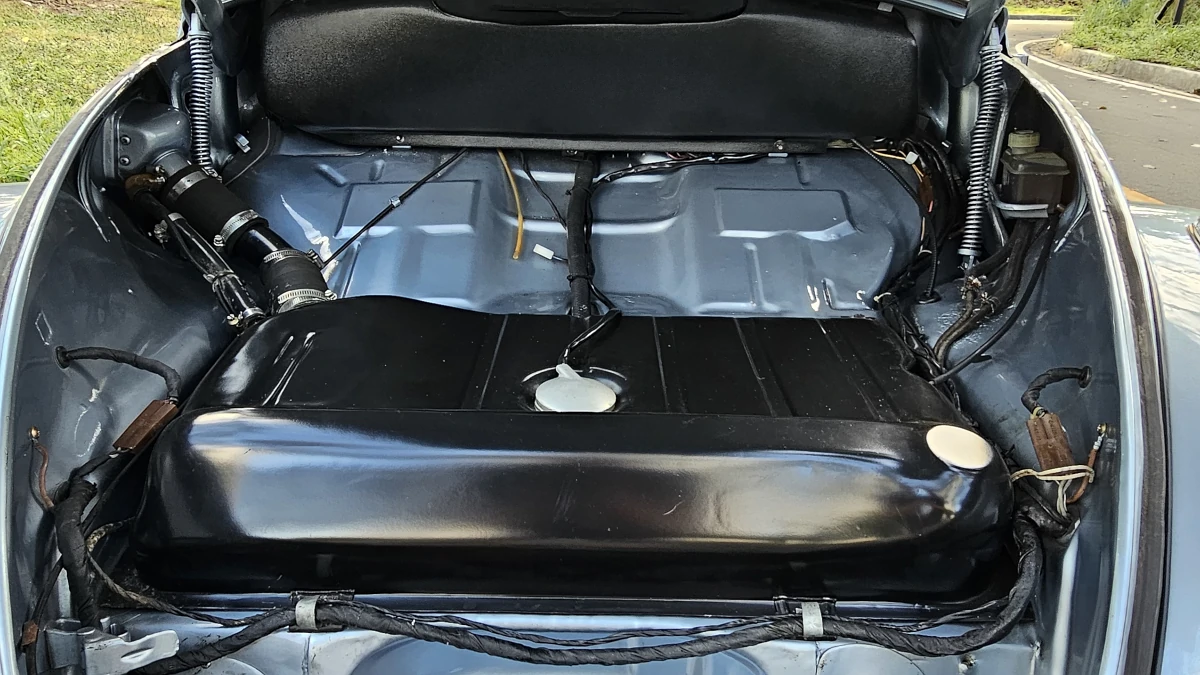
Looking around, you will see evidence that this car is no garage queen: jumper cables, spark plugs, a tow rope, and a spare show you that this car is regularly driven, and according to the owner, a nighttime run up and down CALAX from his place in Alabang is part of its regular exercise.
Dropping the top on this convertible is a one-person affair that is as simple as unlocking two latches and pulling back the roof. Despite the engine’s high-performance setup, the 2.0-liter fires right up, and the chirping or wheezing sound from the stock pea shooters has been replaced by the deep, loud rumble of the sidewinder. There is some roughness in the idle courtesy of the slightly more aggressive Engle camshaft.
Pedals pivot from below, something carried over to the Porsche 356 and 911s, and do take some getting used to, while the unassisted steering may seem a tad heavy at parking speeds but lightens up once you get going. The Hurst short shifter feels solid, but the shifts, while much shorter than the stock shifter, are still on the long side. With 150hp in a car weighing approximately 800kg, this is a quick car. Acceleration is very fast—I have no doubt this car can keep up with some modern machines until its top speed of approximately 130kph.
Driving the car with the roof down gives an even greater sensation of speed and an even greater sense of freedom—that is, until you realize the amount of attention this car attracts! Ride quality is good, if not a bit on the firm side, with front and rear torsion bar suspension that ride on stiffer KYB gas shocks. Amazingly, despite being a convertible, the body is very firm with little cowl shake evident over bumps, which is a true testament to the car’s design and build quality.
Stopping the car requires a solid foot, combined with some sensitivity that is needed to prevent the unassisted disc brakes up front and drums at the back from locking up. The small size makes the Beetle easy to maneuver around town, but handling has never been one of the Beetle’s strong points, as the rear swingarm suspension caused instability when making sudden maneuvers, especially at high speeds.
During its 65-year life, Volkswagen produced over 21.5 million units of the Type 1 on its original platform. Despite production ending in Mexico over 20 years ago, the Beetle has remained as popular as ever, with many still running today—no doubt due to the durability of the original car as well as the availability of spare parts and aftermarket items. But I believe what has kept the Beetle going all these years is the passion and care shown by their owners towards their friend, the Volkswagen Beetle.
Engine: 2,000cc four-cylinder horizontally opposed with 2 x Weber 44IDF carburetors
Transmission: Four-speed manual transmission
Power: 150hp (estimate)
Drivetrain: Rear engine rear wheel drive
Front suspension: Beam axle with trailing arms, torsion car, gas shocks, and
stabilizer bar
Rear suspension: Swing axle, trailing arms, transverse torsion bars, and gas shocks
Seating: Five passengers
NOTE: The author would like to thank Mr. Boy Guevara for providing the information on Volkswagen’s history that helped complete this article.