No pet owner should have to be reminded how to transport pets safely, but a concerning post we saw on social media prompted us to write this story.
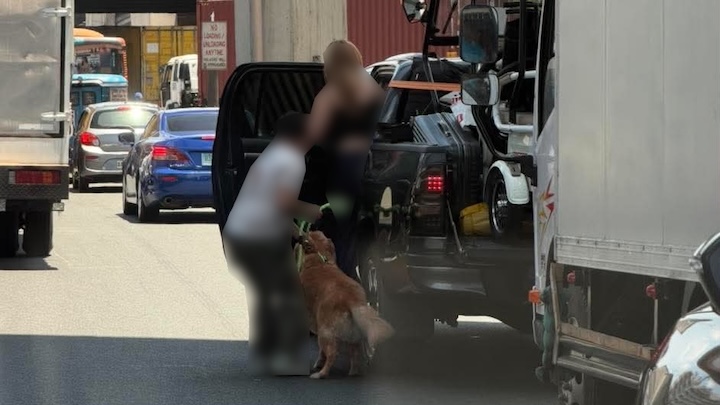
On May 6, at just past 11am, our industry colleague Justin Uy posted photos of two dogs he saw in the back of a pickup truck on the South Luzon Expressway. It was on the northbound side of the expressway before Magallanes, and traffic was at a total standstill. According to Justin, the dogs appeared to be panting and in distress, “trying to find shade or walking in circles. One dog hid under the other dog.” All photos here were taken by him at the scene.
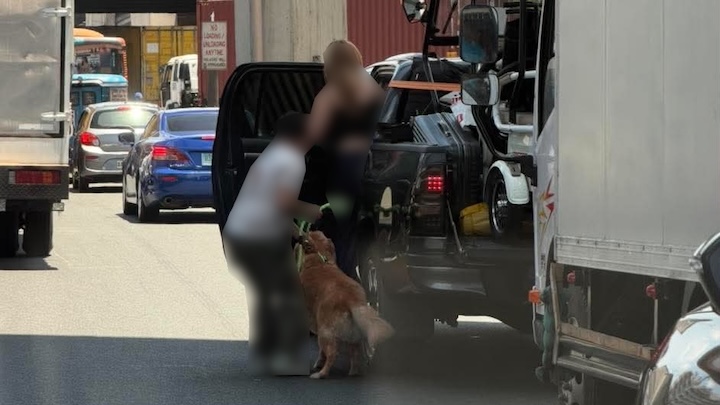
With traffic still unmoving, he was able to check his surroundings and go down, pour water over the dogs, and alert the occupants of the pickup truck, who seemed oblivious to the animals’ plight: “After a few minutes, the driver finally went down to spray water on their dogs… They finally parked on the side and let one dog in. One of the passengers rode the back of the pickup to try to keep the other dog cool.”
OTHER STORIES YOU MIGHT HAVE MISSED:
The Quezon City Libreng Sakay Program now has eight new electric buses
GSIS launches Ginhawa Bike and E-Mobility Loan Program for affordable electric mobility
Technically, transporting dogs in the back of a pickup truck may be allowed, but it has to be done according to the rules set by the concerned government agencies.
The Bureau of Animal Industry (BAI) Administrative Order No. 19 prescribes rules and regulations on the transport of live animals by land. It states the five basic freedoms of animals as follows: 1) freedom from thirst, hunger, and malnutrition; 2) freedom from physical discomfort and pain; 3) freedom from industry and disease; 4) freedom to conform to essential behaviour patterns; and 5) freedom from fear and distress.
The administrative order, which may be found here, has specific sections stating that “all animals in custody or transit shall not be subjected to torture, neglect, inadequate care, or maltreatment (4.2.3, in relation to animal control of strays in expressways and highways), and that “animals shall be protected against harm from hot or cold conditions during travel. In warm and hot weather, the duration of journey stops shall be minimized, and vehicles shall be parked under shade, with maximum ventilation” (4.4.1).
The Republic Act. No. 8485 or the Animal Welfare Act of 1998 also states: “It shall be the duty of any owner or operator of any land, air, or water public utility transporting pet, wildlife, and all other animals to provide in all cases adequate, clean, and sanitary facilities for the safe conveyance and delivery thereof to their consignee at the place of consignment. They shall provide sufficient food and water for such animals while in transit for more than twelve hours or whenever necessary.”
Violations of RA 8485 are in Section 8: imprisonment of not less than six months nor more than two years, or a fine of not less than P1,000 nor more than P5,000, or both, at the Court’s discretion.

Right now, the outside temperature in Metro Manila is around 35 degrees Celsius—but it would feel much hotter than that for an animal in the back of a pickup truck, sandwiched among various items, without access to water. According to PetMD, “dog heatstroke can occur very quickly and result in death in under an hour, especially if the pet does not have access to shade, water, and rest.”
As a pet owner, however, if you’ll be traveling with your pet, you should safeguard the animal’s health and safety at all times, not because you’re afraid of being punished by the law, but because it’s the decent, responsible, and humane thing to do.