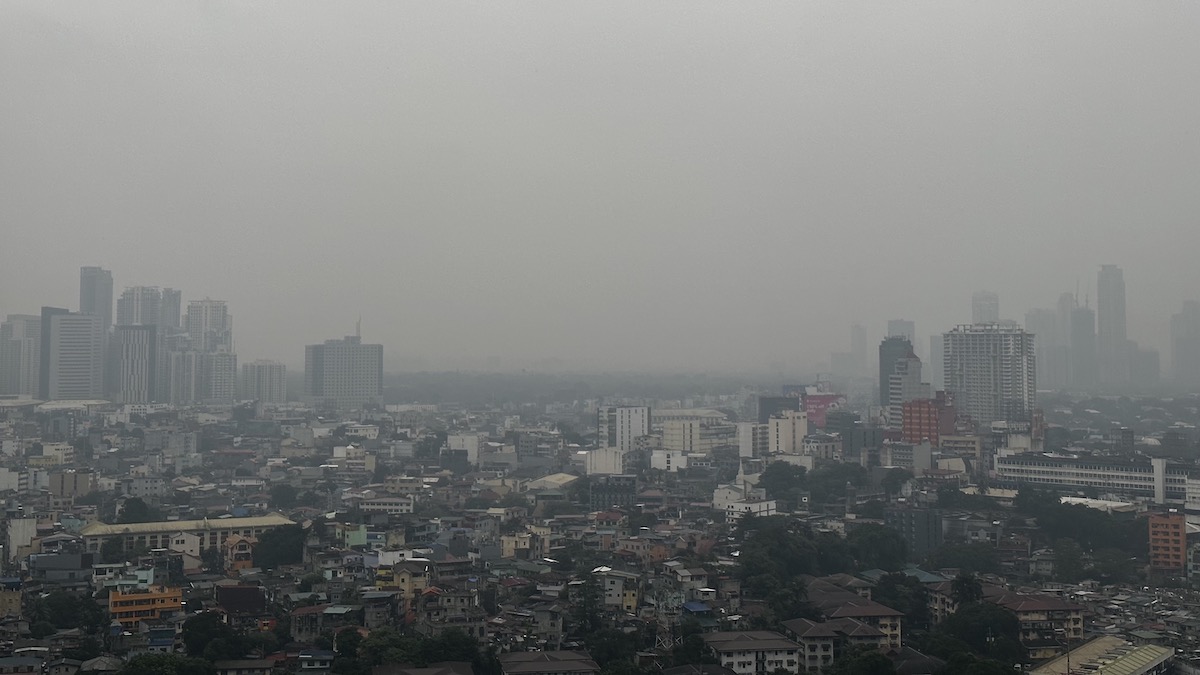
If you’re heading out today, better wear a face mask as the air quality could be harmful in your area. Amid recent wildfires in Indonesia, incoming winds have brought haze towards the Philippines, affecting air quality across the country. Various areas have reached ‘very unhealthy’ and ‘acutely unhealthy’ levels, prompting some LGUs to suspend face-to-face classes in schools.
Based on data from the local government’s Air Quality Management Section, as of 9am on September 1, Metro Manila has seen acutely unhealthy air quality in most cities, with the worst recorded at the monitoring station in Don Bosco, Parañaque, at an Air Quality Index (AQI) of 300. The station in Ateneo de Manila University, Quezon City has also monitored a notably high AQI at 247, similarly, Las Piñas recorded an AQI of 246.
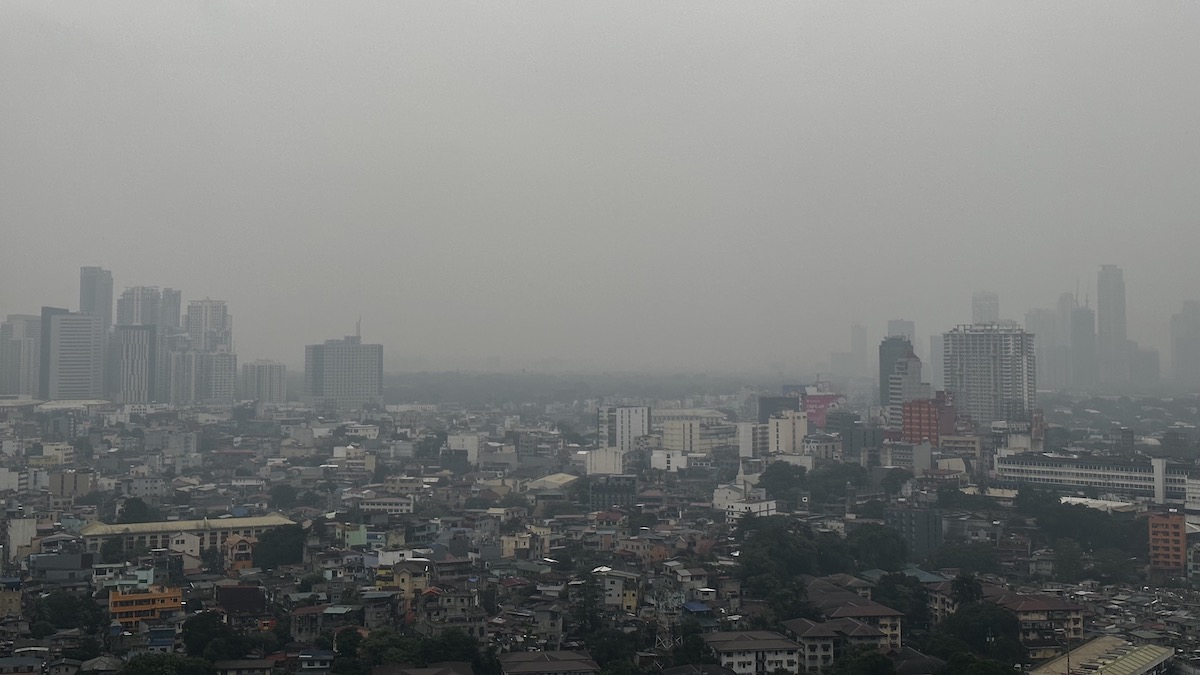
Meanwhile, according to IQAir.com, President Roxas in Capiz monitored an AQI of 155; Daet, Camarines Norte has recorded 184 AQI, and up north, Calasiao, Pangasinan recorded an AQI of 162. Parts of Negros Occidental, Negros Oriental, and Cebu have also recorded AQI scores of 150 to 170. Overall, the regions affected by the haze seem to be mainly situated in Luzon and Visayas.
OTHER STORIES YOU MIGHT HAVE MISSED:
PH fuel price update: P0.32/L decrease for gas, P3.83/L for diesel effective September 1
Parking guide: Where to park in Quezon Memorial Circle
As mentioned, if you live in one of the affected areas, it’s better to bring a face mask when going outside. A K95 would be ideal, but a KN95 can also work, provided it seals properly on your face. Currently, the wildfires in Indonesia remain active, mainly in parts of Kalimantan and Sumatra.
For motorists, lots of newer cars now have high-efficiency particulate air filters that effectively keep finer particles from entering the cabin. Nevertheless, bring a suitably rated face mask when going outside to decrease the chances of inhaling harmful air pollution.