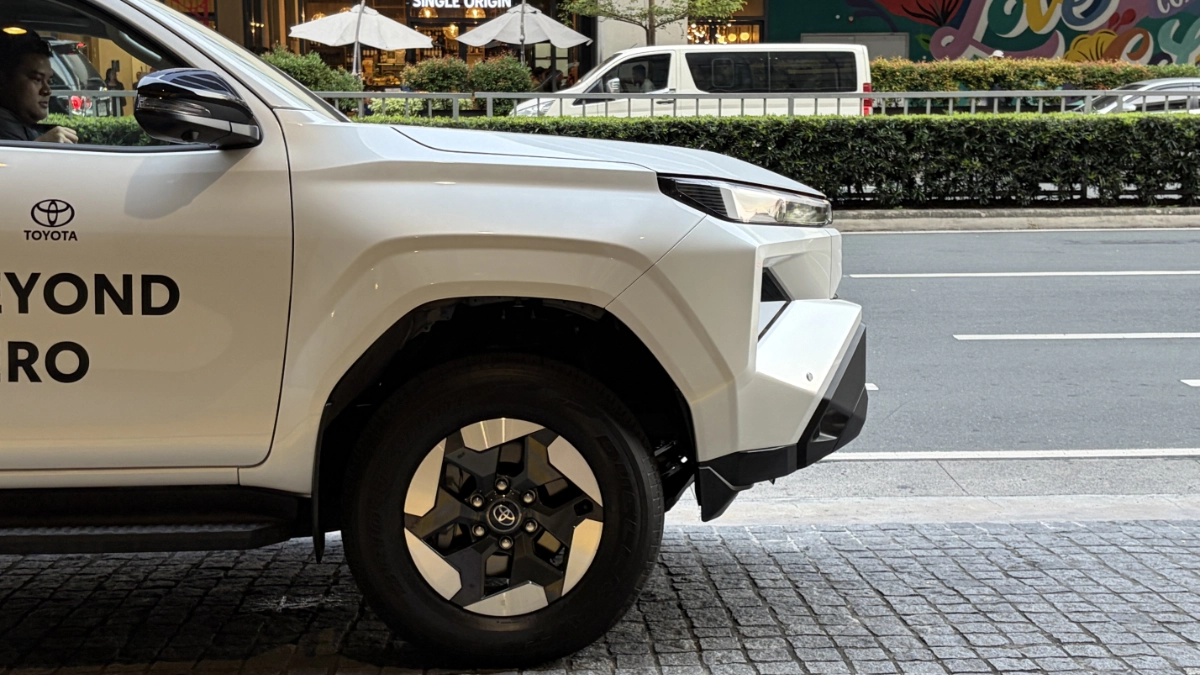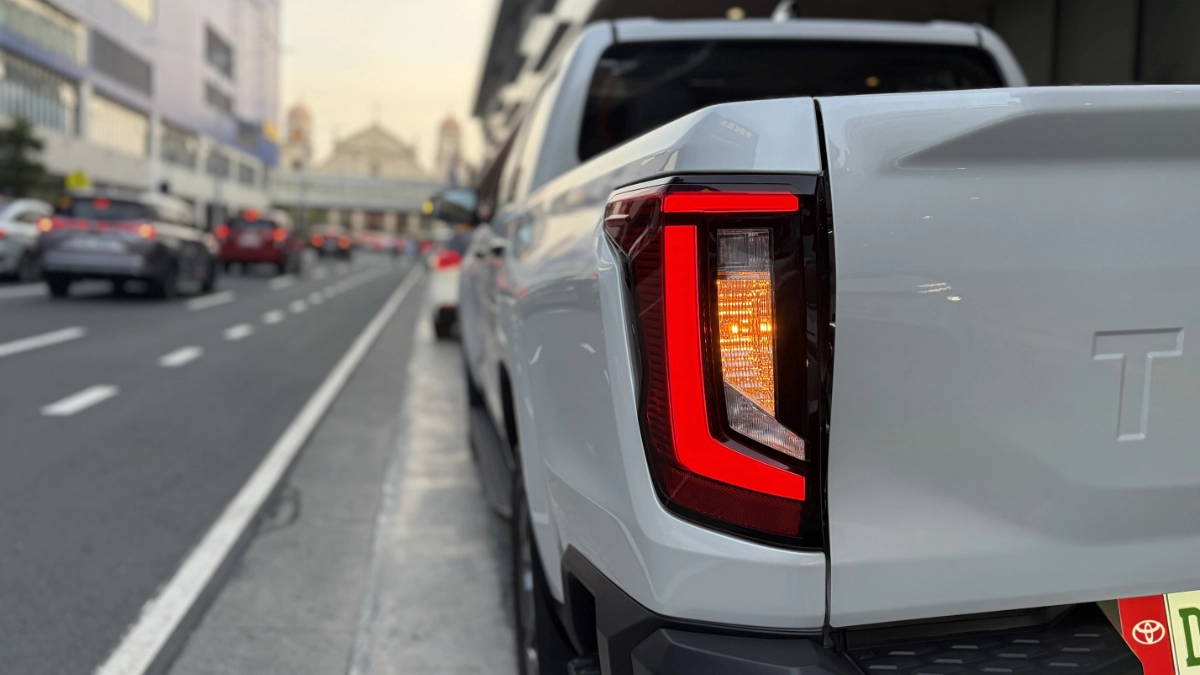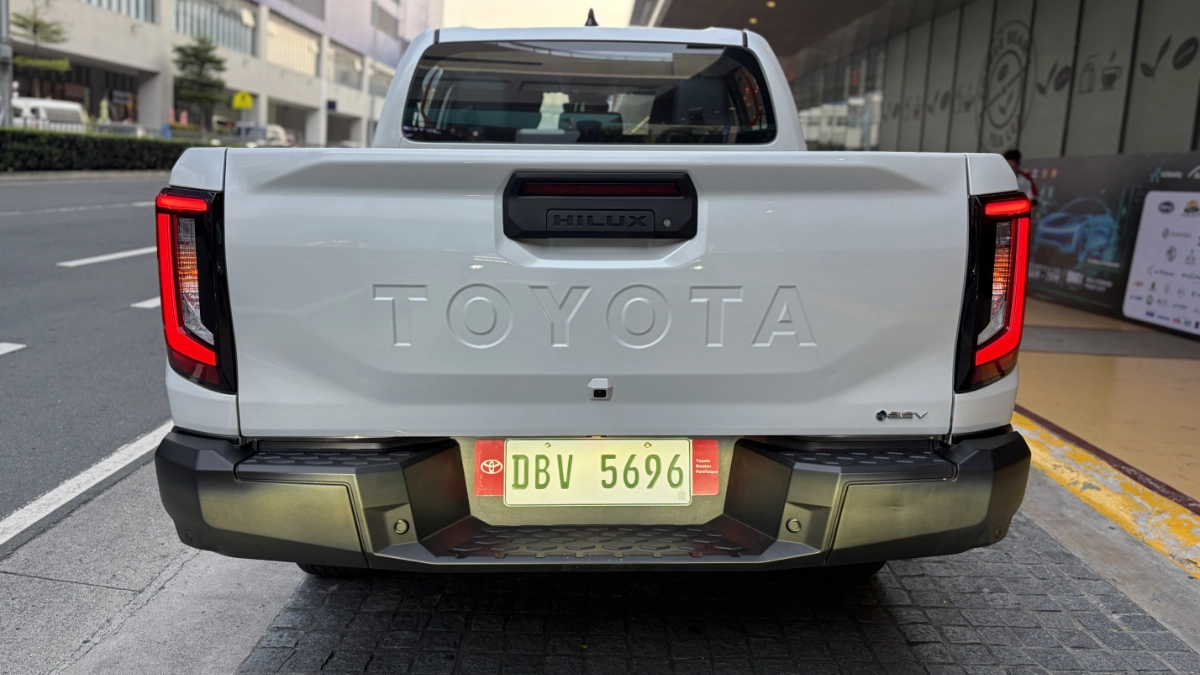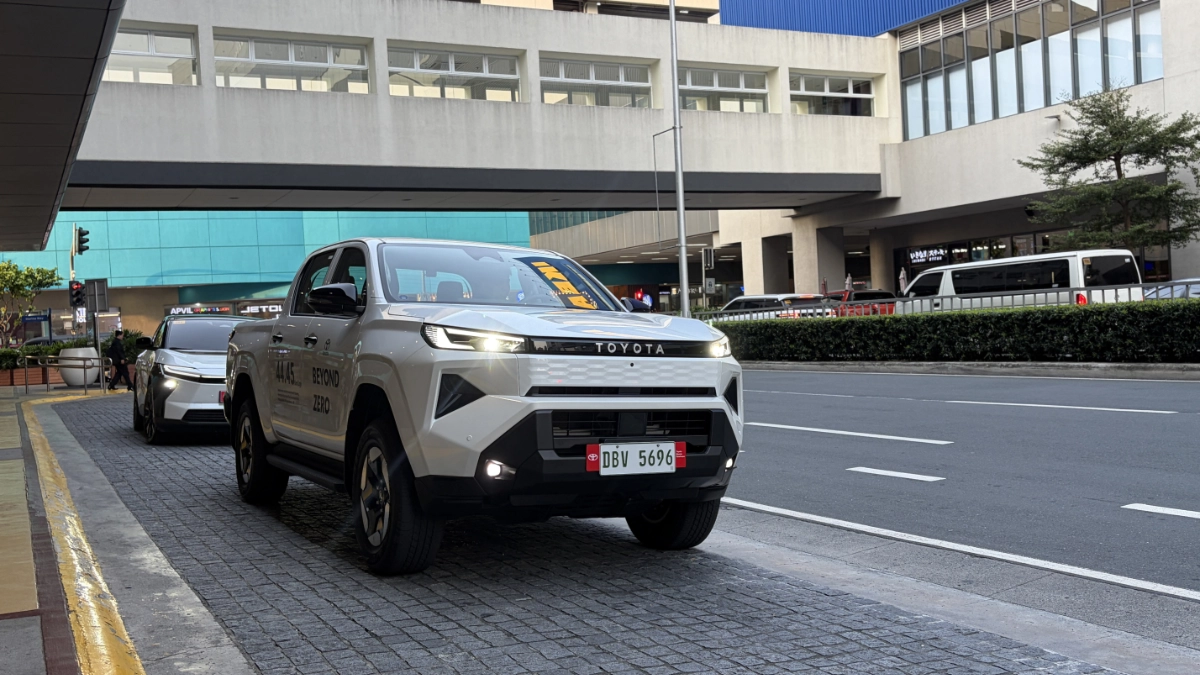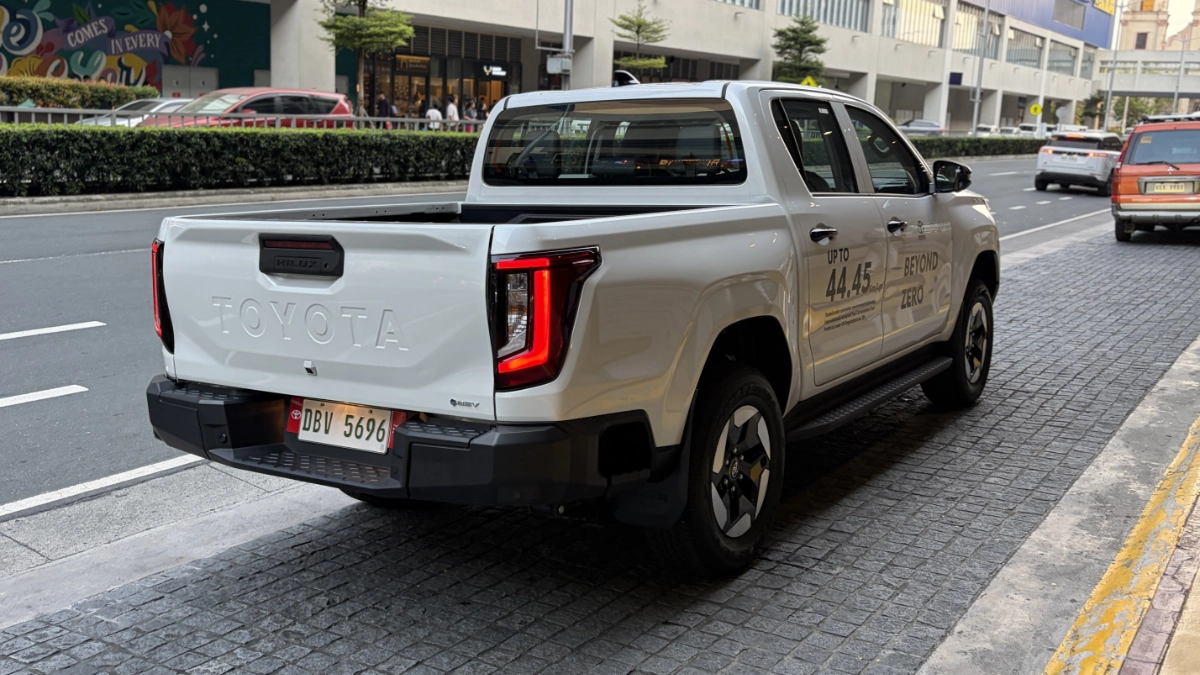
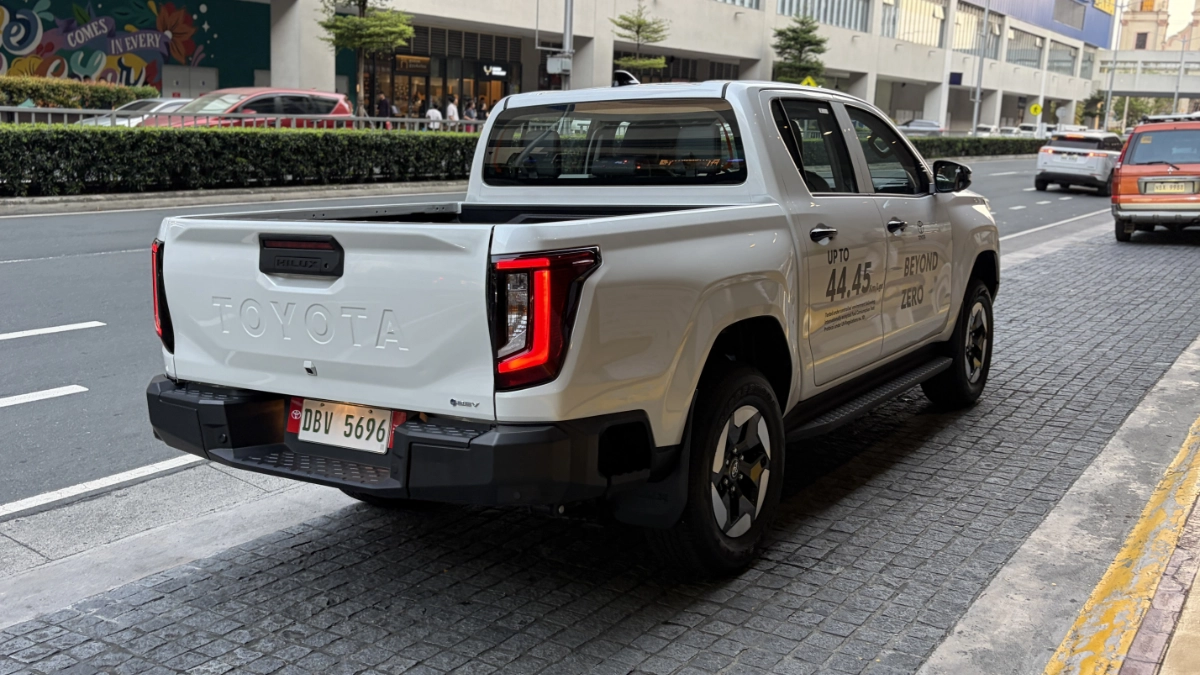
Electrification has officially caught up with the revered Toyota Hilux. The nameplate has reached legendary status for its toughness, reliability, and unbreakable nature. It wouldn’t be the subject of Top Gear’s ‘Killing a Toyota’ challenge if it wasn’t.
What hasn’t it lived through? Floods, check. High mileage, check. A building collapsing on it—oddly enough, check. But electrification? This is something new. The question then becomes, what will the Hilux become in the EV age? How will it affect its iconic status in the automotive world?
ALSO READ:
Review: 2027 Toyota Hilux Conquest 4×4 A/T
First impressions: Here’s our experience with the Suzuki e-Vitara on the race track
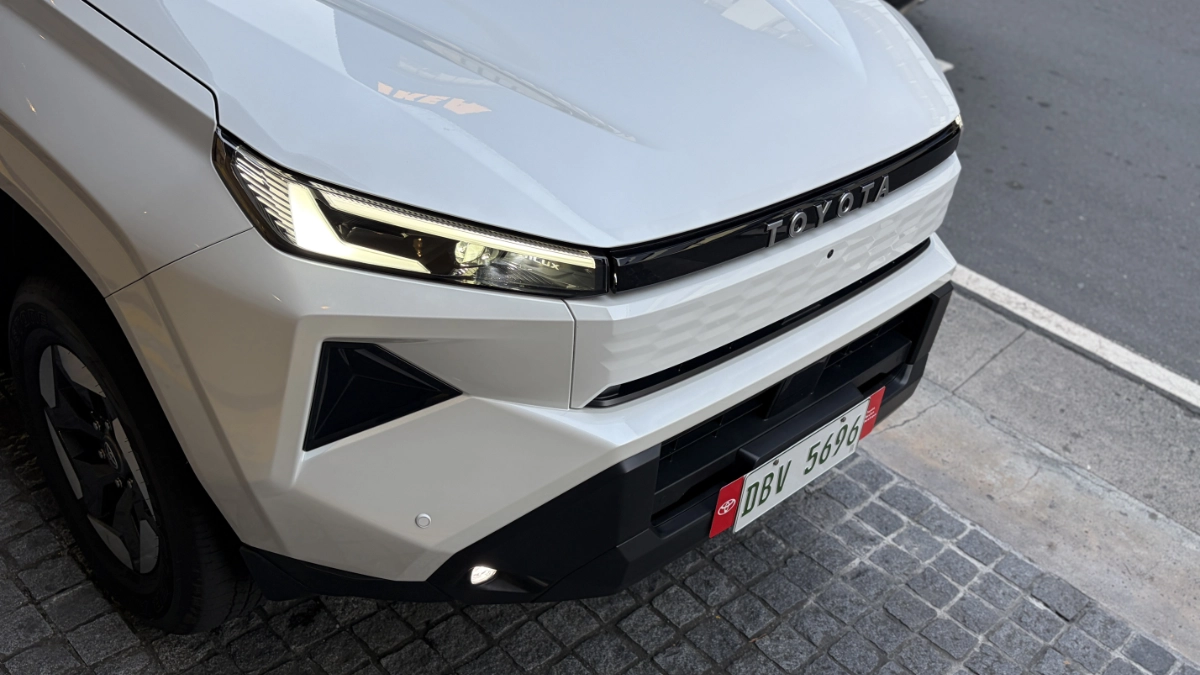
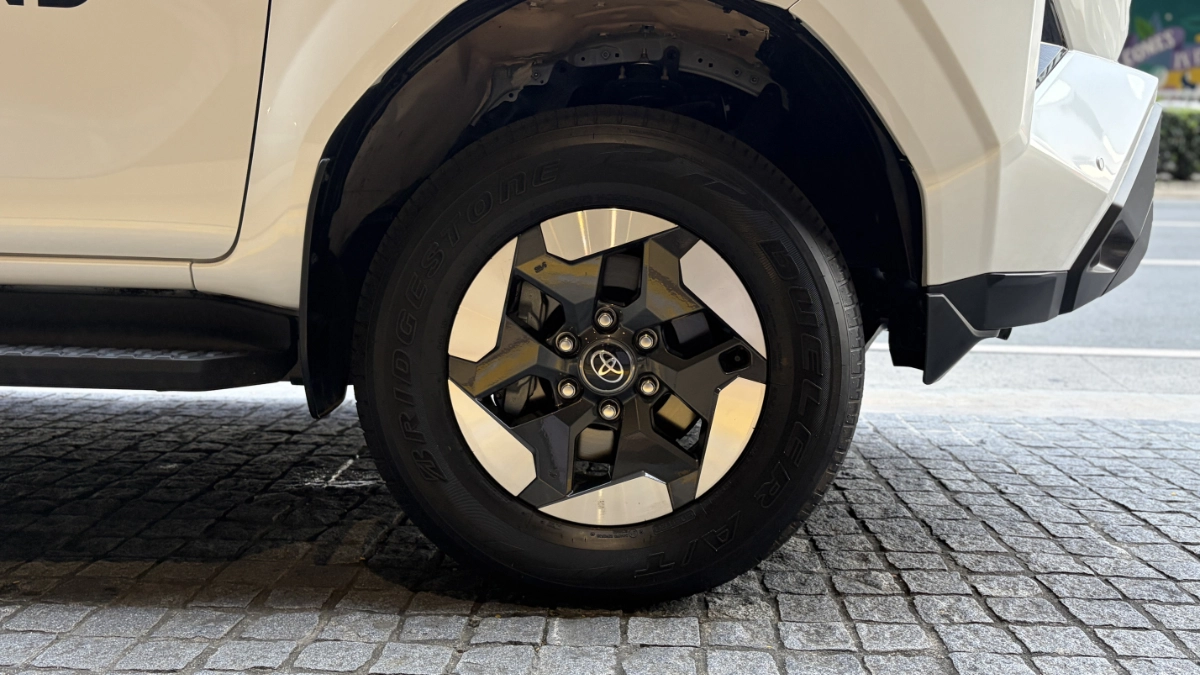
Toyota was deliberate in crafting the Hilux BEV formula. The Japanese carmaker put this truck through the same rigorous testing program as the diesel-powered Hilux, plus additional tests for the electric powertrain. While the ninth-generation Hilux is still available with a 2.8-liter turbodiesel, times are changing and Toyota had to develop this pickup before it was too late.
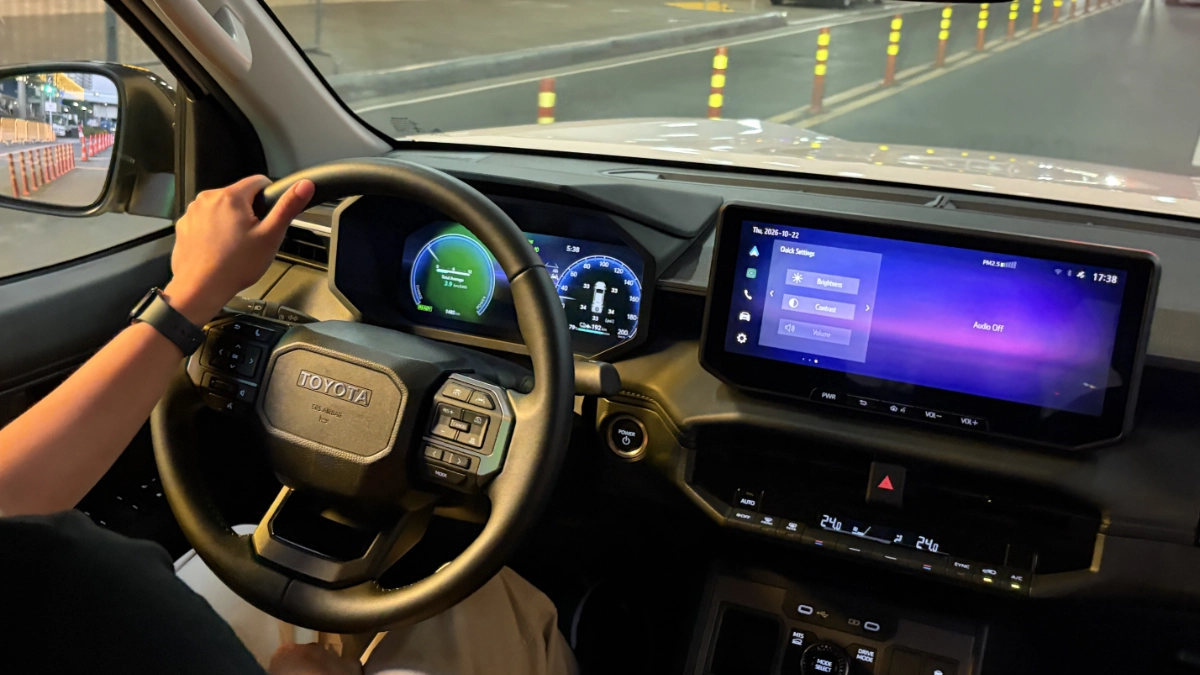
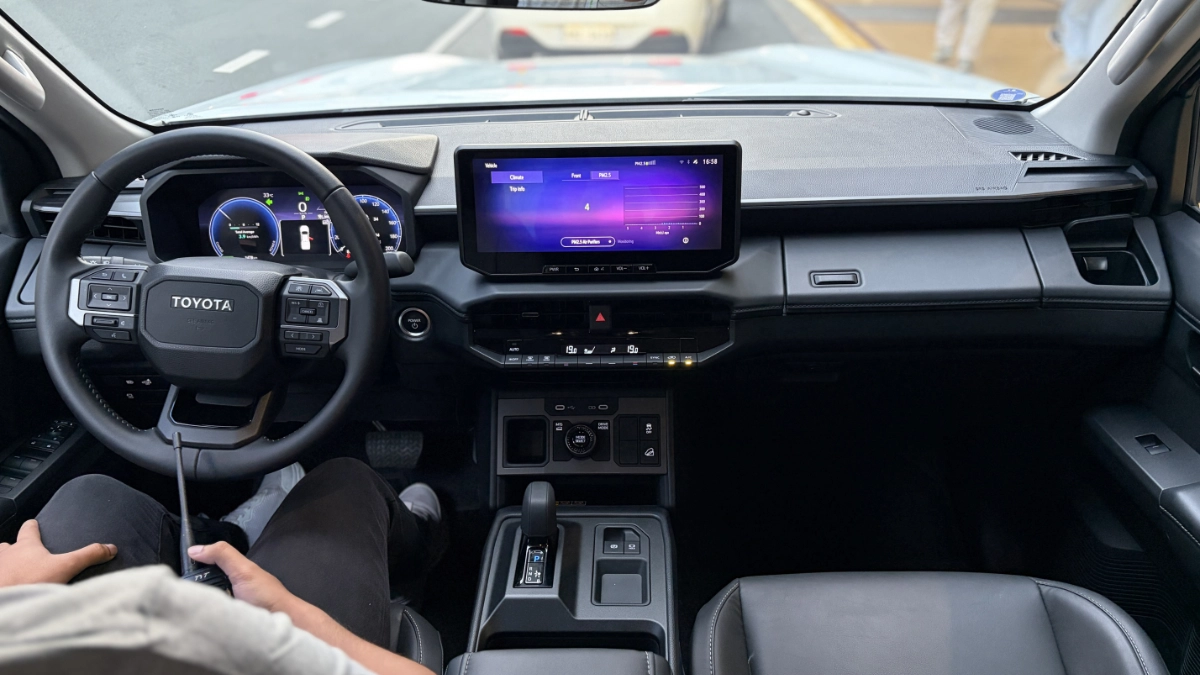
Stepping into the Hilux BEV, the cabin felt familiar. Unlike most EVs, where a flat-screen TV takes up the majority of the dashboard, the Hilux BEV’s cockpit feels nice and analog. There are lots of buttons and switches throughout the dashboard and steering wheel, accompanied by cubbies, cupholders, and a decently sized 12.3-inch touchscreen. It looks like the cabin of its turbodiesel counterpart. And as our executive editor Sharleen Banzon puts it: “If I got in this car without a chance to look at the exterior, I’d think it’s a regular Hilux at first glance.”
That is, of course, until you start it up and drive off. It’s an unusual experience driving what looks like a Hilux without the sounds and vibrations of a diesel engine. Instead, there’s just silence. The throttle is smooth, and the regenerative braking when easing off wasn’t noticeable.
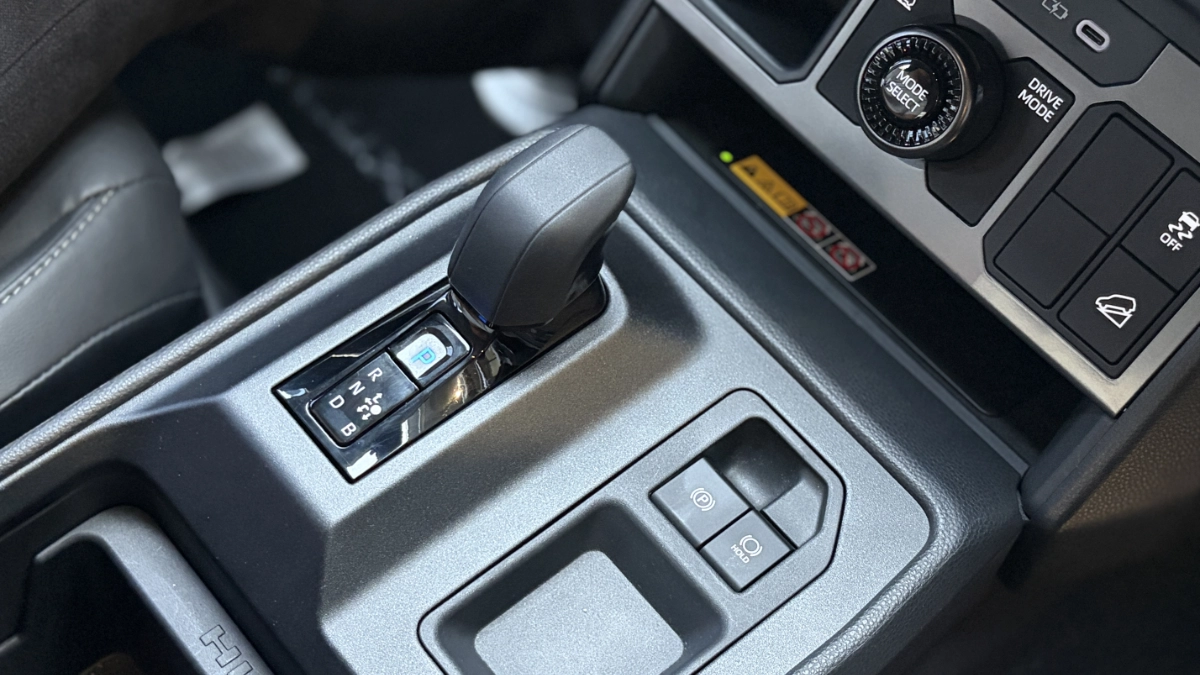
The test-drive session only lasted 15 minutes around the Mall of Asia complex, so there wasn’t enough time to try the different settings. That said, the Hilux was on Sport Mode, and when I floored it on an open stretch of road, the instant torque and acceleration made me want to take it on the highway for a longer drive.
The steering felt lighter than what I was used to in the previous-generation model, but it wasn’t too light to the point of feeling dull. The ninth-gen comes with electric power steering on both the BEV and turbodiesel models, which still gives the driver good feedback for road imperfections. You also still get the same tall seating position with good visibility out the windows.
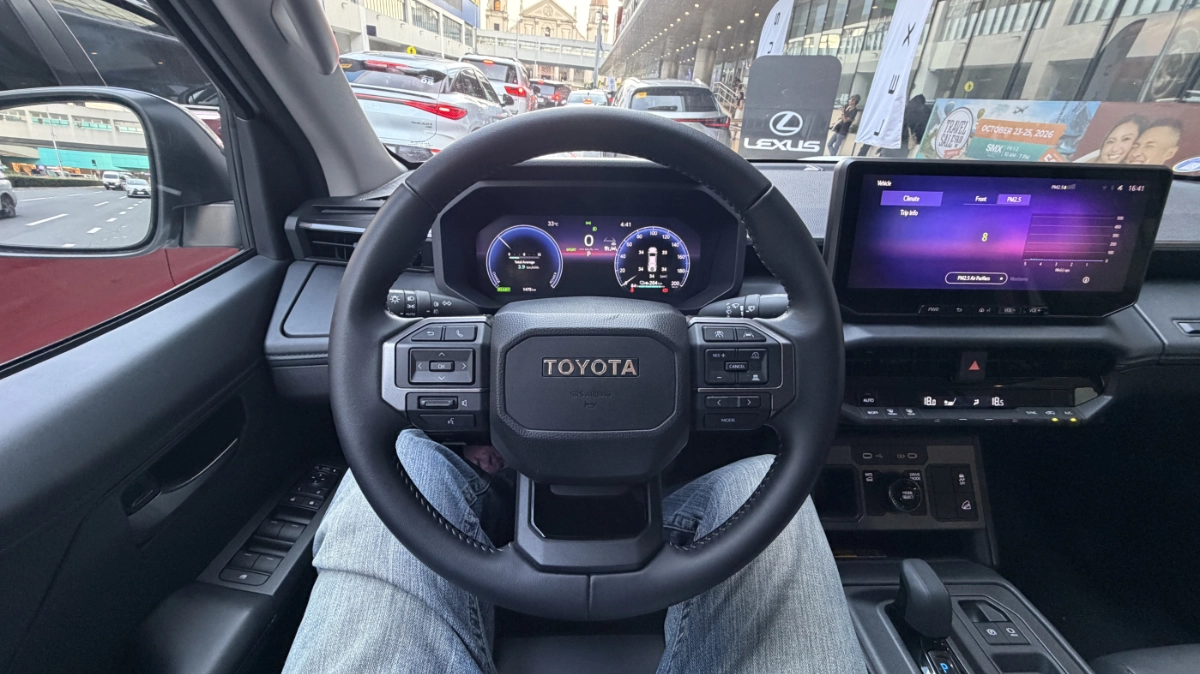
Sitting at a stoplight, I took time to knock on and feel the surrounding surfaces. The driver and front passenger doors had padded materials by the window sills, while the rear doors had hard plastic. The leather seats had decent support, and the center console armrest was padded as well. However, if you’re particular about having the center console and door armrests at the same height, you’d find that the center console’s armrest is slightly higher.
Before our last turn into the driveway, I did notice the Lane Tracing Assist trying to keep me in the center of the road, but it wasn’t aggressive at all. I’ve driven cars where I needed to fight the steering wheel through new road markings painted over old ones. Thankfully, this isn’t the case with the Hilux BEV.
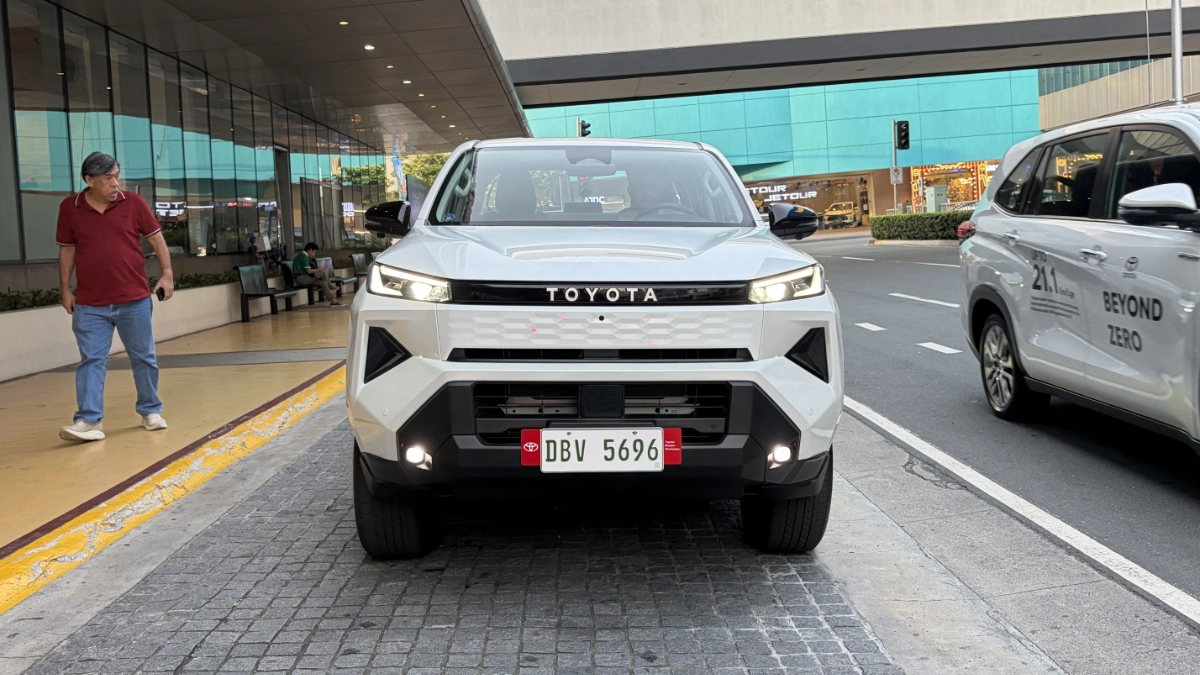
Yes. Whether that’s a good or a bad thing is up to you. The ride and cabin do still feel like a Hilux. The rear still features leaf springs, so while the ride won’t be as plush as a pickup with coil springs all around, it can still haul a decent load in the truck bed. Comfort was never the Hilux’s forte to begin with; it was always about utility.
But that brings us to something more than how the truck feels—how people are going to use it. Driving the Hilux BEV around the block is different from taking it out in real-world conditions. While this truck can haul up to 715kg safely, that’s less than the turbodiesel version’s one-ton load capacity.
Also, the fully electric range is listed at 315km NEDC, even less with the WLTP standard. So going to provinces where charging stations are few and far between requires more planning. And then, there’s the price—P2.99 million. There’s no going around it; it’s expensive, especially for an EV that’s supposed to be more utilitarian than luxury.
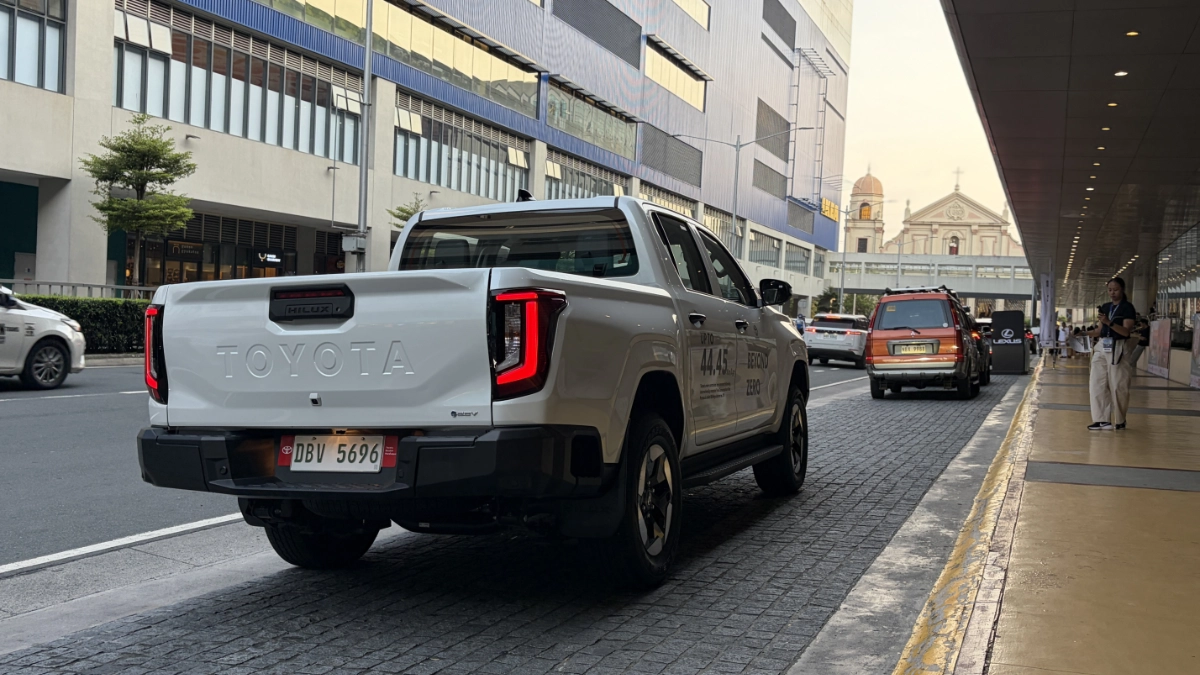
All these things sound like limitations for the Hilux BEV compared to the turbodiesel model, and they are. While electrification may have already caught up to the Hilux, it hasn’t caught up to our motoring ecosystem. Local charging infrastructure isn’t quite there yet for a BEV to get the same freedom as internal combustion engine-equipped models. And while that remains the case, diesel is still king for pickup trucks.
But Toyota has merely begun crafting the Hilux’s electrification. This isn’t the end game. Compared to several generations mastering the diesel powertrain, this is the first generation of an all-electric Hilux, and we can only expect the technology to get better from here. With an equivalent consumption of 44.45km/Lge, that’s not bad at all for utility inside the metro. And at least Toyota has nailed the Hilux feel on its first try. But will that be the case on a longer drive? We’ll have to wait until we can take it on a road trip and take you along for the ride.