In September of last year, the all-new BMW iX3 was revealed as part of a series of new electrified vehicles meant to make individual mobility more intelligent, more human and more responsible. The all-new BMW iX3 and the following series of vehicles are what BMW calls the Neue Klasse, a ‘quantum leap’ in technology and sustainability that prioritizes a circular economy approach as well as introducing a minimalist and human design language that will reshape the brand’s aesthetic.
This is not the first time, though, that BMW has used the term ‘Neue Klasse,’ because in 1962, the brand introduced a line up of sedans and coupes meant to keep the company alive after the financial crisis of the 1950s and to reestablish BMW as a maker of premium sports sedans.
Designed by the legendary Wilhelm Hofmeister (yes, the ‘Hofmeister Kink’ guy), the Neue Klasse of the 1960s were cars were made for the very competitive 1.5 to 2.0-liter segments where BMW had been absent from since World War 2. Models included the 1500 sedan, 2000 sedan, and 2000C and 2000CS coupes, the latter of which were powered by the now legendary BMW M10 4-cylinder engine. BMW AG immediately felt the significant financial impact of the Neue Klasse series of cars breaking even in 1962 after years of losses and eventually making the company profitable again in 1963.
ALSO READ:
Retro review: The Jaguar E-Type remains one of the most beautiful cars ever made
Retro review: The Toyota 2000GT is a sophisticated piece of engineering
By the mid-1960s, BMW saw the potential of a smaller, two-door version of its Neue Klasse 1500 sedan, so Hofmeister assigned designers Georg Bertram and Manfred Rennen to create the 1602 with the 02 denoting a two-door car. Revealed to the public at the 1966 Geneva Auto Salon, the 1602 was shorter than the 1500 sedan by about 23cm, weighed just 940kg, and was powered by a 1,600cc version of the M10 engine producing 85hp. The BMW 1602 was lighter, moved faster, and had better handling compared to the 1500 sedan, making it an exciting two-door coupe that had seating for four and decent luggage space.
Car guys however will always be car guys, and in this case, BMW head of product planning Helmut Werner Bonsch and the M10 engine designer Alex von Falkenhausen both installed 2.0-liter versions of the M10 engine into their 1602 company cars—and rather amazingly, they did this unknown to each other! Both gentlemen got together presented their ideas to the BMW AG board who quickly approved the project when it was revealed that the 2.0-liter version of the M10 would meet US emission standards where the 1.6-liter version failed. And thus, the legendary 2002 was born.
The BMW 2002 officially debuted in 1968 with a single-carburetor base model with 100hp and a 2002ti version featuring twin Solex 40 carburetors, a higher compression ratio and 120hp. The simple but effective suspension setup featured MacPherson struts up front with trailing arms, coil springs and an anti-roll bar. The rear suspension was made up of semi-training arms, coil springs, tube shocks all mounted on a subframe for added rigidity. Despite not achieving the magical 50-50 weight distribution, the 2002 delivers “go-kart” like handling with its raw, direct and engaging experience. Steering the car is non-assisted ZF mechanical steering box while brakes are front discs and rear drums.
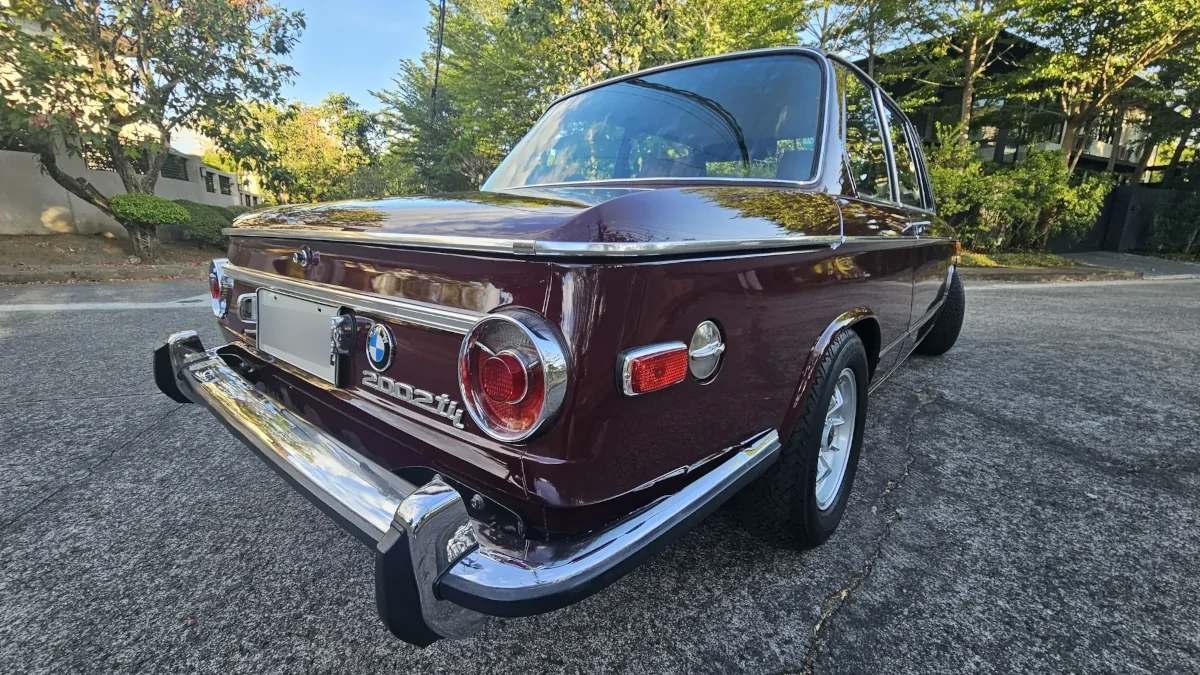
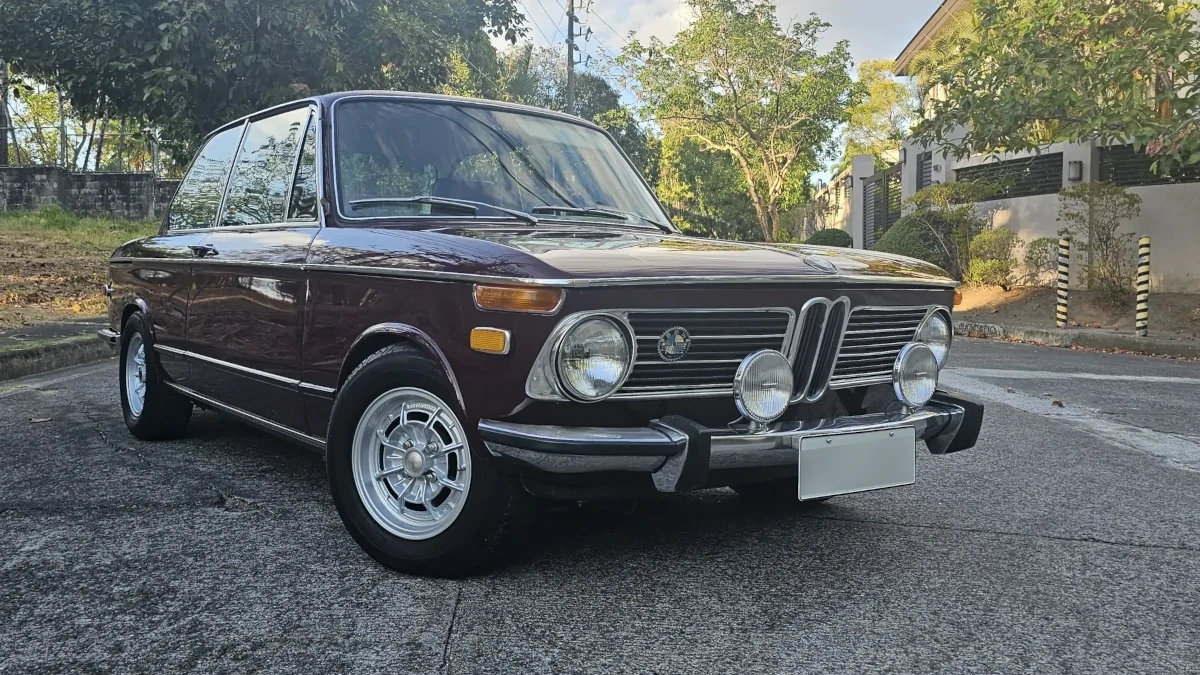
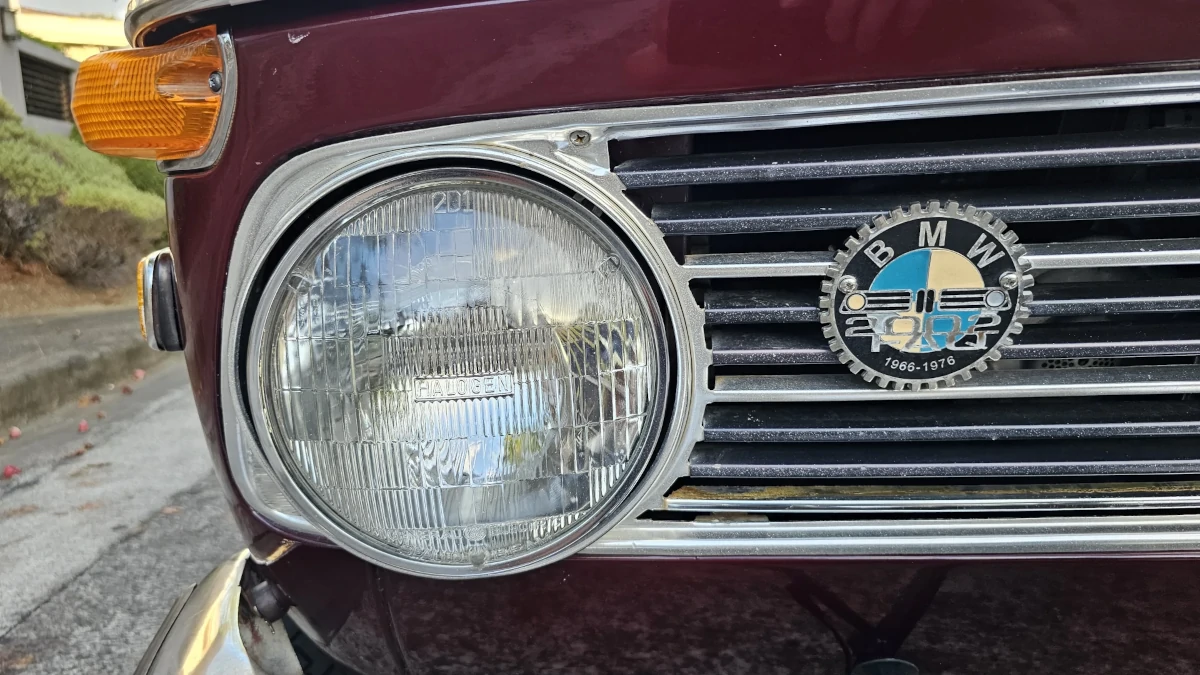
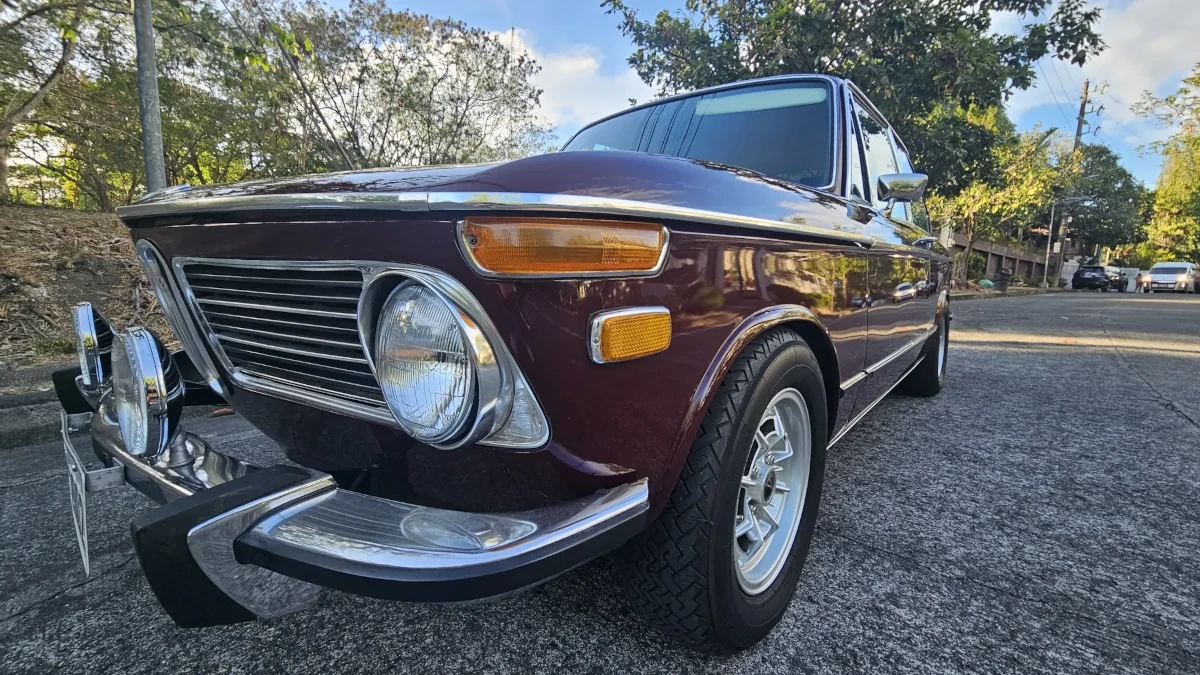
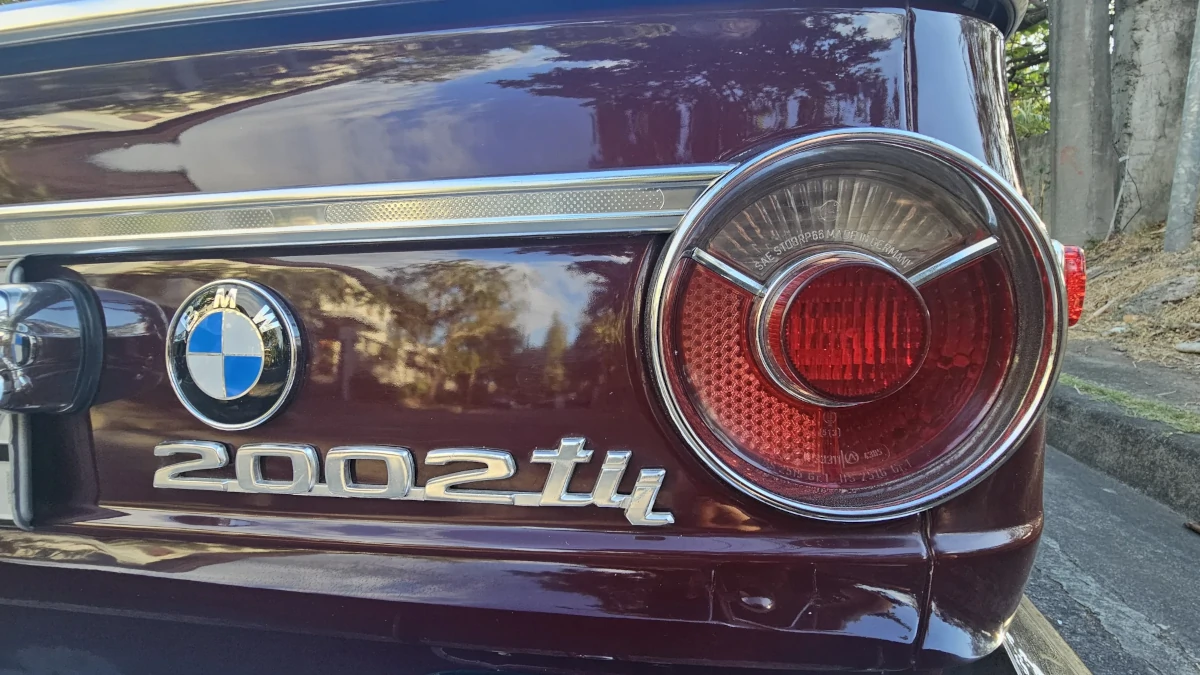
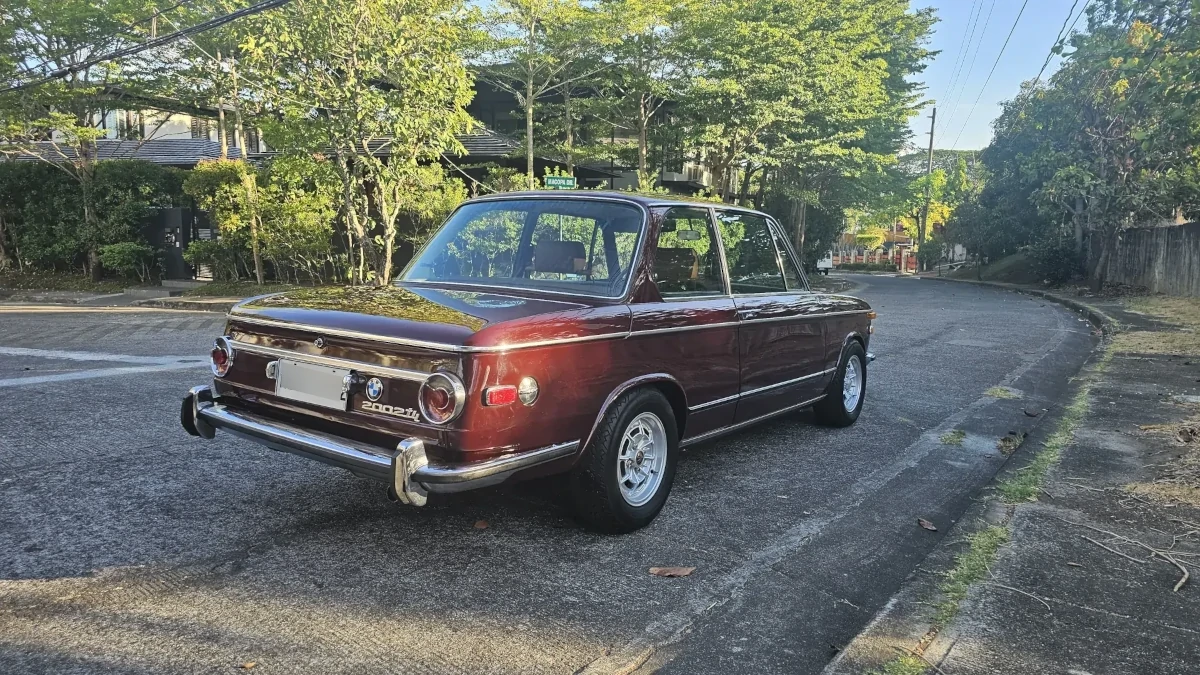
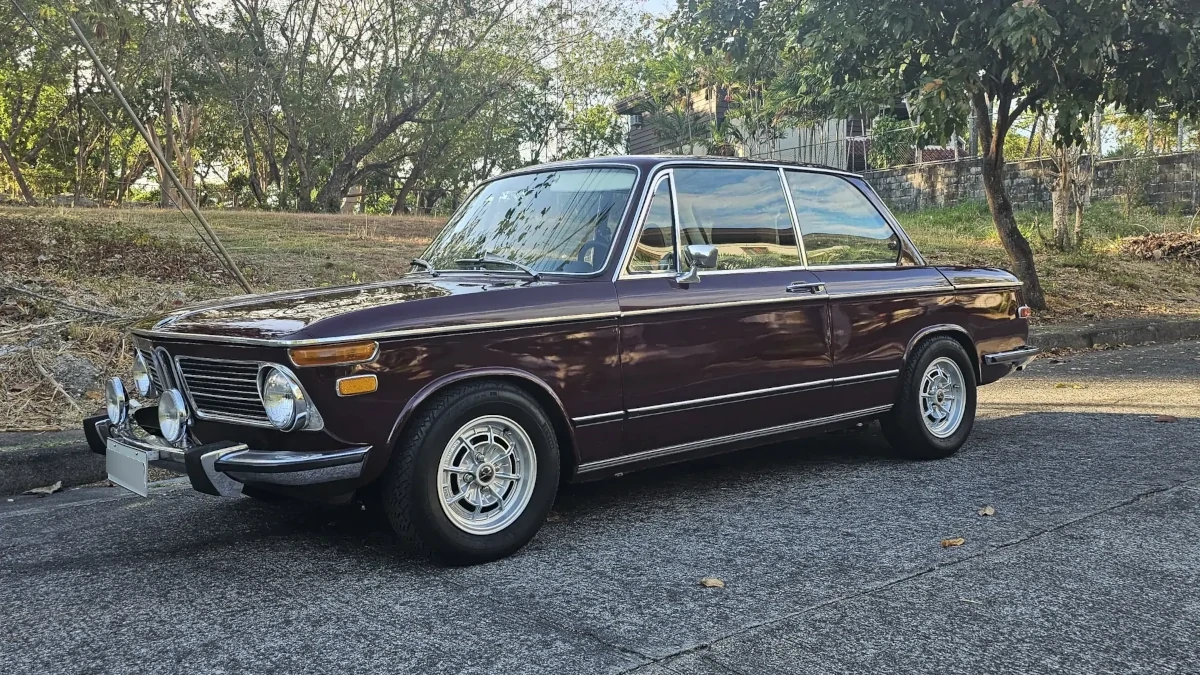
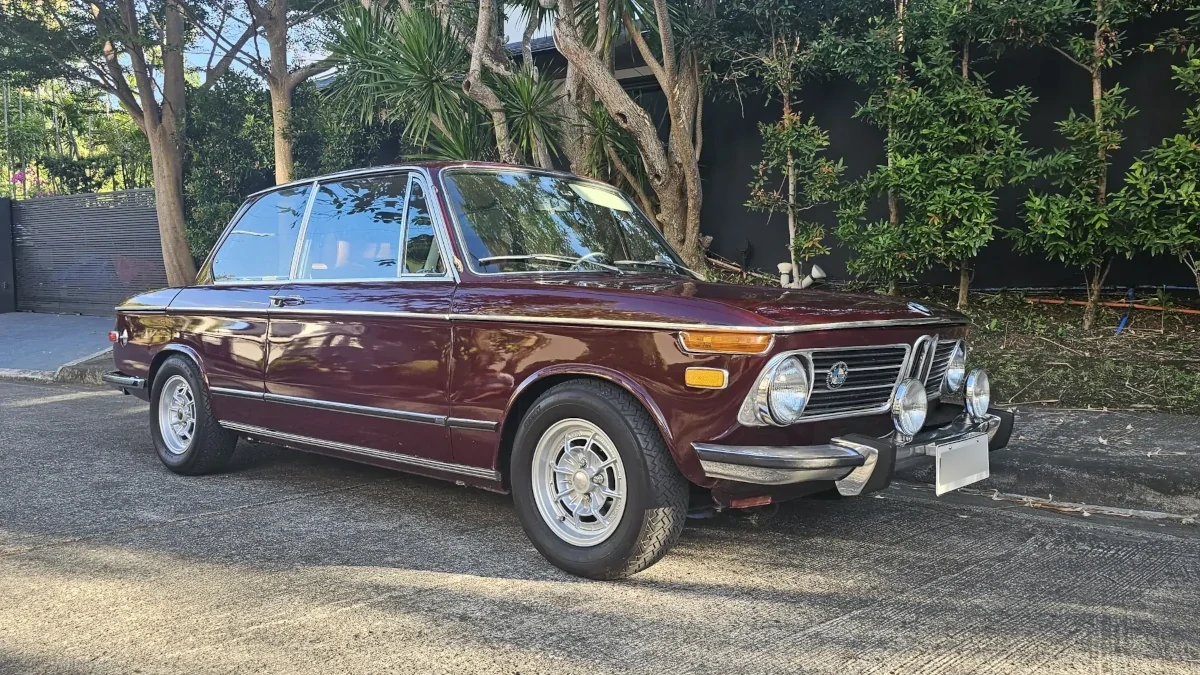
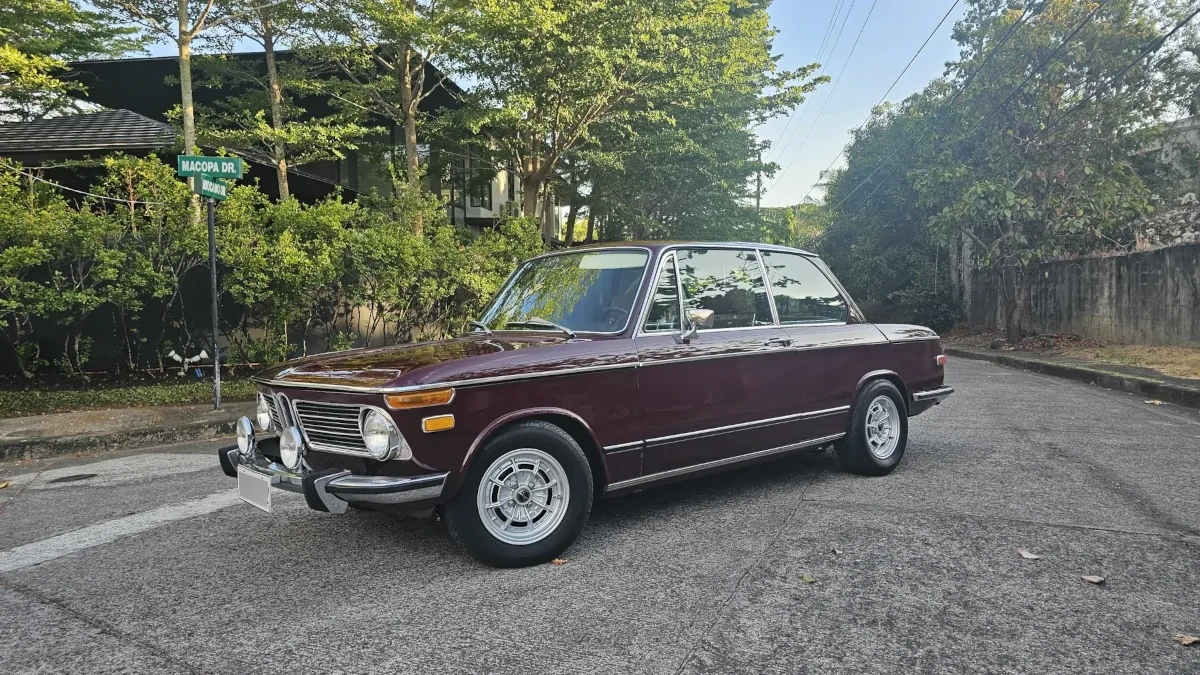
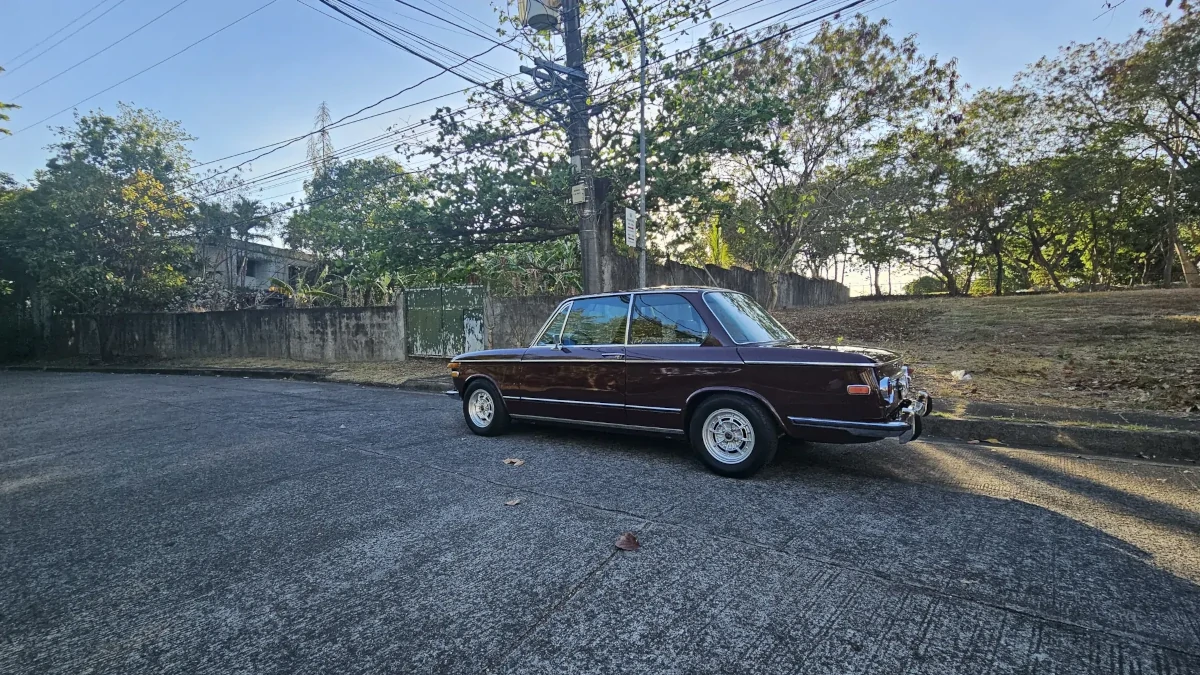
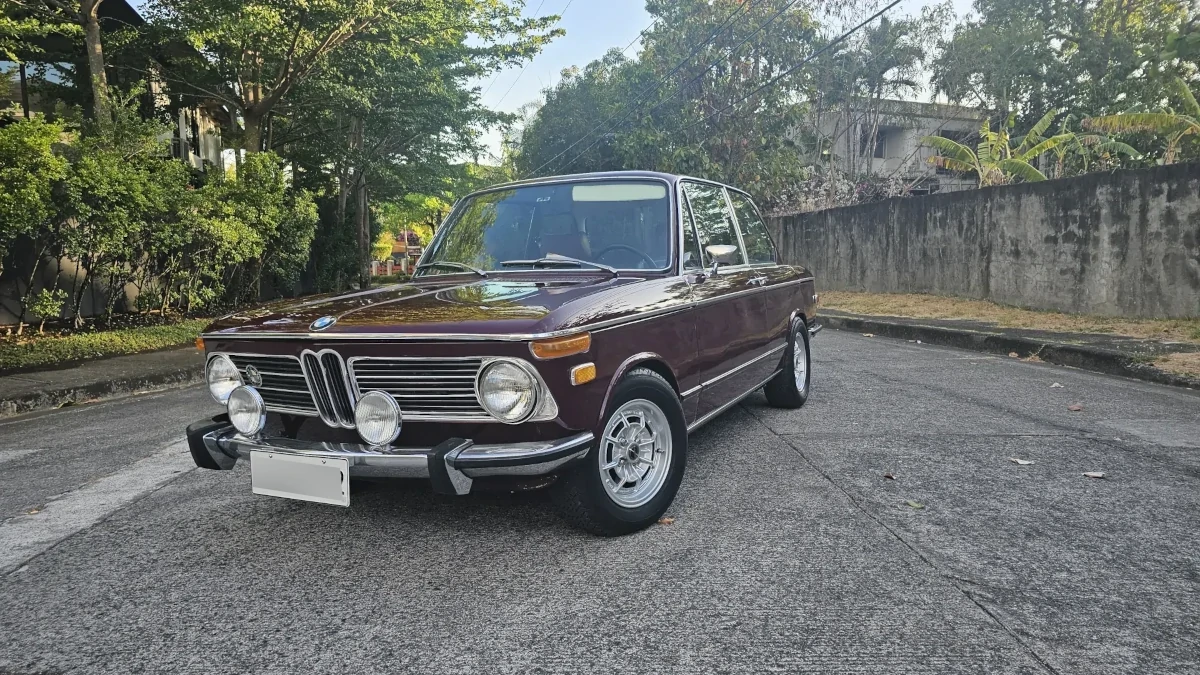
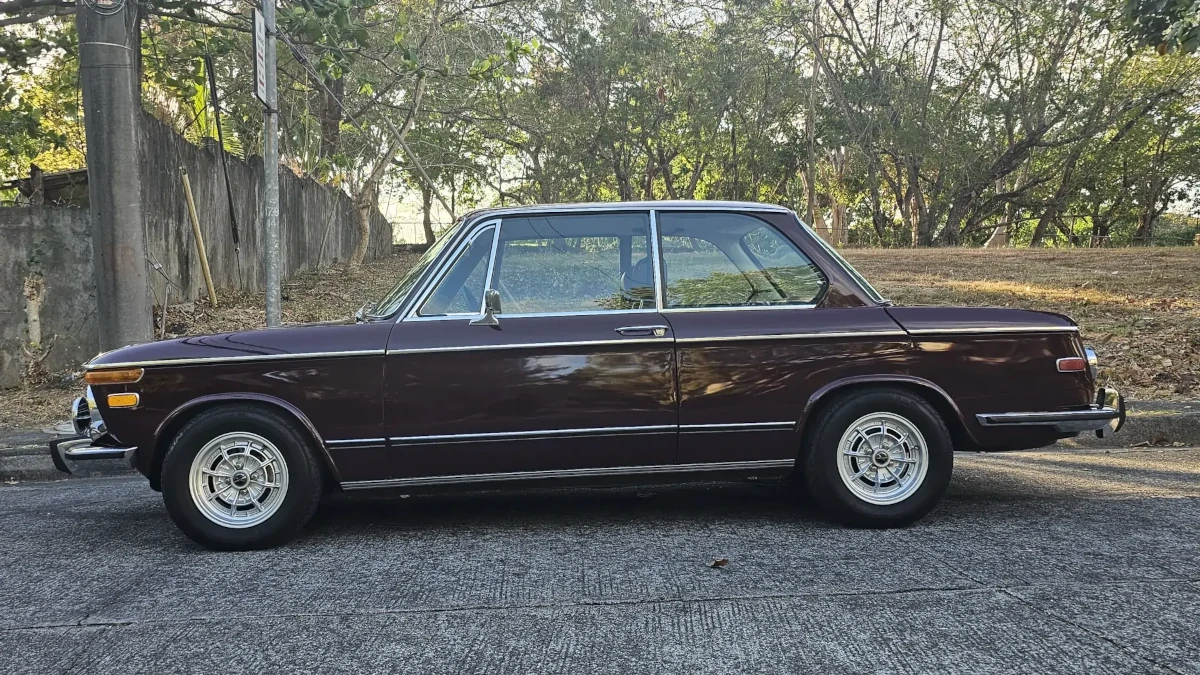
From the outside, the BMW 2002’s three-box design is classic BMW with short front and rear overhangs, a long clamshell hood and set-back passenger compartment. The signature twin kidney grille—a BMW feature since 1933 greets you up front, while the chrome belt line trim runs through the entire almost flat side of the car. It goes all the way to the rear, which features twin round taillights that were eventually replaced by squared-off ones in the late 1973 facelift.
A prominent design feature of the 02 (and other Neue Klasse) cars is the Hofmeister Kink, an extra angle located at the base of the C-pillar, giving the rear window a unique shape that is meant to highlight the car’s rear-wheel-drive configuration and the abundance of glass and the very thin pillars gives it the greenhouse effect.
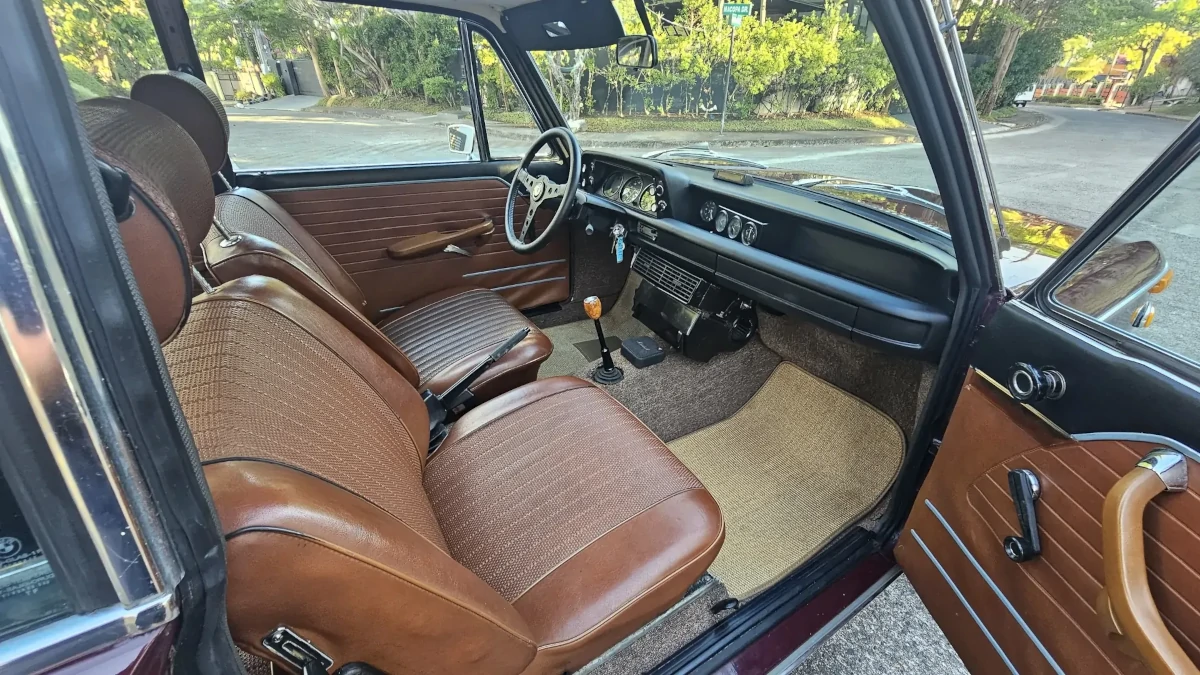
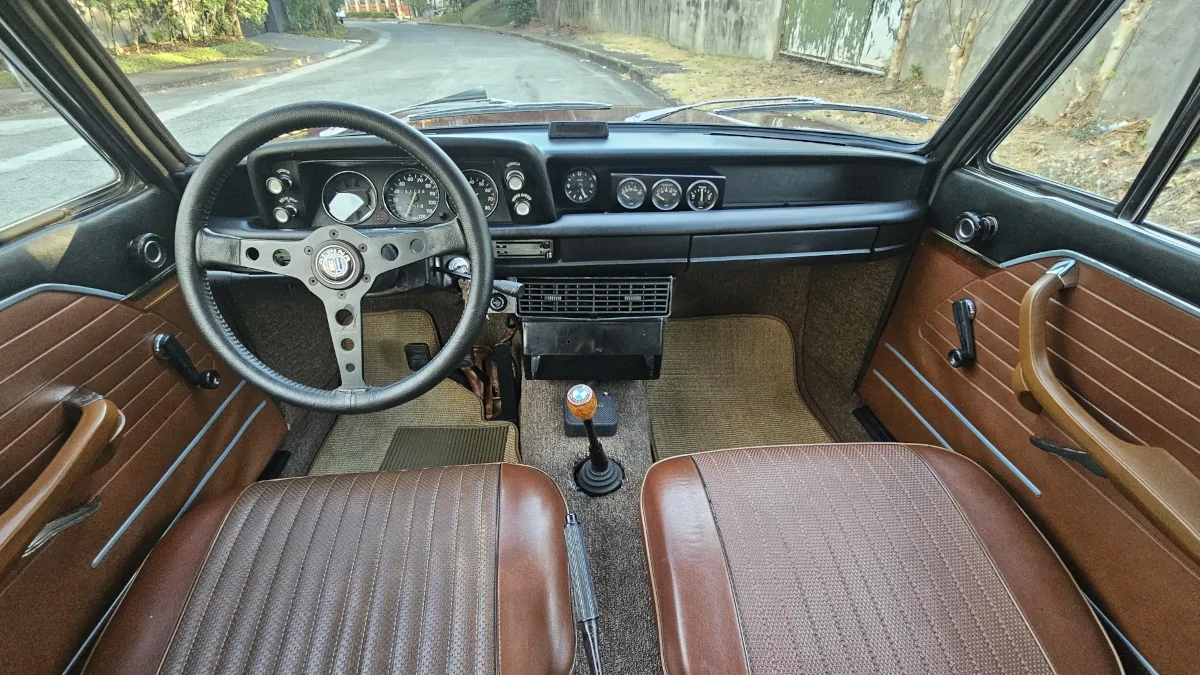
Inside, the BMW 2002 is very German—clinical, efficient and minimalist. The two-piece instrument cluster was functional and straightforward emphasizing the car’s role as a performance oriented sports sedan. Materials used in the 2002 are what can be considered premium for the era with hard wearing vinyl used generously. Front seats are surprisingly comfortable for a car from the 1960’s while the rear seats are surprisingly spacious despite the shorter overall length no doubt designed to accommodate your average German.
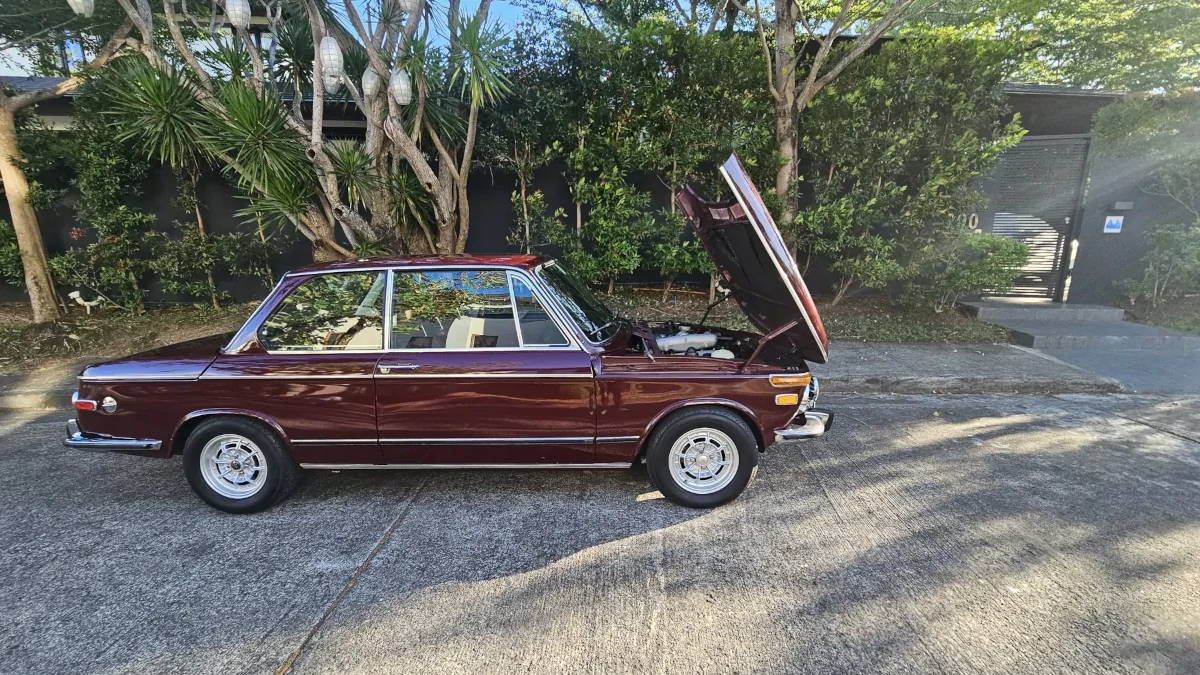
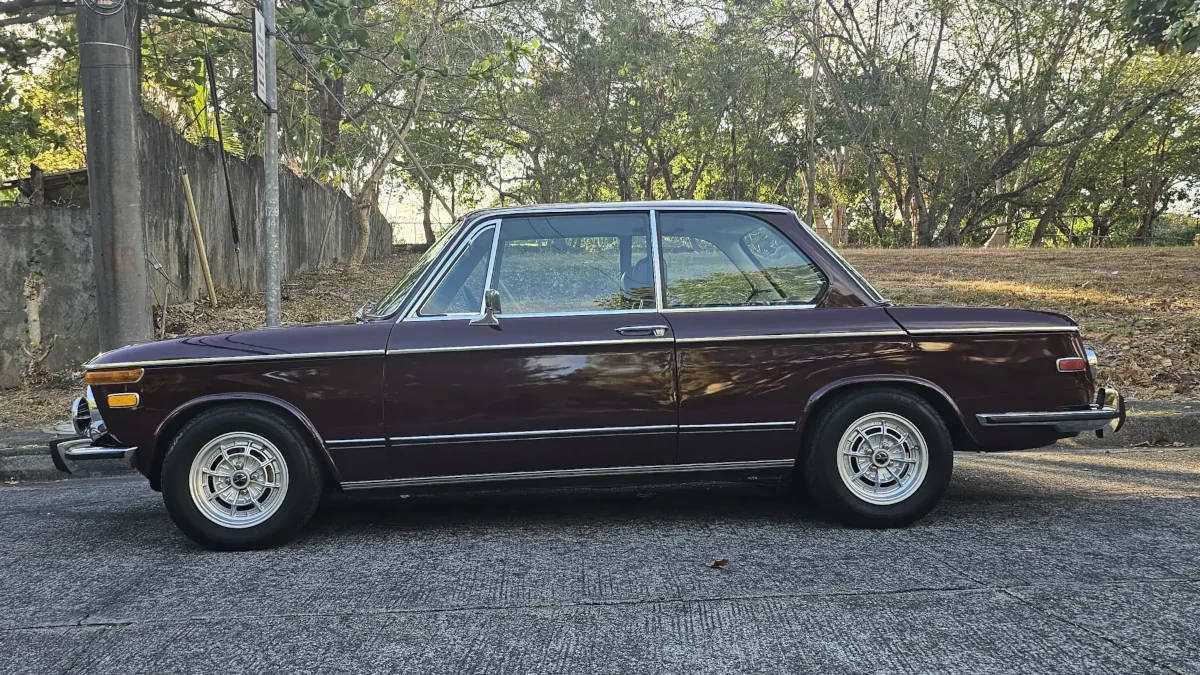
The early 1973 BMW 2002tii ‘roundie’ featured here today was imported from the United States by a returning Filipino resident during the pandemic—a very tasteful choice for his balikbayan privilege.
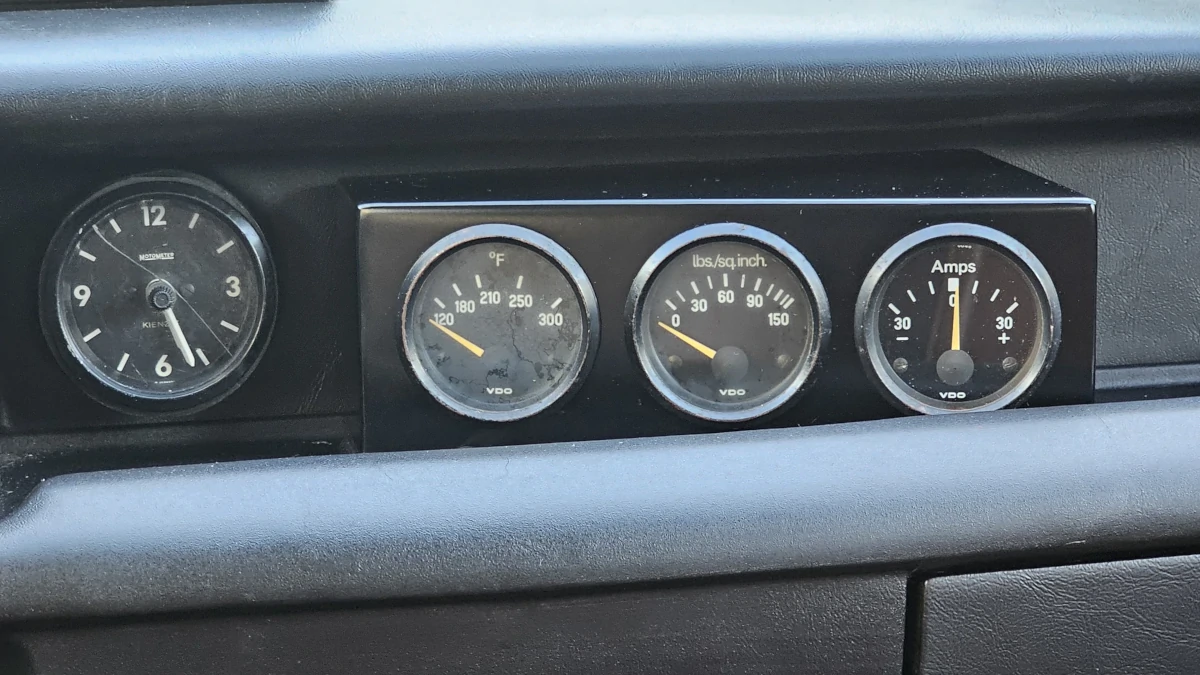
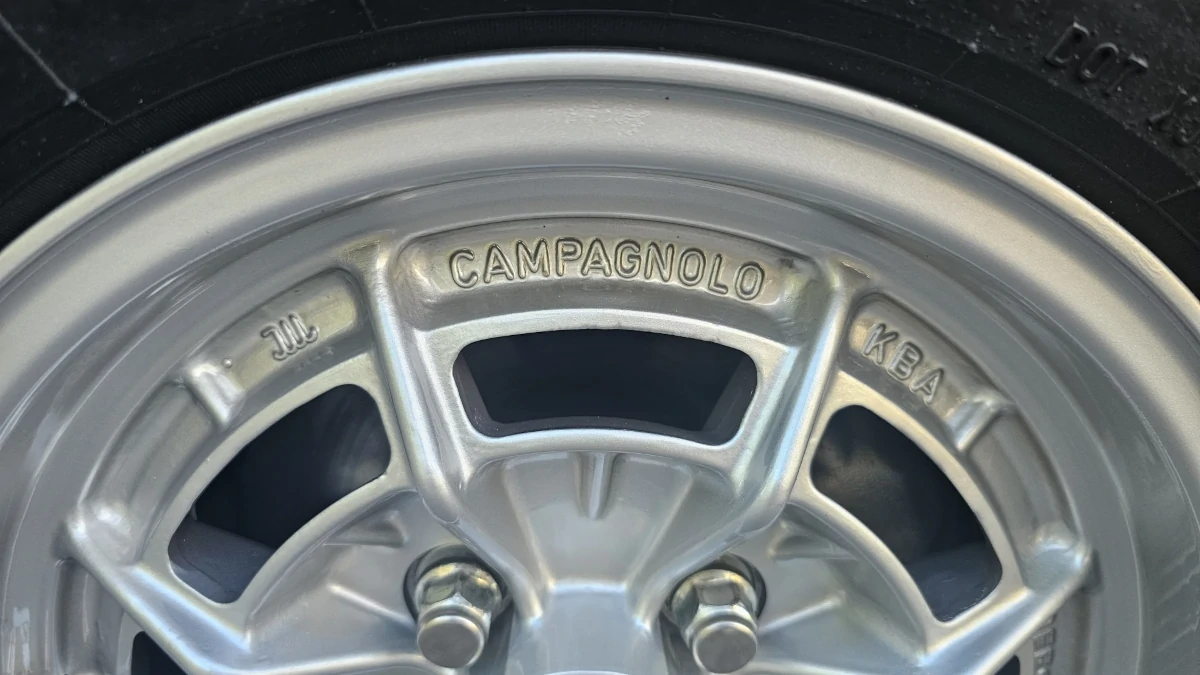
Finished in Malaga Red with a medium brown interior, the car features period-correct modifications like Campangolo alloy wheels, a Getrag 235 five-speed gearbox, an Alpina instrument cluster, and a three-spoke steering wheel. Currently showing just over 153,000 miles (245,000km) on the odometer, we know the car was heavily enjoyed by the previous owners.
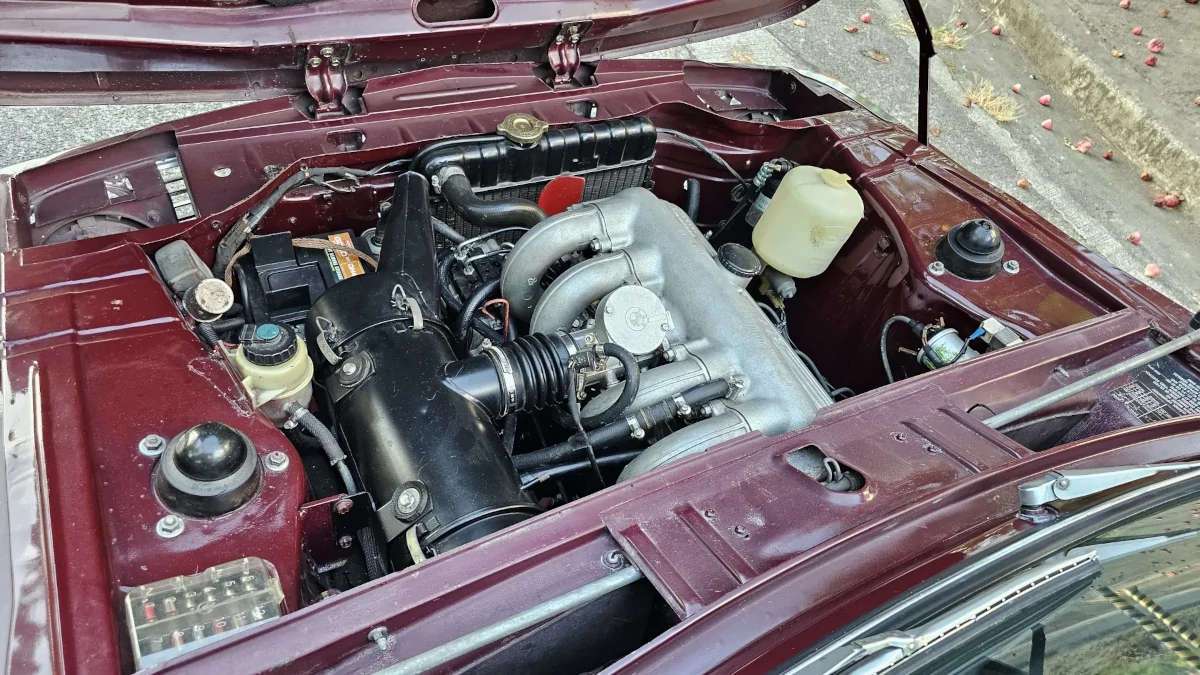
The exterior was given a fresh coat of paint some years back, while the interior is in mostly original state, showing some wear from normal use. Mechanically, the M10 under the hood went through a rebuild in 2012, but it still maintains the original Kugelfischer fuel-injection system. Finally, to make driving the car more bearable in the summer heat, an air-conditioning system with an electric compressor was fitted together with an upgraded alternator to handle the additional power requirements.
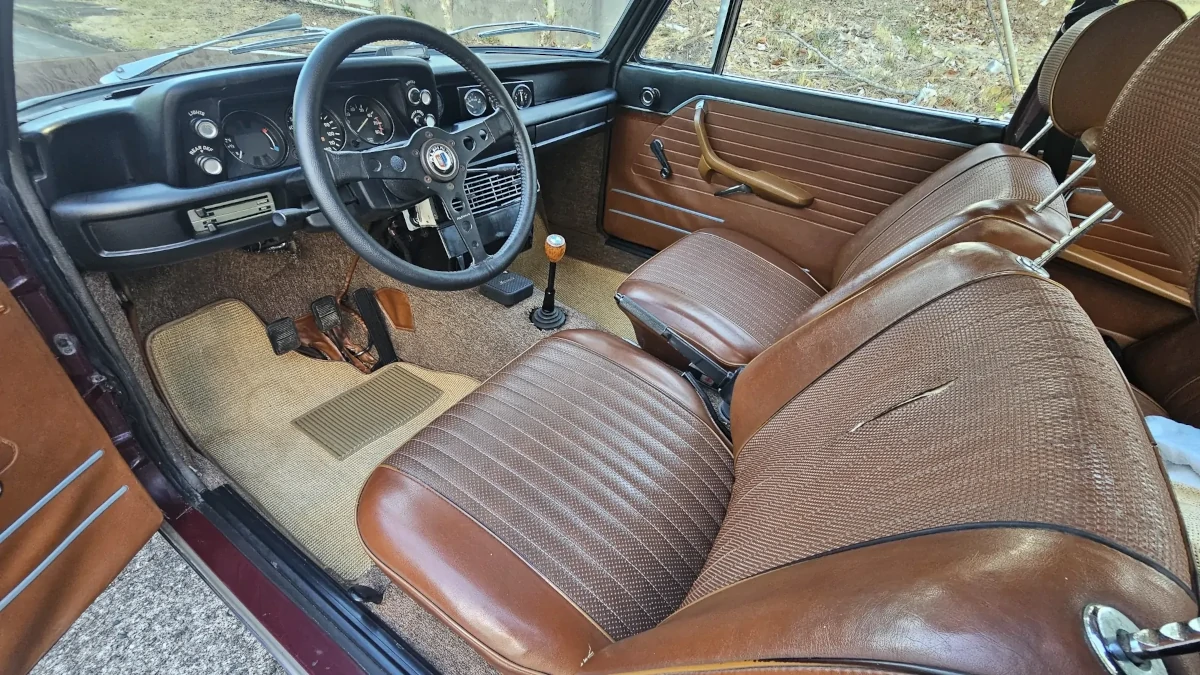
Getting into the car is pretty straightforward and once you are seated, the ‘greenhouse’ cabin of the 2002 gives of a light any airy feeling and offers great visibility. Aside from the rather upright seating position and even more upright steering wheel, ergonomics are good as everything is where it needs to be. Starting the car requires a little massaging of the throttle pedal, though, but the 2.0-liter fires up easily. The floor-mounted clutch pedal is relatively light, but personally I feel the pedals are too close together especially for my size 12s
Once you engage first gear, the car launches smoothly. Steering is light despite the lack of assistance—this 2002tii is quite easy to drive and makes you feel comfortable and ‘one with the car’ immediately. The 2.0 liter drives strong, feeling much stronger than the rated 130hp, something that has been somewhat a trademark characteristic of any BMW. The fuel injection makes the car a lot more flexible, developing a lot of its 177Nm at lower RPMs.
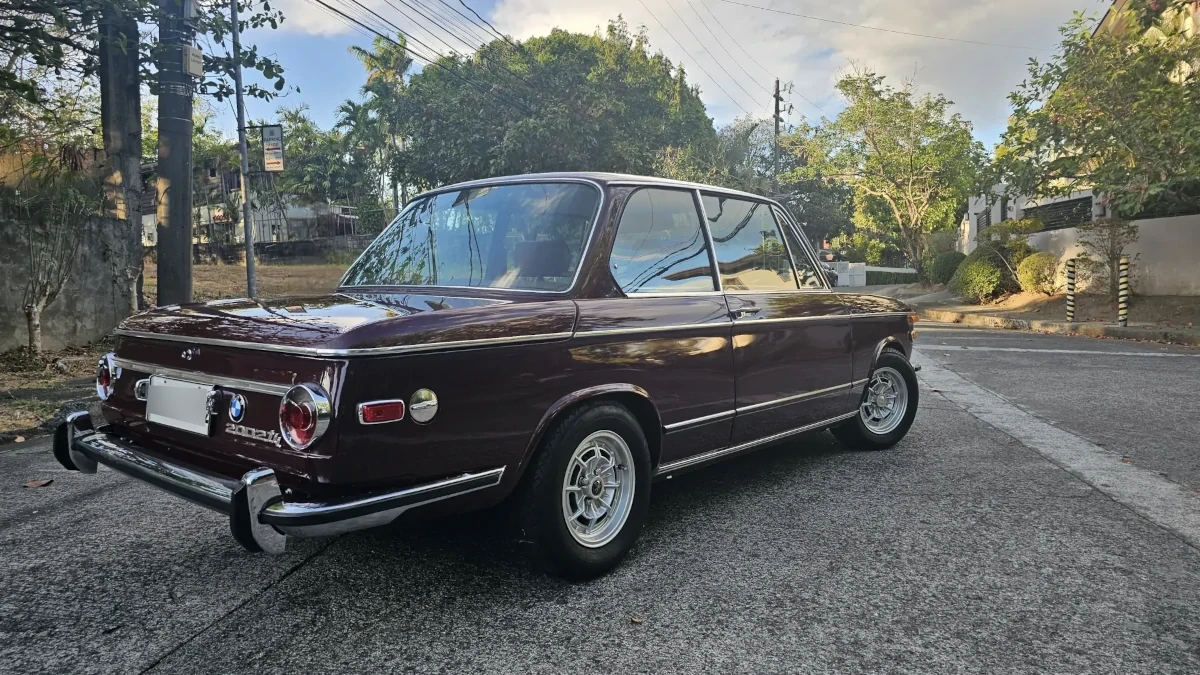
The suspension is a bit firm but in no way harsh which is perfect for the sporty nature of the car and surprisingly, the ground clearance is quite good with the car not scraping its floor while going through speed bumps.
Overall, driving the 2002tii was a very enjoyable experience, making me believe that by the time it hit the market, it truly was a very well-sorted machine and did not feel as old as some of the cars I have driven of similar age.
The BMW 2002 was introduced in 1968 as a solidly engineered sports coupe that was more practical than its competitors with German engineering and quality control. Close to 400,000 units of the BMW 2002 were built from 1968 to 1975, many of which still survive today. The prices in the market reflect the collectable appeal of this car, especially the 2002tii and 2002 turbo.
Most important though, the BMW 2002 played a large part in saving BMW financially as well as creating the identity of BMW as the ‘Ultimate Driving Machine.’ This part of its DNA is still present today in the G42 2-Series coupes and the G87 M2 coupe.
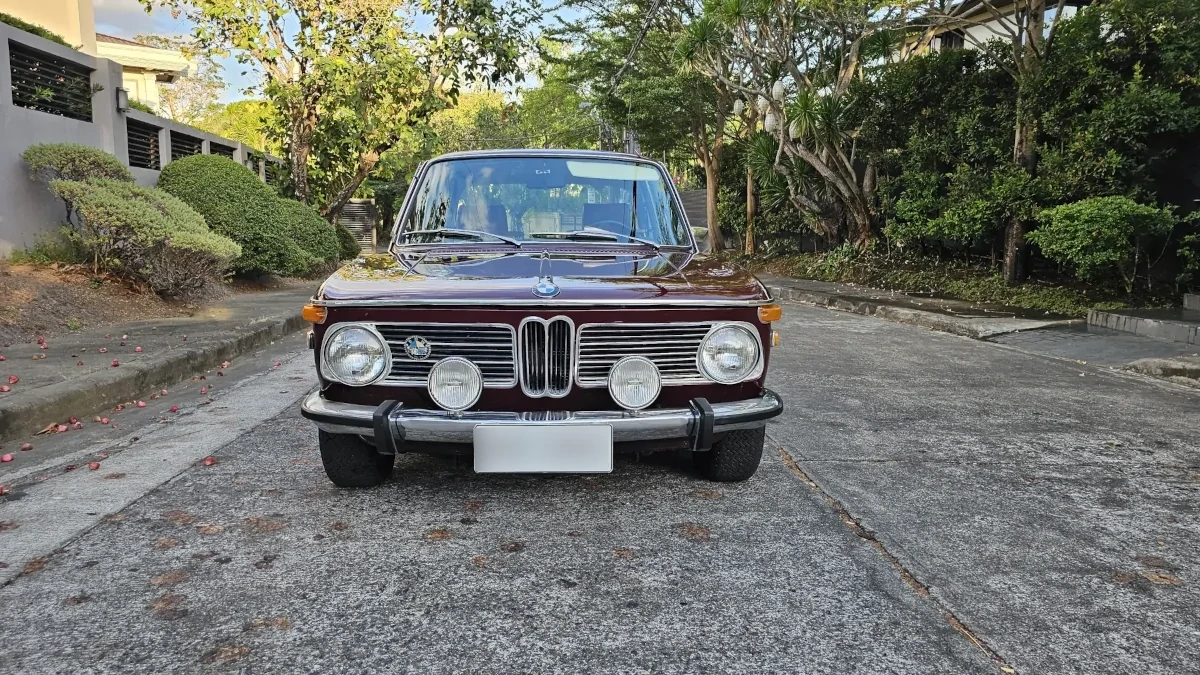
Engine: 1,990cc SOHC in-line-four, with Kugelfischer mechanical fuel injection
Transmission: Getrag 235 five-speed manual
Power: 128hp @ 5,800rpm
Torque: 177 Nm @ 4,500rpm
Drivetrain: Rear-wheel drive
Front suspension: MacPherson struts with lower control arms, coil springs, and anti-roll
bar
Rear suspension: Fully independent system with a subframe-mounted assembly incorporating trailing arms, coil springs and shock absorbers
Seating: 4