The year 1961 turned out to be quite an eventful year, starting with Russian Yuri Gagarin becoming the first human in space, followed by American Alan Shephard a few weeks later. The construction of the Berlin Wall began, OPEC was formally constituted, and over here, Diosdado Macapagal was sworn in as the fifth President of the Philippines.
In March of that same year, Jaguar unveiled the all-new E-Type at the Geneva Motor Show—a venue where Europe’s jet set come to see the latest creations of the different car companies from around the world. And there the E-Type definitely stole the show with 500 pre-orders taken, double from the 250 pre-orders Jaguar was expecting.
Styled by Malcom Seyer under the direct supervision of Jaguar founder Sir William Lyons, the E-Type began development in 1956 with the first prototypes on the road the following year. Lyons wanted a new car to replace the ageing XK150, but what resulted was a car that was more an evolution of Jaguar’s Le Mans–winning D-Type racer.
OTHER STORIES YOU MIGHT HAVE MISSED:
The Ativ HEV can be yours for as low as P10,741/month through Toyota’s April promo
Ford PH’s April promo slashes P500k off the Mustang Mach-E
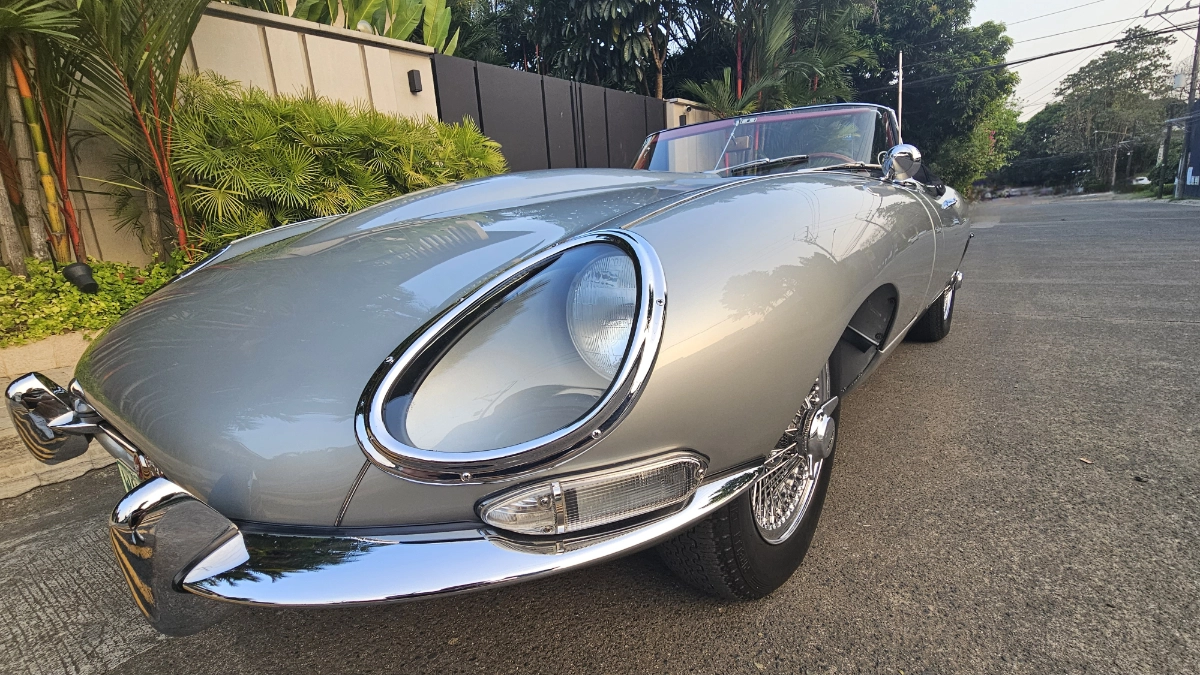
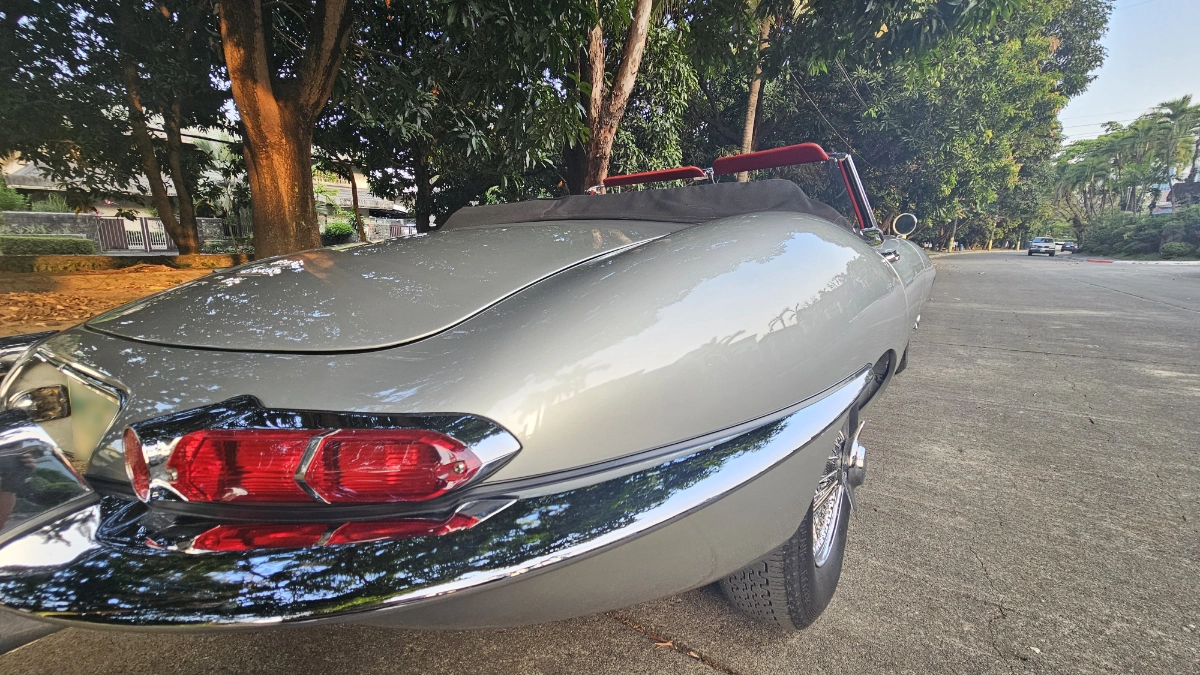
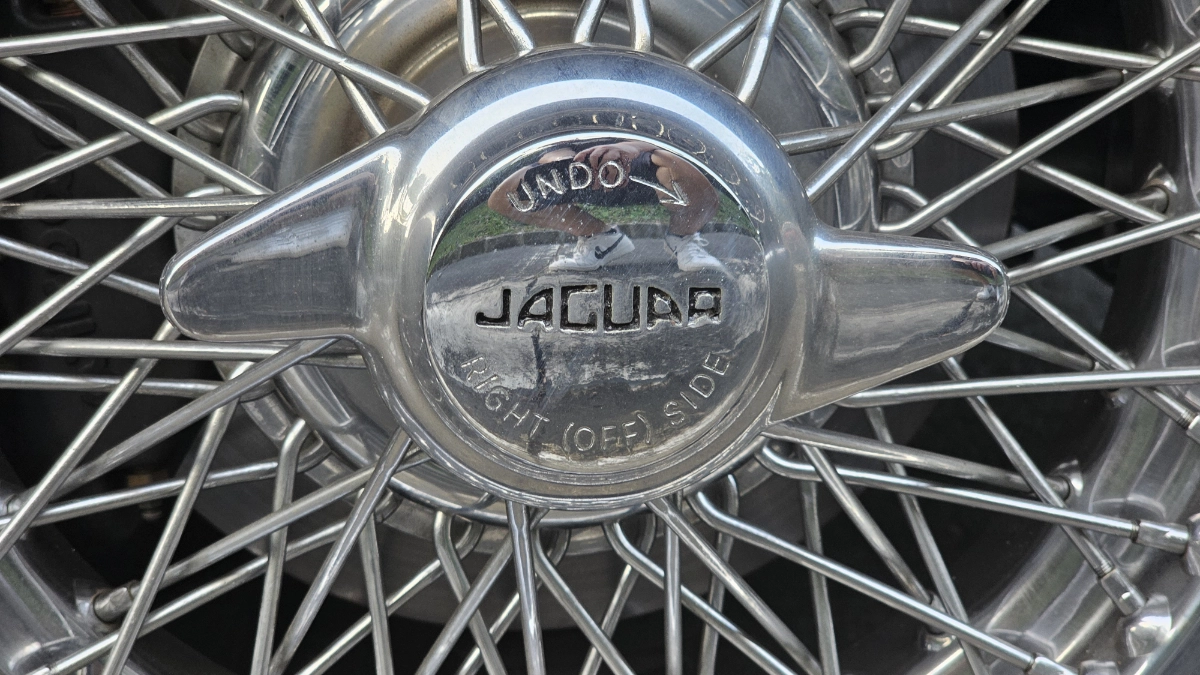
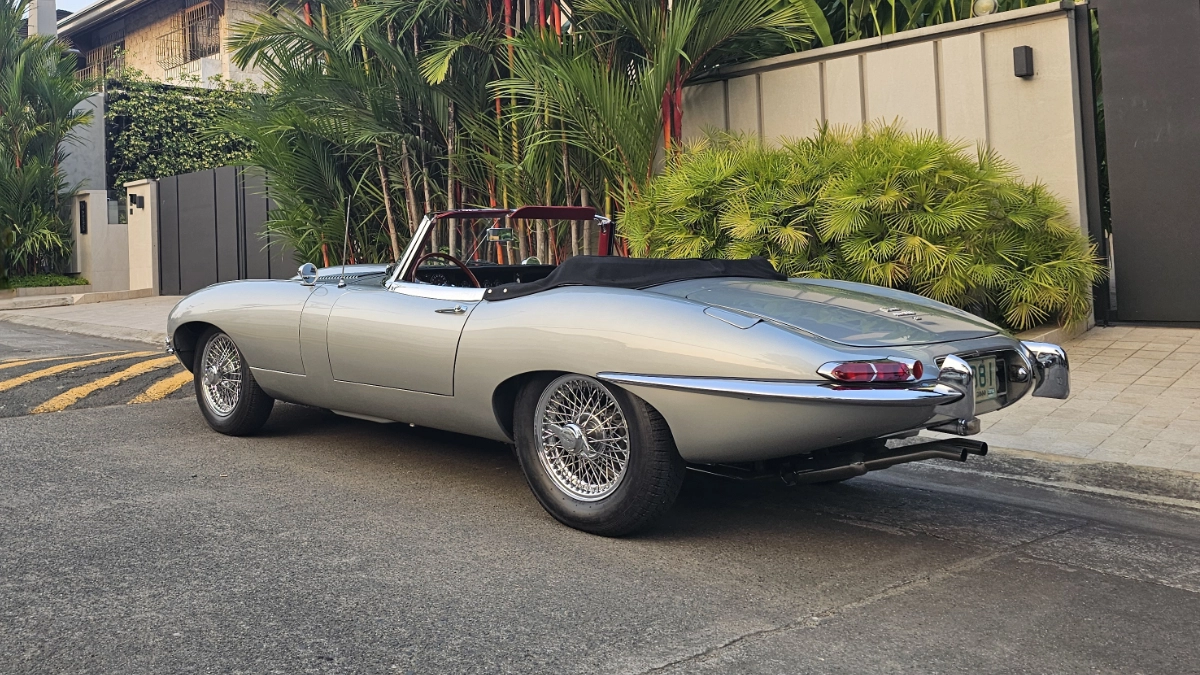
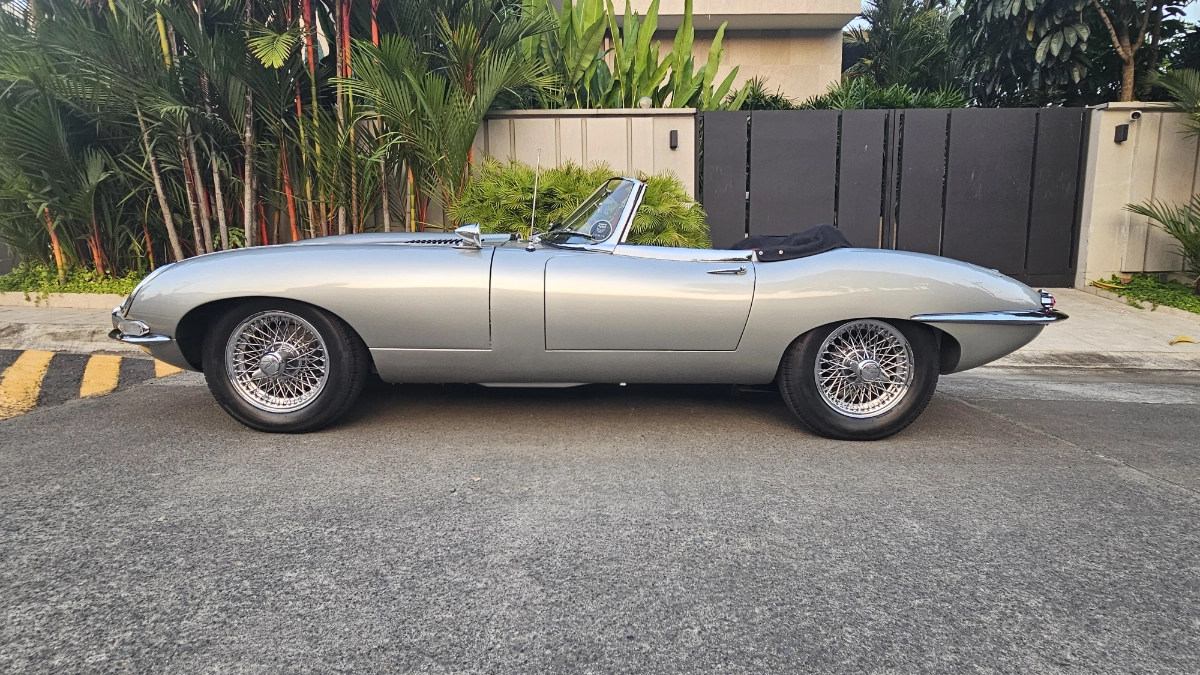
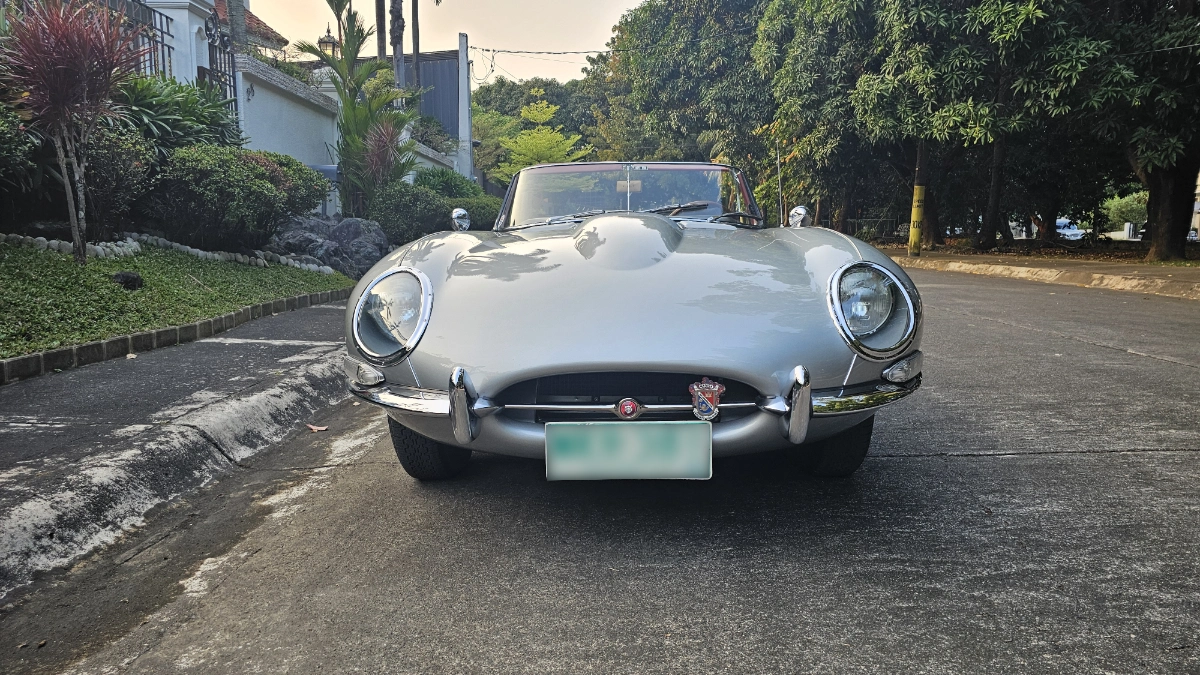
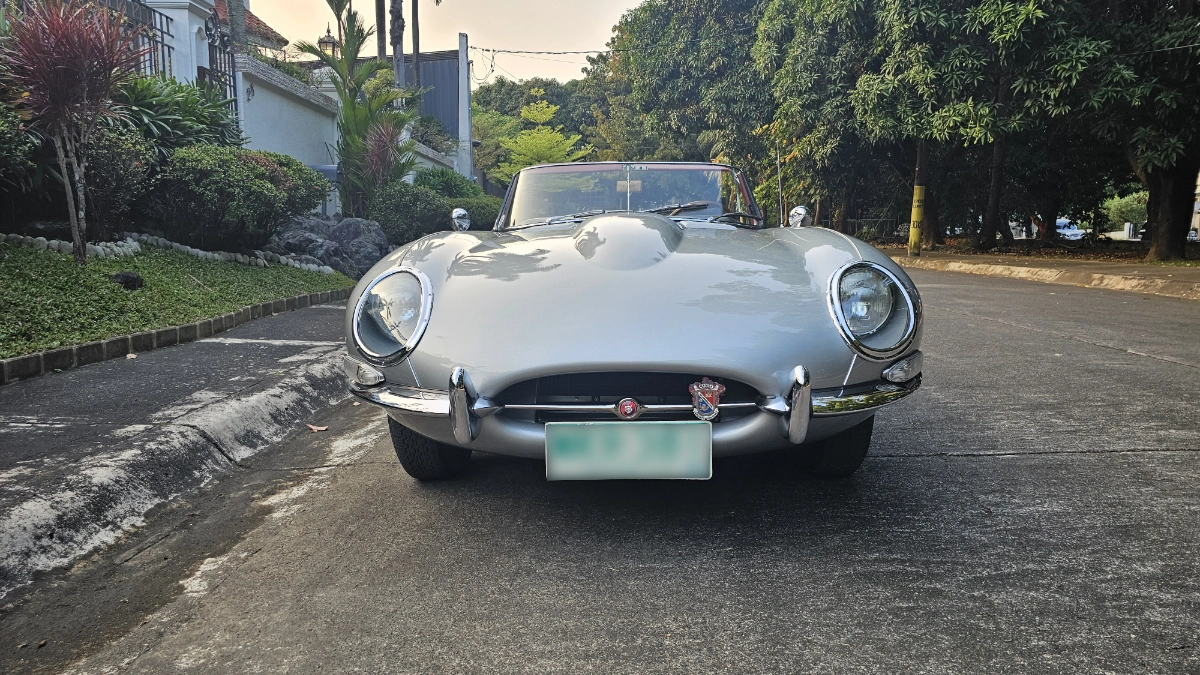
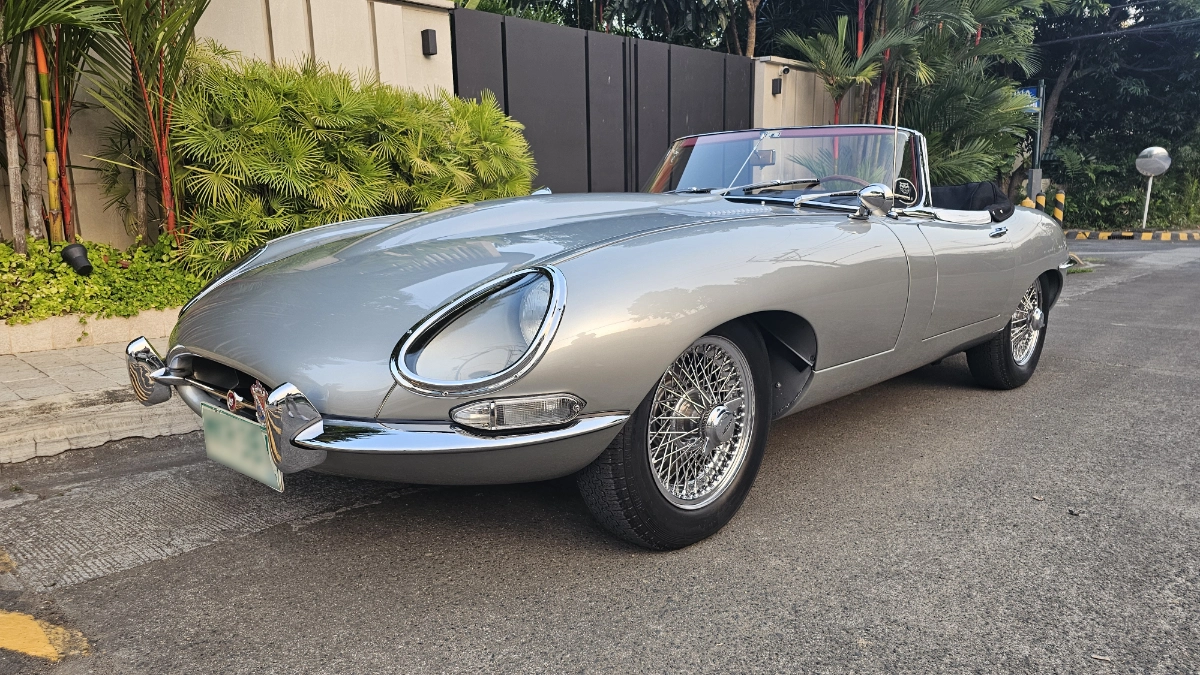
At first glance, the car is just beautiful to look at from any angle. Words cannot describe this and photos do not do justice to how pretty this car is in the metal. Its low, sleek look, long hood, and short tail accentuated by the shiny twin exhausts and the chrome 15-inch wire wheels—the E-Type can be best described as ‘drop-dead gorgeous.’
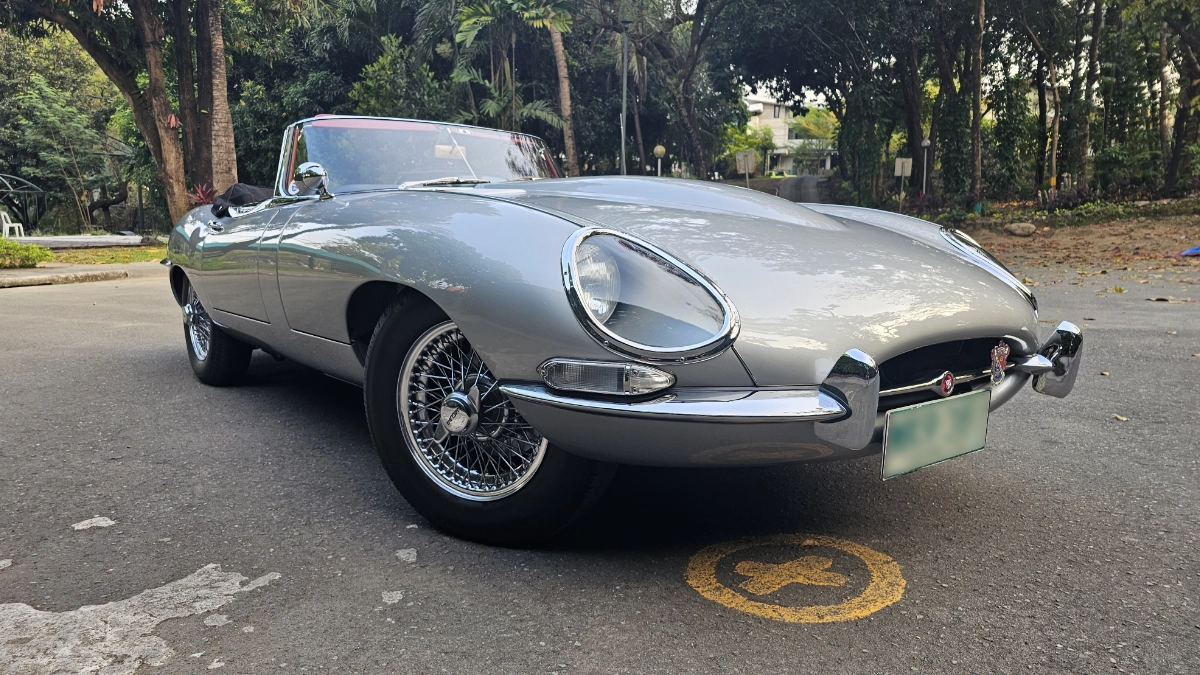
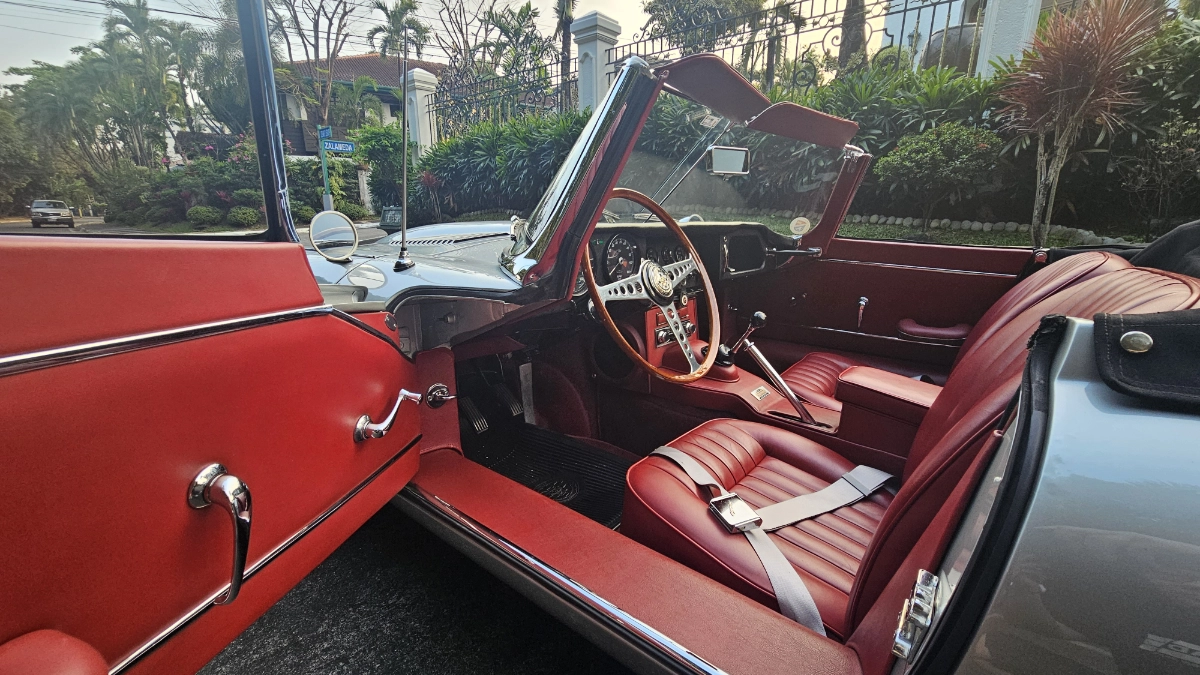
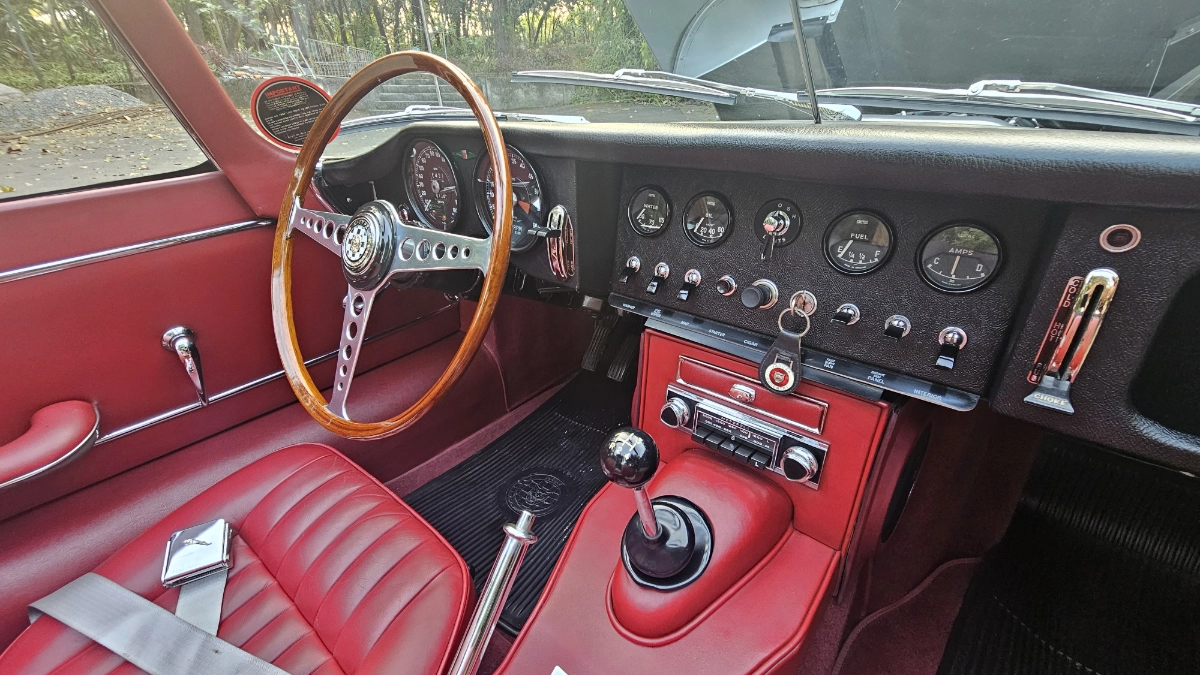
It may surprise you that the car was designed without access to a wind tunnel and the aerodynamic design was born out of pure mathematics. Inside, there’s a large, ’50s racing steering wheel, and the instruments look aircraft inspired with large easy to read analog gauges and a complete complement of rocker switches. The ‘barrel-back’ seats on the early 3.8-liter E-Types can be quite hard and uncomfortable, but this has been much improved on the 4.2-liter examples with the added cushioning and improved adjustability.
Coming from its racing pedigree, the E-Type was built around a monocoque with a front subframe that carried the engine, front suspension, and bodywork bolted directly to the tub. The front suspension featured double wishbones with torsion bars, telescopic shock absorbers, and an anti-roll bar. The twin coil-spring rear suspension, differential, axles, and radius arms were all mounted on a detachable subframe which was bolted directly to the monocoque tub. Steering was of the rack and pinion type, while stopping the car from over 200kph was done by power-assisted four-wheel disc brakes that were mounted inboard at the rear.
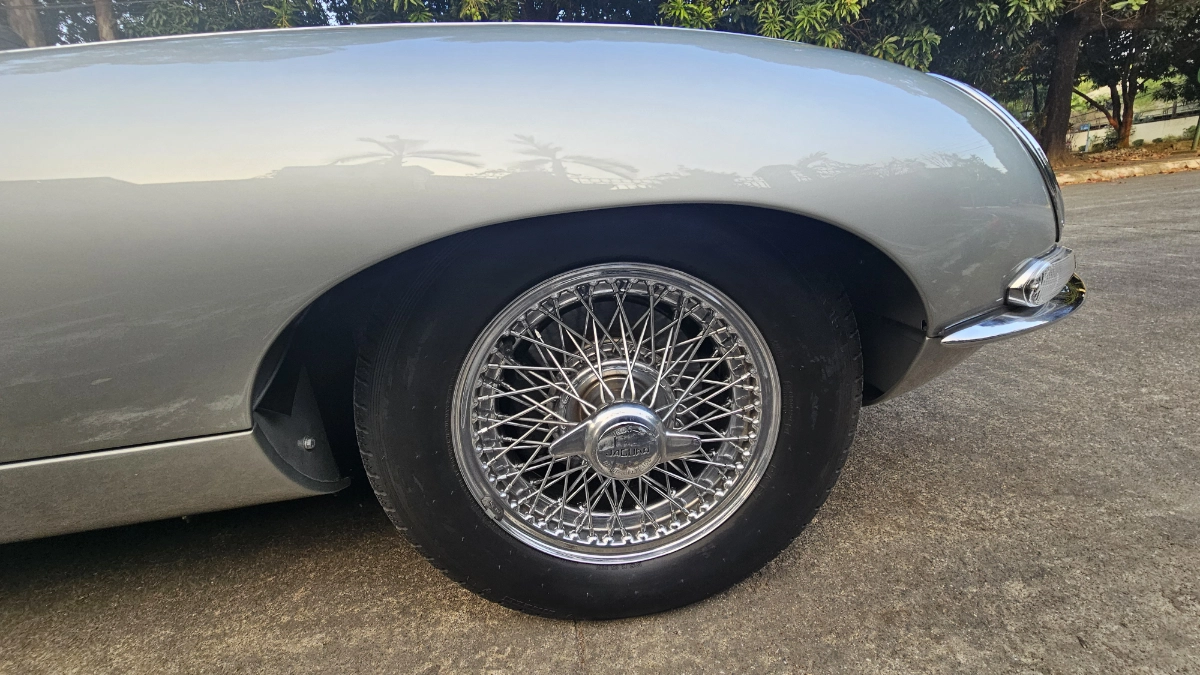
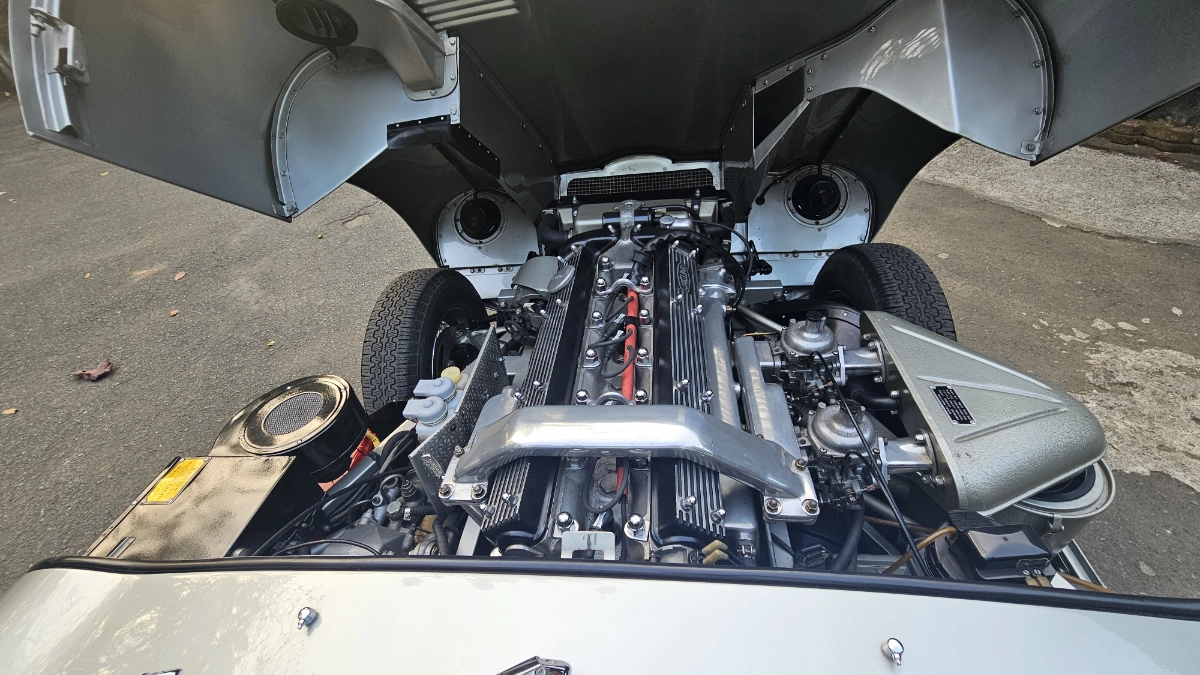
The E-Type was built from 1961 to 1974 and can be split into three different series. The original engine was a 265hp 3.8-liter twin-cam six-cylinder mated to a four-speed non-synchronized Moss gearbox. Displacement was increased to 4.2 liters in 1964 and a synchronized gearbox was also fitted. The 4.2-liter produced the same amount of horsepower as the 3.8 liter but torque was increased from 325Nm to 384Nm.
The E-Type was initially available as a two-seat fixed-head coupe (FHC) and an Open Two Seater (OTS) with a 2+2 version following in 1966 and the Series 2 being released in 1968, with changes made to comply with US highway safety laws. In 1971, the Series 3 debuted together with the 5.3-liter V12, and this ran until the end of production in 1974. Perhaps the biggest difference to the Ferraris and Aston Martins of the era was that the E-Type was not a limited-production car—a total of 72,520 E-Types were built in its 13-year lifespan.
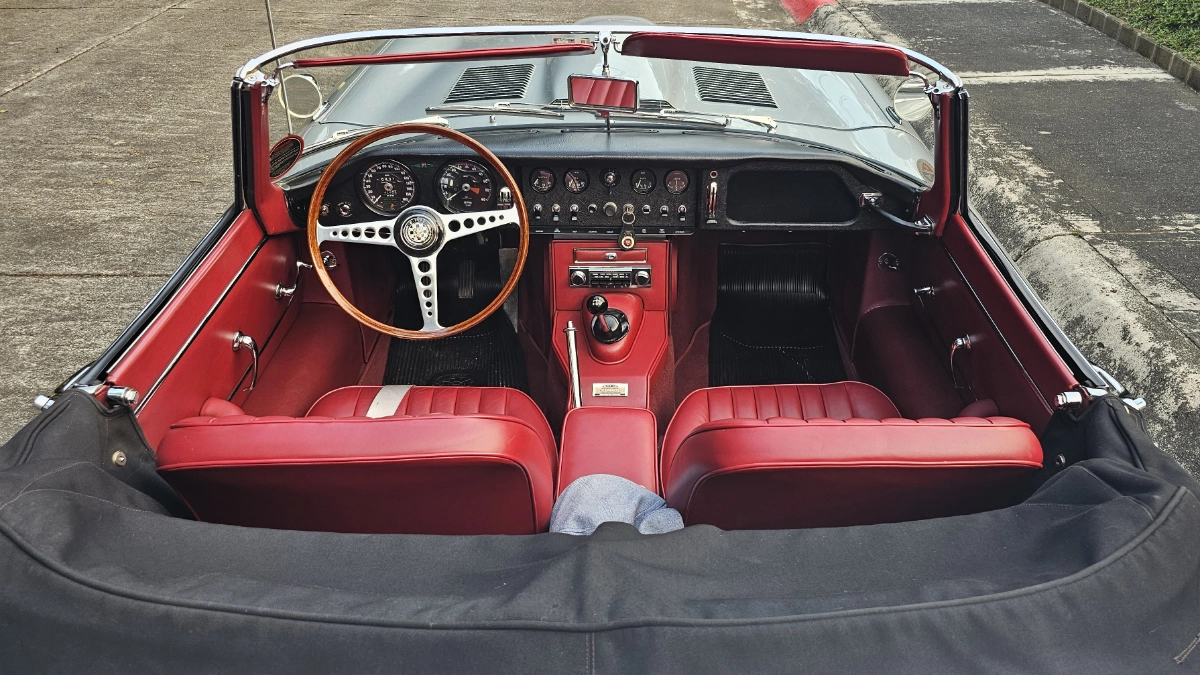
The E-Type we are featuring today is a 1967 Open Two Seater with a 4.2-liter engine made for the US market and fitted with twin Zenith-Stromberg carburetors instead of the triple SU units. The different carburetors plus other modifications meant to reduce emissions reduced engine output to 246hp and 357Nm of torque. This Jaguar was built toward the end of production for the Series 1 and already had a mixed bag of Series 2 parts fitted, making it the unofficial Series 1.5
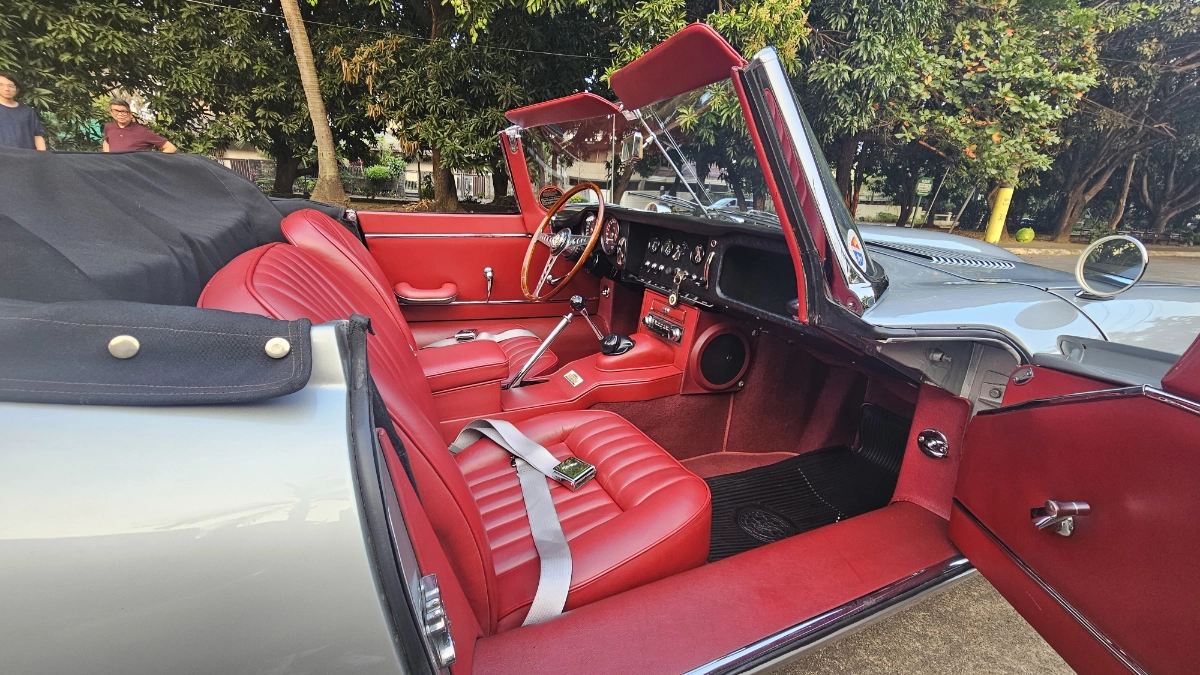
The car was imported from the United States in 1980s by its first owner, and at that point it was wearing its original black paint with a tan interior. Its second owner restored the car in 2005 but maintained its original colors. The Jaguar changed hands again before reaching its current and fourth owner 13 years ago, during which it underwent a meticulous restoration, this time refinished in the Opalescent Silver Grey that it wears today. It comes with an all-new red leather interior acquired from Hirsch Automotive in New York. All Jaguars (and most British cars) of that era were particularly notorious for reliability issues, so during the restoration, the owner made sure that the electrics and cooling system were upgraded.
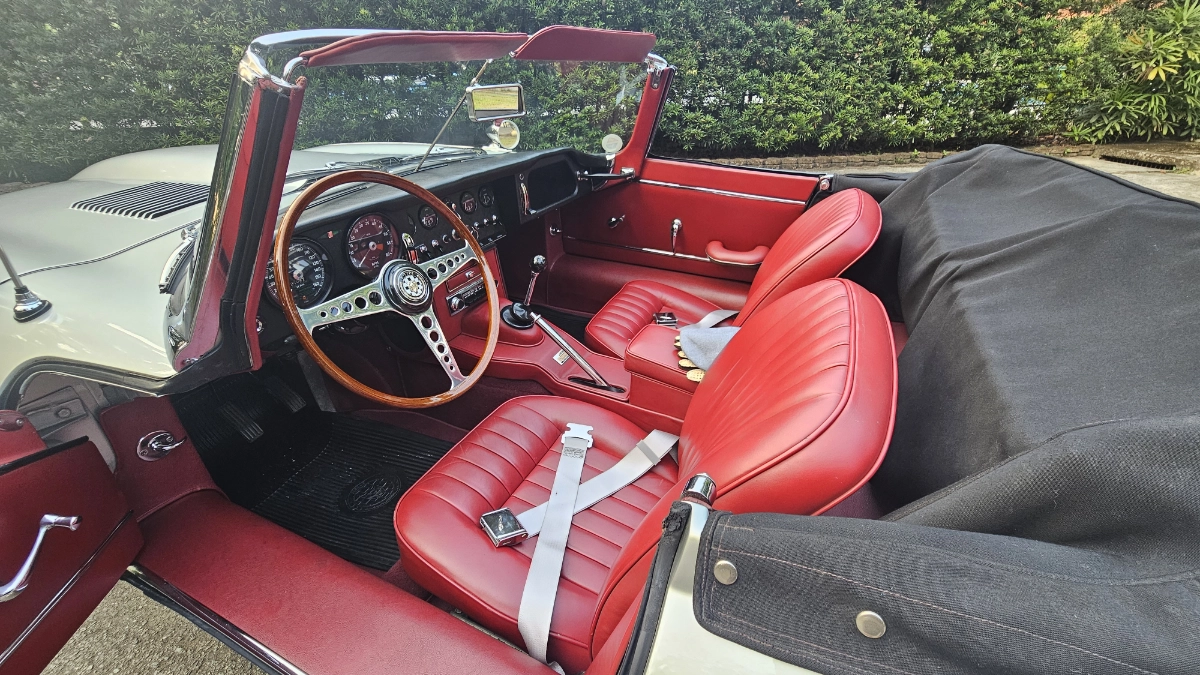
Stepping inside the E-Type, you begin to realize how sleek shape makes for a tight cockpit, getting in particularly with the top raised is a bit of a challenge for someone 1.75 meters tall. Once seated, the smaller footwells might prove to be uncomfortable on long drives.
The beauty of the red leather interior and the little detailed touches inside perfectly match the sleek silver exterior. With the top down, visibility is excellent, but the long hood takes some getting used to as it seems to go on forever. Twisting the key turns on the fuel pump and primes the float bowls while pushing the start button brings the big six-cylinder to life, after which it idles smoothly at around 700rpm.
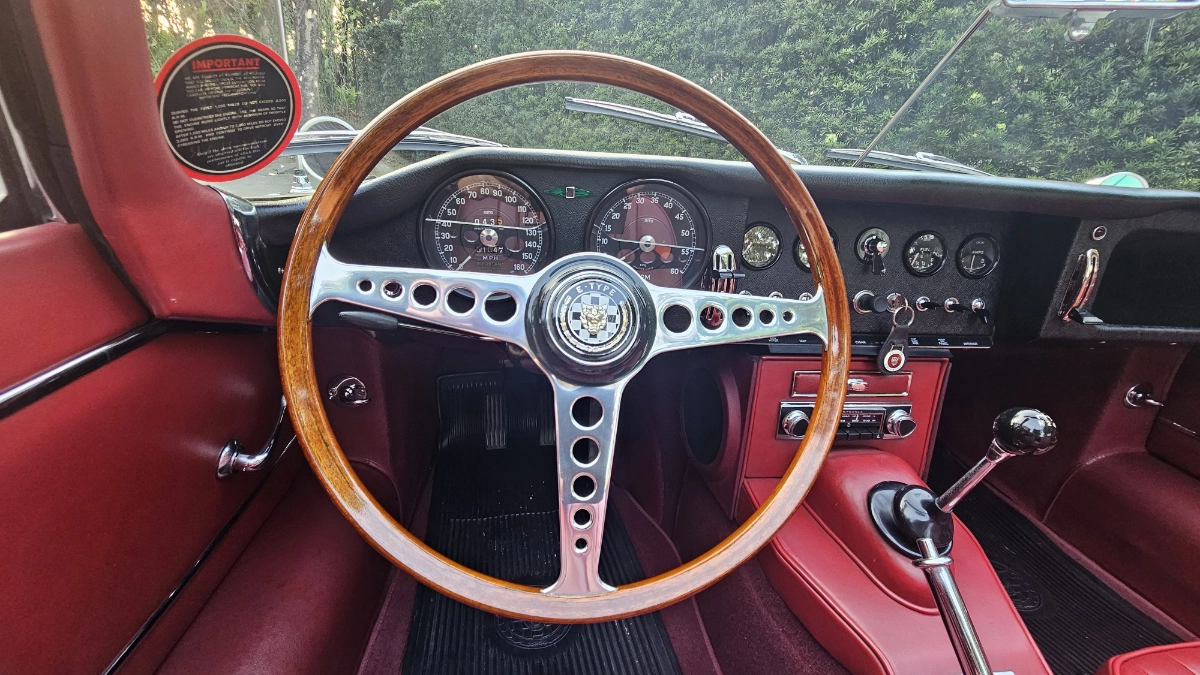
Despite the skinny tires, the unassisted steering is a bit heavy and only begins to lighten up once you reach higher speeds. Our drive in the Jaguar was limited to the confines of a gated community so speeds were kept in check, but the engine felt smooth and torquey. Ride quality is firm and gives you the reassurance that this car will remain stable at the high speeds this car was designed to do. Of note, though, is how low the car is as the exhaust pipes did scrape the speed bumps a few times. Going for a drive in a Jaguar E-Type is definitely something special, though—from the open-top experience with the accompanying sound of the engine to the very analog experience of a ’60s machine, it just feels magical.
In the ’60s, there was no greater way to show everyone how cool you were than cruising around in an E-Type Jag, and adding to the cool factor were famous owners including Frank Sinatra, George Harisson, Steve McQueen, and Bruce McLaren. The E-type’s design is timeless, a fashion statement that does not go out of style. As a testament to this, the car is on permanent display at the Museum of Modern Art in London. Enzo Ferrari called the Jaguar E-Type the most beautiful car ever made, and I have to say, he was probably right.
Engine: 4,235cc inline-six-cylinder with dual overhead camshafts
Transmission: Four-speed manual
Power: 246hp @ 5,400rpm
Torque: 357Nm @ 4,000rpm
Drivetrain: Rear-wheel drive
Front suspension: Double wishbones and longitudinal torsion bars with adjustable ride height and hydraulic shock absorbers
Rear suspension: Fully independent system with a subframe-mounted assembly and dual coil-spring/damper units per side
Seating: 2 passengers